With the usual December-through-February bare-root rose season approaching, Alameda County gardeners have time to choose a planting site before choosing a flower. University of California Agriculture and Natural Resources guidance published Nov. 15 recommends matching roses to local growing conditions, allowing room for mature plants and preparing for prompt planting. Those decisions matter in a county where foggy bayside gardens and inland yards experience substantially different summers and winter nights.
Start with the space the rose will occupy when grown, not its size at the nursery. The UC ANR guide describes hybrid teas as generally 3 to 6 feet tall, with one large flower per stem. Floribundas form bushier plants, typically 2 to 4 feet tall and wide, bearing clusters of flowers. Grandifloras can reach 5 to 8 feet, combining an upright habit with multiple blooms on a stem.
Other growth forms offer different options. Miniatures generally reach only 1 to 2 feet and suit containers, while climbing and rambler roses have flexible canes that can be trained on fences or arbors. The guide describes landscape or shrub roses as relatively low-maintenance choices. Flower color is only one selection criterion: growth habit and the cultivar’s suitability for the garden’s microclimate also deserve attention.
Read the yard, not just the climate zone
An April UC ANR explanation of Alameda County microclimates describes the immediate bayside strip as having cool, foggy summers and mild winters. Portions of the Oakland and Berkeley hills sit in thermal belts where cold air drains away, leaving winter temperatures warmer than on valley floors. Parts of Castro Valley and Hayward still receive marine air but have colder winters than those hillside belts.
Farther inland, Pleasanton, Dublin and Livermore experience hotter summers and colder winter nights than the coastal areas. Even those regional descriptions cannot capture every yard. Buildings redirect wind, trees provide shade, and concrete and asphalt retain heat. South- and west-facing walls absorb daytime warmth and release it at night. A garden’s actual sunlight and exposure therefore matter alongside its regional planting zone.
For roses, the November guide calls for at least six to eight hours of sun daily, good air circulation and protection from wind. It recommends soil amended with compost and organic matter, with a preferred pH around 6 to 6.5. Drainage matters as well: the guide warns against planting in muddy or waterlogged ground because roots can rot.
Choose the plant and prepare the ground
Buying decisions also include how the rose was propagated. Own-root plants come from cuttings, while grafted roses join the selected variety to a different rootstock. UC ANR explains that a vigorous rootstock can help roses cope with challenging soils or microclimates. Own-root roses initially grow more slowly, according to the guide, but catch up after two to three years. Neither label replaces checking whether the particular cultivar suits the site.
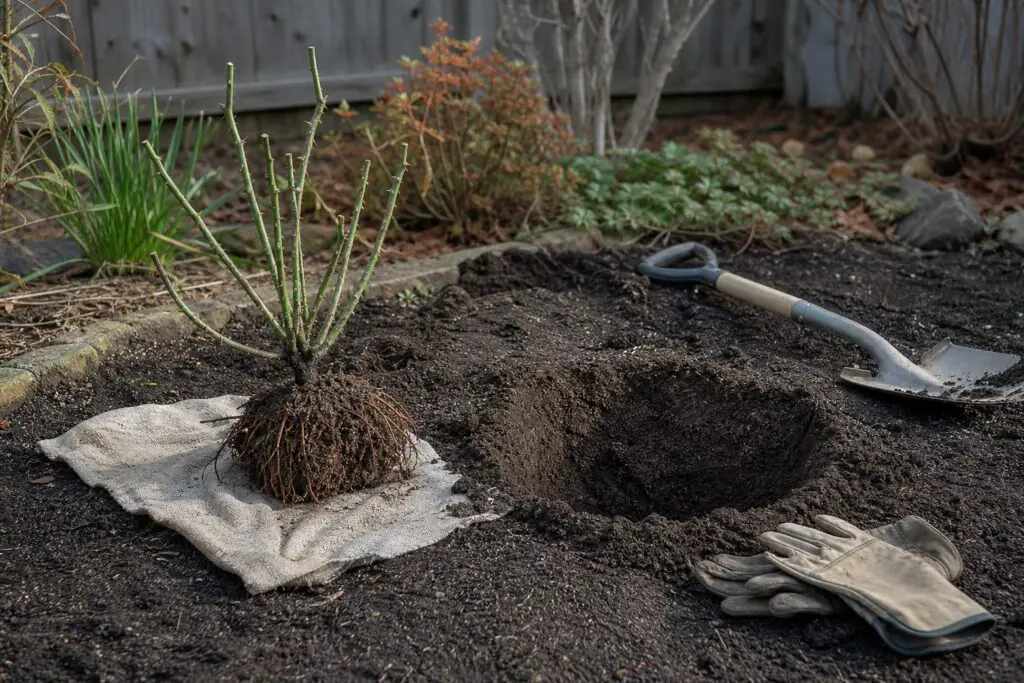
Bare-root roses should go into the ground soon after purchase or delivery. If planting must wait briefly, keep them moist, not wet. Before planting, the guide recommends soaking the roots overnight in room-temperature water. Make the hole large enough to spread the roots over a central cone of soil, then add soil gradually so it contacts the roots without compressing them.
For grafted roses, the Alameda County guide specifies keeping the swollen bud union about 4 inches above the soil. Water deeply after planting without leaving the ground waterlogged. Container roses offer a wider planting window, including mild coastal winters, but UC ANR advises avoiding planting when temperatures approach 90 degrees. Their planting hole should be about as deep as the soil in the pot and twice as wide as the root ball.
Establishment care centers on getting water to the root zone without keeping the aboveground stem wet. The guide recommends forming a soil basin 1 to 2 inches high around the plant and adding mulch to conserve moisture between waterings. It identifies drip irrigation or a bubbler as useful options. The county microclimate guidance also notes that drip systems can tailor watering to areas with different sunlight and temperature conditions.
Keep establishment and annual pruning separate
Planting preparation should not be confused with the annual pruning of an established rose. Older UC Master Gardener guidance, published in February 2024, places that work generally in the dormant period from late winter into early spring. Removing dead, damaged or diseased canes and thinning crowded growth serves structural and sanitation purposes, including improving airflow and reducing conditions favorable to fungal disease.
That general pruning window is not a single calendar prescription for every rose or garden. The Master Gardener guidance directs readers to their local program for area-specific timelines. For a first purchase, the immediate checklist is more concrete: confirm the cultivar’s local suitability, reserve enough sunny space for its mature size, and have the soil and watering arrangement ready before bare roots arrive.