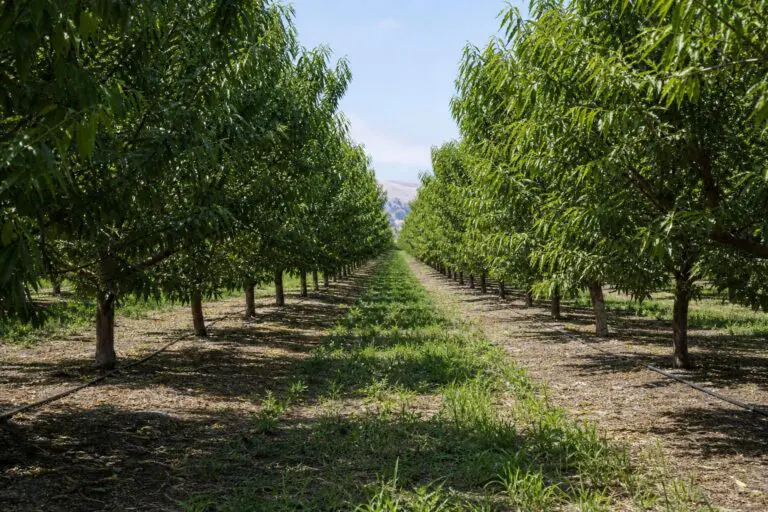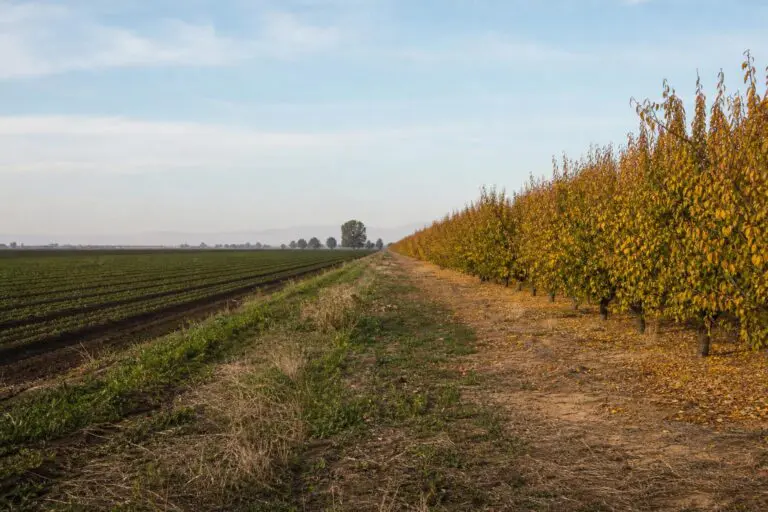
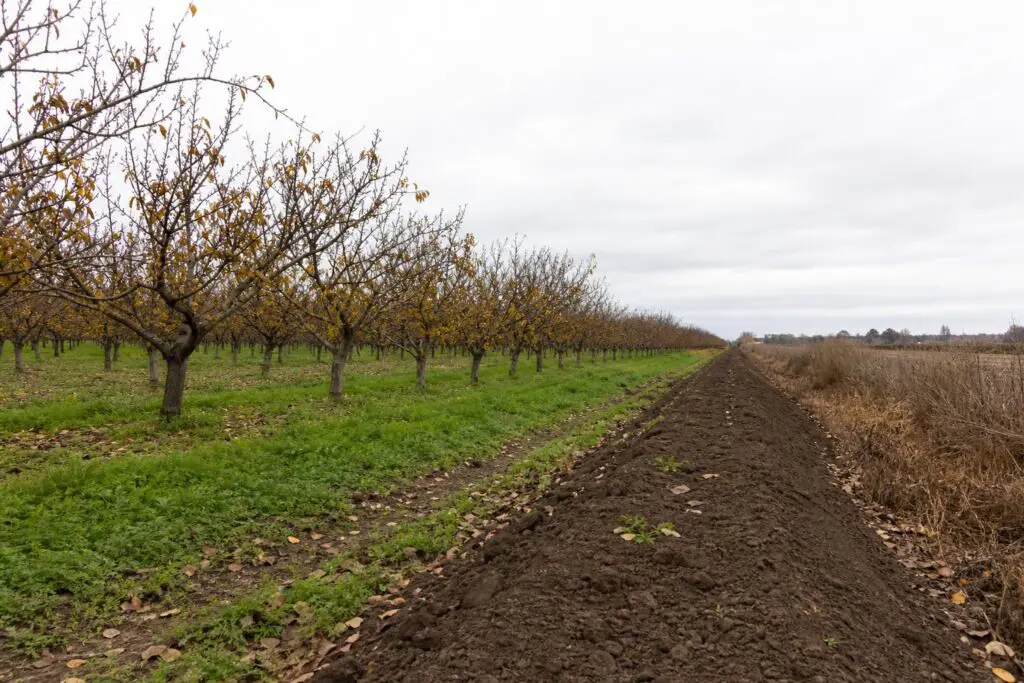
Sacramento Valley orchard growers can prepare for winter by improving soil infiltration and giving runoff clear routes away from trees, according to UCCE water resources advisor Curt Pierce. Growers considering bringing floodwater onto their land for groundwater recharge face a separate task: coordinating with local agencies and meeting state requirements before diversions begin.
The seasonal backdrop is a strengthening El Niño. In its Nov. 12 discussion, NOAA’s Climate Prediction Center put the probability of strong-to-very strong conditions through January-March 2027 at greater than 79%. But NOAA cautions that even a very strong El Niño does not guarantee the weather impacts usually associated with it.
That uncertainty leaves orchard preparation as a site-specific management decision, not a bet on a particular rainfall total. Pierce, who serves Glenn, Tehama, Colusa and Shasta counties, identifies several ways to keep orchard surfaces permeable and manage runoff. He also warns that those practices can bring frost-protection, pest and disease trade-offs.
Match orchard work to soil conditions
Vegetation in orchard alleys is one option. Pierce says both cover crops and native vegetation can help water enter the soil, although each has advantages and disadvantages. For growers choosing to establish cover crops, his guidance favors planting as soon as possible after harvest to give the vegetation the best opportunity to establish.
Drainage deserves attention alongside infiltration. Pierce suggests considering surface grading that provides clear routes for stormwater to leave an orchard. Berms can slow runoff and direct it away from trees toward places where it can soak in. The objective is not simply to retain every drop wherever it first collects.
Soil treatments depend on the problem. Pierce identifies gypsum as an option for sodium-affected or crusting soils and dry ripping for compacted ground, but only while the affected soil remains dry before seasonal rains. Organic materials, including mulch, hulls and shells, can reduce surface crusting and improve infiltration. These are options to evaluate with a local UCCE advisor, not a uniform prescription.
Floodwater recharge has separate requirements
Managing rain that falls on an orchard is different from diverting surface floodwater onto land for recharge. The State Water Resources Control Board’s September 2026 technical guidance describes a conditional pathway under Water Code section 1242.1 that allows qualifying flood diversions without a water right permit. It is not general authorization to take stormflows.
The pathway, added to state law in July 2023, applies during qualifying extreme flood conditions and expires Jan. 1, 2029. According to the board, diversions can begin only after an eligible local or regional agency publicly identifies an imminent risk of flooding downstream of the diversion point. The diverter does not make that determination.
The agency must have an adopted flood-control plan or have considered flood risk in its most recently adopted general plan. Its determination also governs when diversions must stop: once it determines there is no longer a downstream risk of flooding land, roads or structures, the authorization under this pathway ends.
A flood notice is only one requirement. The board also describes protections involving diversion equipment, recharge locations, water quality, ecosystems and existing water rights. Temporary pumps require protective screens. Restrictions apply to certain animal-facility areas and land with recent manure or pesticide applications. Additional conditions apply to diversions from Sacramento-San Joaquin Delta tributaries.
Prepare for notices and reporting
The board’s preparation flyer sets out three reporting deadlines. A diversion notice is due at least 48 hours before diversion if possible, but no later than 48 hours after it begins. A preliminary report is due within 14 days after diversion begins, and a final report within 15 days after diversion ends.
Those reports go to the State Water Board and to the groundwater sustainability agency, if one exists. The flyer also makes an important distinction for growers assessing a recharge project: diverting floodwater without a water right permit does not establish a water right or give the diverter ownership or control of that water.
Advance coordination can address those questions before a storm arrives. Pierce encourages growers to ask their water district about stormflow capture plans and possible cooperation. The board recommends identifying potential diversion and recharge sites, learning how the responsible agency issues flood-risk notices, and preparing to meet reporting deadlines before pursuing a diversion.