Different datasets can give substantially different estimates of surplus nitrogen for the same Central Valley farms and crops, potentially changing where groundwater-protection efforts take priority. A UC Davis research team compared five datasets and found disagreement large enough to shift those decisions, according to a UC Agriculture and Natural Resources announcement published Nov. 13.
The finding concerns estimates of nitrogen surplus, not measurements of groundwater contamination. Its practical significance lies in how those estimates guide conservation and mitigation priorities: the same farm or crop could appear to need more attention under one dataset and less under another, the UC announcement reported.
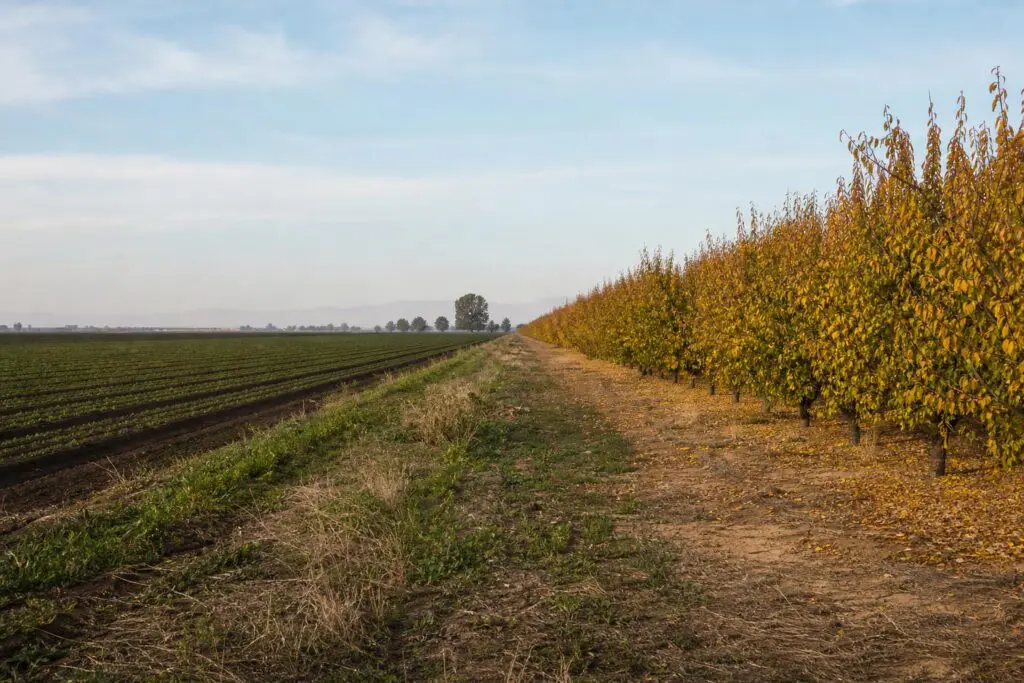
Postdoctoral researcher Baibaswata Bhaduri coordinated the comparison, which UC said appeared that week in Nature Sustainability. The researchers used the Central Valley because it offers several sources of agricultural nitrogen and harvest information. Most parts of the United States rely on just one or two datasets, USDA’s agricultural survey and census, according to UC.
Five datasets, different views of farm activity
The five sources draw on different kinds of information. Alongside the two USDA datasets, researchers examined grower-reported nitrogen applications and crop yields, expert fertilizer-rate and yield estimates from UC Davis Cost and Return Studies, and annual crop acreage and harvest records from the California Department of Food and Agriculture.
Those sources are not interchangeable descriptions of farm activity. The grower records report total nitrogen applied and crop yields, while the cost studies provide crop-specific expert estimates. The CDFA records supply acreage and harvest information collected and reported by county agencies. The comparison found that the resulting surplus estimates differed significantly.
Thomas Harter, the study’s corresponding author and a UC Davis Cooperative Extension specialist, urged caution in interpreting those differences. “We must take into account the uncertainty in current data about fertilizer use and harvest,” he said in the announcement. “Improving data accuracy by engaging with farmers is critical.”
Harvest totals do not tell the whole nitrogen story
Uncertainty also enters nitrogen accounting when harvest yields are converted into estimates of nitrogen removed from a field. A 2016 literature overview by Daniel Geisseler, a UC Davis Cooperative Extension nutrient-management specialist, explains why multiplying yield by an average nitrogen concentration does not necessarily describe an individual crop year accurately.
Geisseler’s review found that nitrogen concentrations in harvested plant parts can vary considerably from year to year. Calculations using average concentrations are therefore better suited to a multiyear view than to a precise estimate for a particular year. A reported yield alone does not resolve that variation in nitrogen concentration.
The review identified harvest year, nitrogen availability and crop variety as major contributors to variation for most crops it examined. Other influences, including fruit size, dry matter content, the share of marketable yield and harvest growth stage, could also matter for some crops. These factors affect the conversion from harvested weight to nitrogen removed.
Marketable yield can leave another part of removal uncounted. For most crops where culls or other discarded material are separated at a processing facility, Geisseler wrote, a calculation based on marketable yield underestimates actual nitrogen removal. The missing portion is the nitrogen carried in that material, rather than in the product sold.
Perennial crops pose a separate accounting limitation. Nitrogen accumulating in trunks, roots and branches is not included in a harvest-based removal value, the review noted. That distinction separates nitrogen exported in the harvested crop from nitrogen retained in longer-lived plant tissues, which the harvest calculation does not capture.
Better field data remain a research need
The 2016 review also found uneven California data coverage among crops: some had extensive observations, while others had few or none. Geisseler called for additional Central Valley field samples for many crops to strengthen estimates of harvested-part nitrogen concentrations. That older work describes methodological limits, rather than testing the new study’s dataset comparison.
For the new study’s authors, disagreement among datasets points to where better information is needed. Bhaduri said understanding the differences is essential to making groundwater-protection decisions scientifically defensible and fair to farmers and communities. The study received funding from the California State Water Resources Control Board and USDA’s National Institute of Food and Agriculture.