Dairy manure compost reduced nitrous oxide emissions by about 35% compared with fertigation alone in a University of California almond orchard study, according to findings announced Nov. 19. The result points to a potential emissions benefit for growers, but separate UC research underscores that compost does not necessarily deliver higher yields or enough additional production to cover its cost.
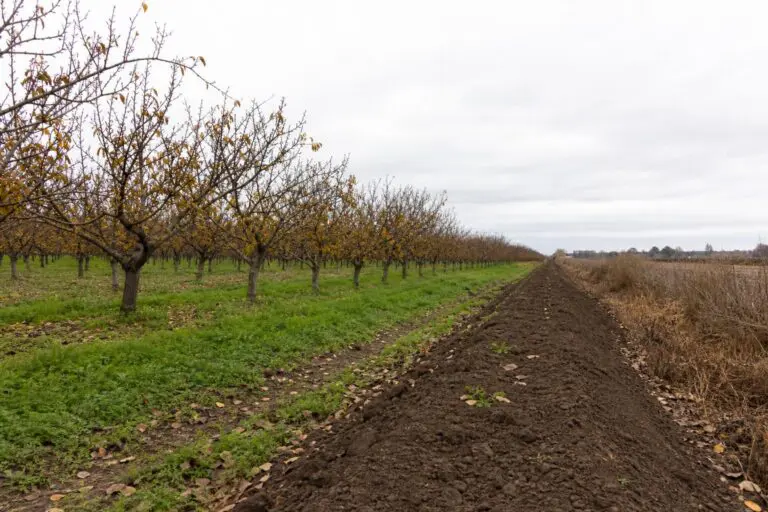
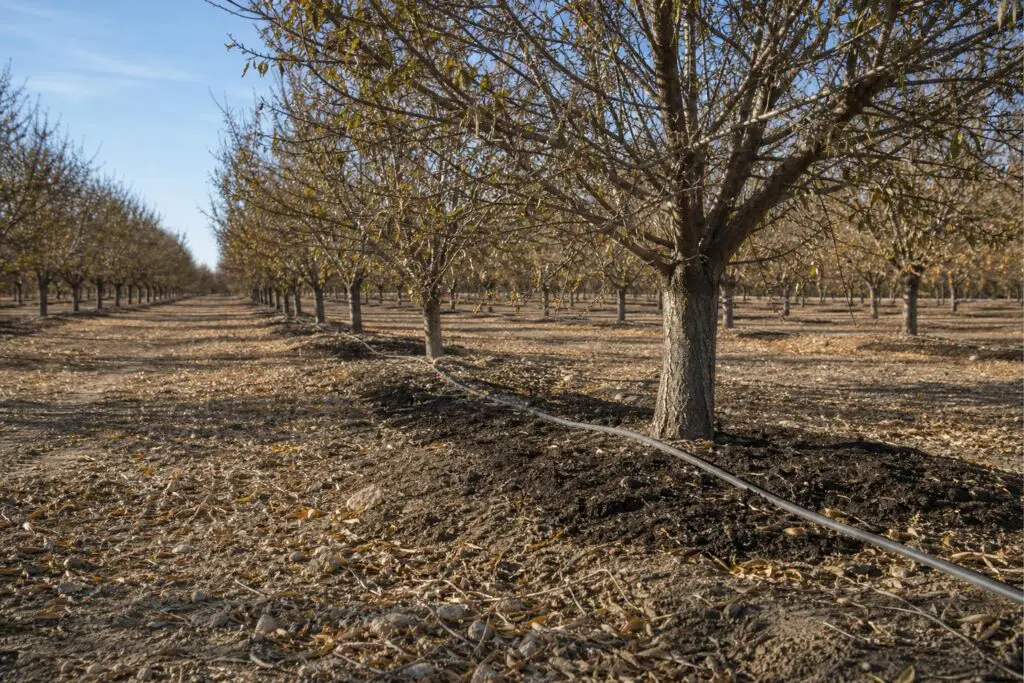
The newer research followed 480 trees across 40 acres of a commercial Central Valley almond orchard for four years. UC reported that compost applications increased or maintained crop yields while reducing emissions of nitrous oxide, a greenhouse gas. The researchers plan to submit the findings to journals; they are not yet presented as a published, peer-reviewed paper.
What the emissions comparison measured
Researchers compared four nutrient treatments: no added nutrients, compost alone, fertilizer delivered through irrigation, and compost combined with that irrigation-delivered fertilizer, known as fertigation. The roughly 35% reduction was measured against trees receiving fertigation alone. That figure applies specifically to nitrous oxide, not to all greenhouse gases or the full environmental footprint of producing almonds and milk.
Adolfo Coyotl, a UC Davis soil biogeochemist and doctoral student in the Department of Land, Air and Water Resources, said conditions became hotter and drier over successive years of the experiment. He reported that conventionally fertigated trees struggled, while trees receiving both compost and fertigation were more resilient. Trees receiving compost also grew faster than those without it.
The emissions result surprised researchers because manure compost supplied additional organic nitrogen as well as carbon. Coyotl suggested that the carbon may have helped soil microbes retain nitrogen rather than allowing it to escape as nitrous oxide. That explanation remains a hypothesis, and he is continuing to investigate the microbial processes behind the observed response.
The proposed nutrient cycle connects two existing agricultural uses. Almond hulls already go to dairies as animal feed, and composted dairy manure can return nutrients to orchard soils. Deanne Meyer, a UC Cooperative Extension livestock waste management specialist involved in the research, described the work as a way to cycle nutrients back between the two industries.
Older trials found no yield gain
A separate 2019 report by Roger Duncan, a UC Cooperative Extension advisor in Stanislaus County, offers a different perspective on orchard performance. After five years, his trials found no increase in almond tree growth or yield from composted green waste or manure. Those results concern different orchards and treatments, not a repeat test of the newer emissions finding.
Duncan’s two trials began in 2015. One orchard occupied previously unfarmed Hanford sandy loam; the other was planted on loamy sand after removal of an almond orchard. Both received compost at planting, followed by approximately 10 tons per acre each spring from 2016 through 2019. The trials monitored growth, yield, leaf nutrients and water stress.
The older study also recorded an unexpected water response. Trees in compost-amended soil tended to be slightly more water stressed than those in unamended soil, based on stem water potential measurements. Duncan identified high chloride in the composts as a possible explanation, but said the reason was unclear. The report did not establish chloride as the cause.
Emissions benefits and orchard economics differ
The financial outcome was unfavorable under those trial conditions. Duncan reported purchase and application costs of approximately $265 per acre annually at the 10-ton rate, totaling $1,325 per acre over five years. Without increased growth or yield, he concluded that the practice did not appear economically sound for the conventionally farmed almond orchards studied.
Those dollar figures belong to the 2019 report, not today’s compost market. They also do not establish the economics of the newer trial. Duncan left open the possibility that benefits could take longer than five years to emerge, or that compost might be more useful in orchards without commercial fertilizer, although at substantially higher cost.
For growers weighing the findings, emissions performance and orchard returns are distinct outcomes. The newer UC study reports lower nitrous oxide emissions and maintained or increased yields under its conditions. The older trials found no production gain under theirs. Together, they support a narrower expectation than a universal yield response: compost’s measured benefits depend on the outcome being evaluated.