Yolo County home gardeners can protect exposed beds this winter by adding organic cover, keeping healthy plant material in the garden and postponing work when soil is saturated. In seasonal guidance published Nov. 8, UC Master Gardeners of Yolo County outline ways to reduce erosion and build organic matter without aggressively digging beds.
The program identifies November through February as a time to protect soil from rain while improving the structure and fertility that support spring planting. Its advice offers several options: mulch for exposed surfaces, finished compost for planting areas, or a living cover crop where a vegetable bed would otherwise remain unused through winter.
Choose a protective surface layer
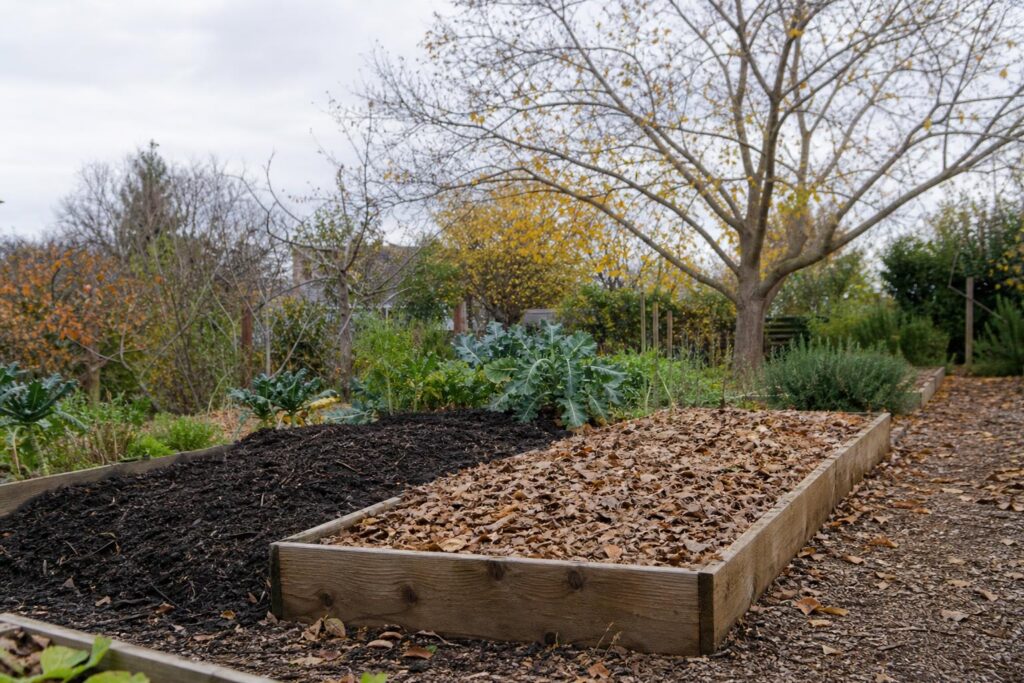
Organic mulch shields the soil surface from heavy rain, reduces erosion and suppresses weeds, according to the Master Gardeners. Leaves, straw, composted plant material and wood chips are among the choices. As these materials break down, they also contribute organic matter. Fallen leaves offer an option already available in many home gardens.
For leaf mulch, aim for a layer about two to three inches deep. The program cautions that thicker layers of whole leaves can mat together and restrict air and water movement. Shredding leaves makes them less likely to form a dense, wet blanket and helps them decompose more quickly.
Leaves can go around vegetables, flowers, shrubs and trees, but placement matters. Keep mulch several inches away from tree trunks and woody plant stems to reduce the risk of crown rot and pest problems. Under trees and shrubs, leaves can remain in place to protect soil and gradually return organic matter and nutrients.
Finished compost is another option for vegetable beds and other planting areas. The Master Gardeners generally recommend a two-to-three-inch surface layer to improve soil structure, add organic matter and help soil retain water while allowing drainage. They note that increasing organic matter is particularly useful in both clay and sandy soils.
There is usually no need to dig compost deeply into a bed. Rain, earthworms and other soil organisms can gradually incorporate a surface application. Gardeners who choose to mix it in can use a spading fork to work it gently into the top few inches, but only when the soil is not too wet to work easily.
Use living cover and healthy crop residues
For a vegetable bed that will sit unused through winter, the program suggests considering a cover crop instead of leaving bare ground. Rye and wheat are examples of grasses used for this purpose. Fava beans, common vetch and clover are legume options that can contribute nitrogen while protecting the soil and adding organic matter.
After harvesting summer vegetables, cleanup does not have to mean pulling out every healthy plant and root. Healthy crop plants can often be chopped and left on the surface to decompose, with roots remaining underground. The Master Gardeners say this returns organic material while limiting disturbance to earthworms and beneficial soil microorganisms.
That approach has an important limit: remove diseased or heavily insect-infested plants rather than leaving them in the bed. The companion leaf guidance also advises against reusing leaves from plants with disease or serious pest problems. It directs gardeners to their local green-waste system for that material, as well as leaves they cannot reasonably use.
Put leaves to work, then let wet beds rest
Leaves destined for a home compost pile provide carbon-rich material. Mix them with nitrogen-rich ingredients such as fresh grass clippings, vegetable scraps or green garden trimmings. The program suggests roughly equal parts leaves and green material as a starting point, keeping the pile as damp as a wrung-out sponge and turning it occasionally to introduce oxygen.
On lawns, several passes with a mulching mower can chop leaves into pieces small enough to settle between grass blades and decompose. Remove some if the accumulation becomes thick enough to smother the grass. Elsewhere, keep fallen leaves off sidewalks and out of street gutters: wet leaves can create slippery surfaces and clog storm drains.
Once rain leaves beds saturated, resist digging, tilling or walking on them, especially in clay soils. The Master Gardeners warn that working wet ground can damage its structure and cause compaction that persists into the growing season. Wait for moist but workable conditions, and use winter observations to identify pooling, runoff or erosion that needs attention when conditions permit.