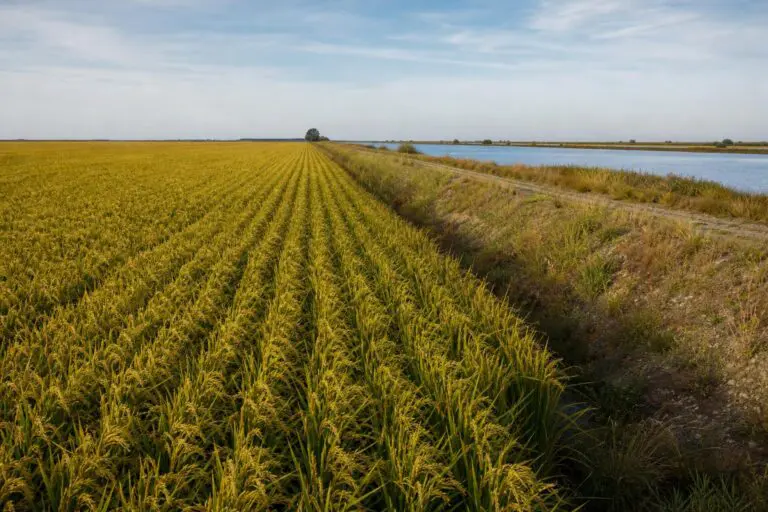
California’s 2026 rice season moved from rain-delayed planting to a mostly dry, warm harvest, but that favorable harvest weather had not settled questions about yield or grain quality by late October. UC Rice Extension Specialist Bruce Linquist’s seasonal review describes a smaller statewide crop footprint and mixed yield reports, while a separate UC Cooperative Extension recap estimates that rice acreage continued to expand in the Delta.
Both reviews were published November 10. Linquist explicitly dated his assessment October 21, however, making its harvest progress figures and unresolved quality questions an October snapshot rather than a final November crop report. His central distinction was between getting the crop harvested and knowing how it ultimately performed: dry weather helped with the first, while yield and quality information was still arriving.
Spring rain narrowed the planting window
The year initially offered an opening for early fieldwork. Linquist reported that dry conditions allowed about 10% to 20% of rice acreage to be planted in early spring. Rain in early May then delayed much of the remaining acreage and compressed planting into a tight window. Citing USDA data, he placed the halfway point for planting at May 19, about a week later than normal.
Linquist also linked the spring rains to reduced acreage. He cited USDA’s estimate of 455,000 planted acres, compared with an average of around 500,000. That statewide decline did not describe every growing region. The Delta recap estimated 20,000 rice acres in San Joaquin County and roughly another 2,000 acres in Sacramento and Contra Costa counties, continuing the region’s expansion.
Those Delta figures remain estimates, not completed county crop-report totals. The recap noted that San Joaquin County’s 2026 crop report would not be available until the following year. It also described Delta yields as comparable with the statewide average, but did not provide a final 2026 regional yield. Acreage growth and crop performance therefore remain separate parts of the season’s assessment.
Harvest progress did not settle quality
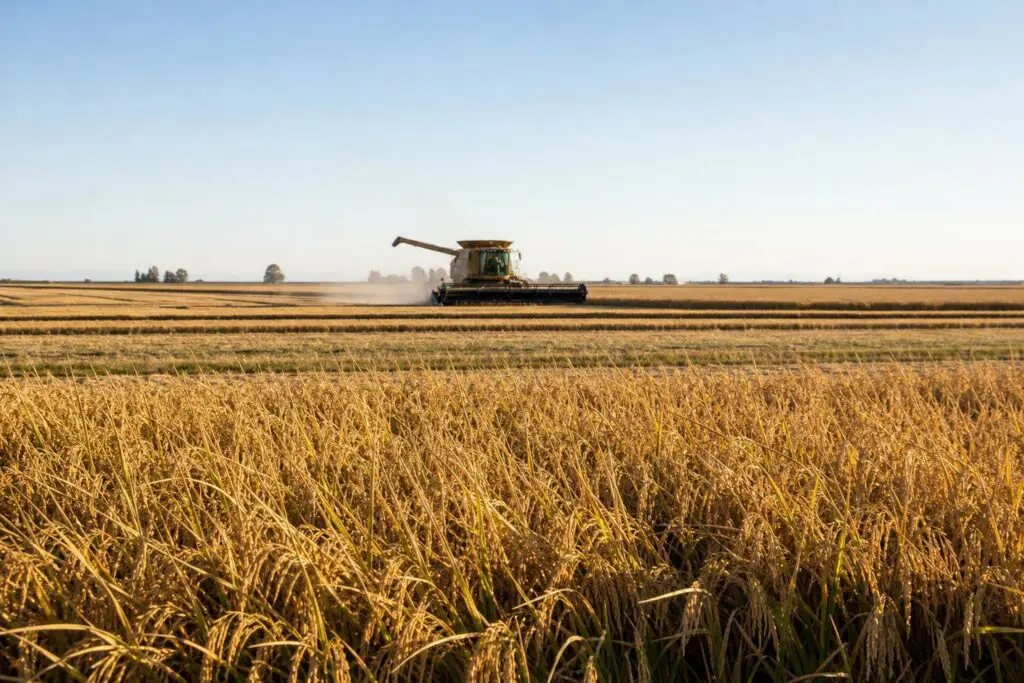
After planting, Linquist described most of the growing season as mild relative to other years. Conditions changed during September grain fill, when temperatures became unseasonably warm. Growers had worried that rain would interfere with harvest, he wrote, but October had instead been mostly dry and warm through the time of his assessment, allowing harvest to proceed despite the late planting.
The harvest milestones still reflected that delayed start. USDA figures cited by Linquist put harvest at 50% on October 9, a few days later than normal, and 80% by October 18. Those dates document substantial progress, not a completed harvest. His October 21 review also anticipated cooler weather and a greater chance of rain later that month; it did not report how that forecast subsequently played out.
Warm weather brought a separate uncertainty. Linquist raised concern that the higher September and October temperatures could reduce grain quality, even though the same dry, warm stretch helped growers bring in the crop. He did not report a measured quality loss. As of his assessment, information about quality was even less certain than the yield reports reaching him.
The yield accounts themselves did not point in one direction. Some reports indicated high yields in early-planted rice and yields about 5% lower in later-planted rice. Linquist also heard from growers who planted later and nevertheless had very good yields. These were grower reports, not a final statewide comparison, and they did not support treating delayed planting as a uniform yield outcome across California.
Field pressures varied across the crop
Field conditions were similarly mixed. Linquist had expected the compressed planting schedule to produce many weedy fields because late planting can leave some tasks omitted or poorly timed. He did see troublesome fields, including many with grass weeds, particularly Walter’s barnyardgrass. But he also saw numerous clean, good-looking fields. Despite rumors of more weedy rice, he reported only one newly identified field.
His disease observations were more restrained than the planting difficulties might suggest. Bakanae was relatively limited, blast and smut were minimal, and aggregate sheath spot and stem rot were at normal levels. Armyworms caused heavy infestations in some fields during the first June and July flight, while the smaller August flight produced very few worms. These observations describe uneven pressures, rather than a single statewide pest outcome.
The Delta recap adds a regional weather benchmark to that picture. At the Staten Island CIMIS station, average daytime highs from June through August were 90 degrees Fahrenheit and average nighttime lows were 55 degrees. The recap characterized seasonal temperatures as moderate. Those summer measurements cover a different period from Linquist’s concerns about September and October heat, leaving the harvest-time quality question unresolved.