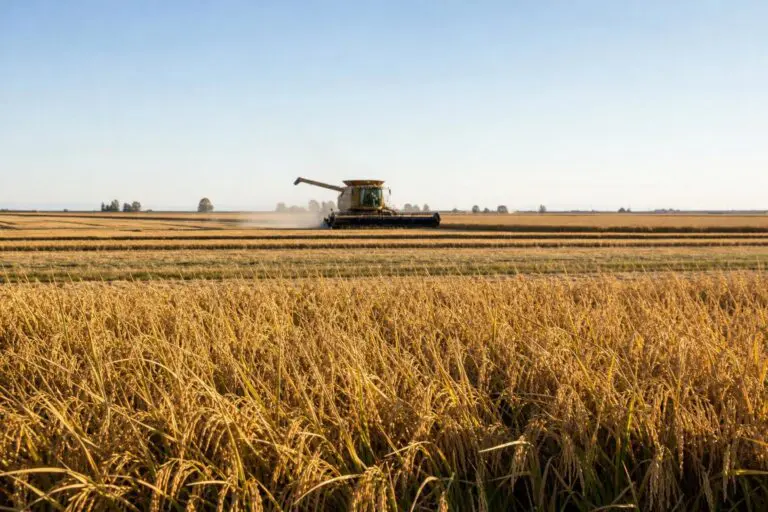
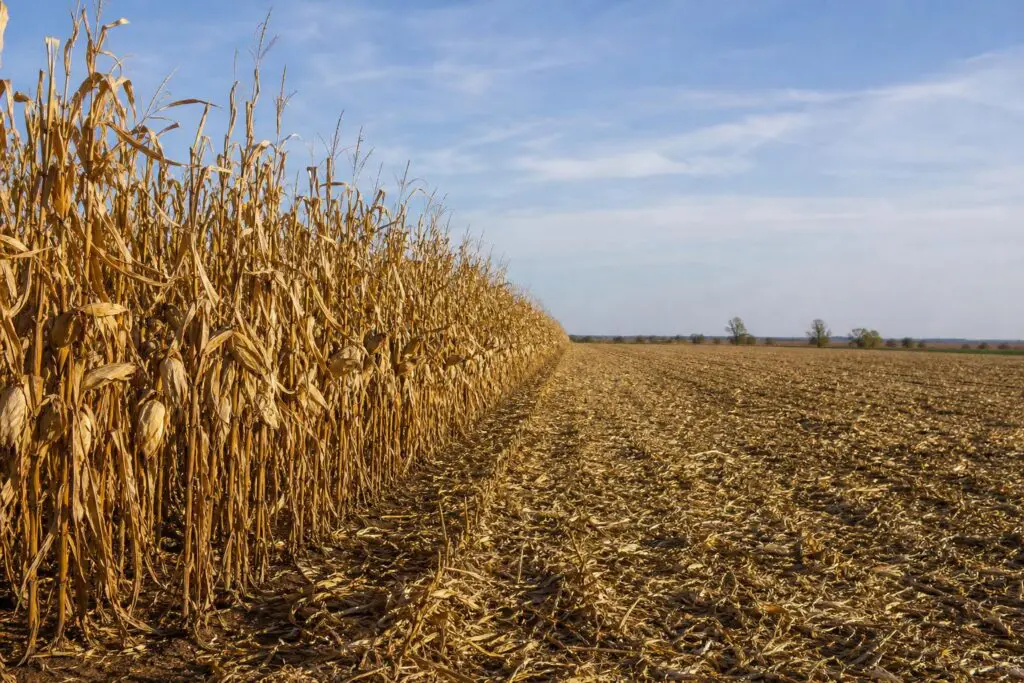
USDA lowered its national corn yield forecast to 179.6 bushels per acre on November 10, reversing the direction of October’s increase while still projecting what could be the nation’s second-largest grain corn crop. The combination leaves growers watching January for another adjustment, but it does not make a further cut, or higher prices, predictable.
The National Agricultural Statistics Service forecast production at 15.9 billion bushels, down 1 percent from its previous forecast and 6 percent from 2025. Yield fell 1.6 bushels per acre from October and was 6.9 bushels below last year. Those figures describe a smaller crop than previously expected, not a small crop by historical standards.
The November report reflects conditions as of November 1 and information collected before harvest was complete. It is a forecast rather than a final harvest tally. University of Illinois agricultural economist Joe Janzen identifies January 12, 2027, as the scheduled release date for the final NASS yield estimate, making that the next major checkpoint in his analysis.
Unusual swings, no clear January direction
Janzen’s comparison with national yield forecasts since 2014 finds that this year’s changes remain within the historical range. What stands out is their direction: estimates have moved down, then up, then down again. Such reversals are uncommon, he writes, and the October and November swings are among the larger late-season movements in that comparison.
Across the final three forecast revisions in Janzen’s comparison, the average absolute change is about 1.4 bushels per acre. That measure counts the size of a revision without regard to whether it raises or lowers yield. This year’s larger movements suggest more uncertainty than usual about the national average, rather than a dependable direction for the next estimate.
The distinction matters because an unusually unsettled forecast can invite a directional bet. Janzen finds no clear relationship between earlier revisions and the adjustment made in January. Although November-to-January changes tend to be somewhat larger than earlier revisions, his analysis finds no statistically significant tendency for that final adjustment to move one way.
Several years with large January reductions, including 2014, 2018, 2020 and 2024, may look encouraging to sellers hoping for a smaller crop estimate. Janzen cautions that selecting those examples provides too little evidence for a dependable prediction. Their existence shows that substantial reductions can occur, not that another reduction is now the most likely outcome.
What the longer record shows
A longer historical study helps separate two ideas often combined in market discussion: forecasts sometimes continue moving in the same direction, but a crop that looks large does not necessarily keep getting larger. University of Illinois economists Scott Irwin and Darrel Good examined that distinction in a 2024 analysis covering national forecasts from 1970 through 2023.
Their test used what was known at the time of the September forecast, rather than classifying crops by how large they eventually became. That approach found little relationship between corn’s September yield relative to trend and the subsequent revision through January. In practical terms, an above-trend September forecast did not reliably signal further increases.
Irwin and Good did find modest evidence that corn forecast changes can carry forward. The correlation between August-to-September changes and September-to-January changes was 0.27. That is a limited historical relationship, not a rule for an individual season, and it addresses a different interval from Janzen’s examination of the final November-to-January adjustment.
Yield uncertainty is not a price forecast
For prices, Janzen argues that uncertainty about U.S. yield alone cannot sustain higher values. His historical comparison places the current forecast below the initial trend estimate, but not far below it relative to past revisions. That starting point is central to his caution against treating a possible January reduction as an automatic case for a rally.
The January release will therefore answer a narrower question first: how much NASS changes its estimate after the November forecast. A downward revision would reduce estimated yield; an upward revision would increase it. Neither the recent reversals nor the longer historical tendency supplies a reliable advance answer, and the November production forecast still points to a very large national crop.