A new UC Agriculture and Natural Resources holiday-health post reminds households to refrigerate leftovers within two hours, putting kitchen handling on the seasonal checklist. For families preparing fresh produce alongside meat and poultry, FDA guidance adds practical safeguards: separate raw animal products, rinse produce correctly and use a thermometer rather than appearance to judge whether food is cooked.
The UC ANR post describes how disease-causing bacteria can lead to food poisoning and identifies 40°F to 140°F as a temperature range in which bacteria thrive. FDA’s existing household and produce guidance turns that warning into specific steps, beginning with shopping and continuing through preparation, cooking and storage.
Those precautions apply to produce from a home garden, farmers market or grocery store. FDA says harmful bacteria can reach fruits and vegetables through soil or water during growing, and contamination can also occur after harvest, including during storage and preparation. Its washing advice includes homegrown and farmers market produce, not just supermarket purchases.
Start with selection and clean preparation
At the market, select fruits and vegetables without bruises or damage. Buy pre-cut or packaged produce, such as cut melon and bagged salad greens, only when it is refrigerated or surrounded by ice. Pack produce separately from raw meat, poultry and seafood, and maintain that separation when putting groceries away at home.
Before preparing food, wash hands with soap and warm water for at least 20 seconds. Cut away damaged or bruised portions of fresh produce and discard anything that looks rotten. Rinse fruits and vegetables thoroughly under running water, including items with skins or rinds that will not be eaten.
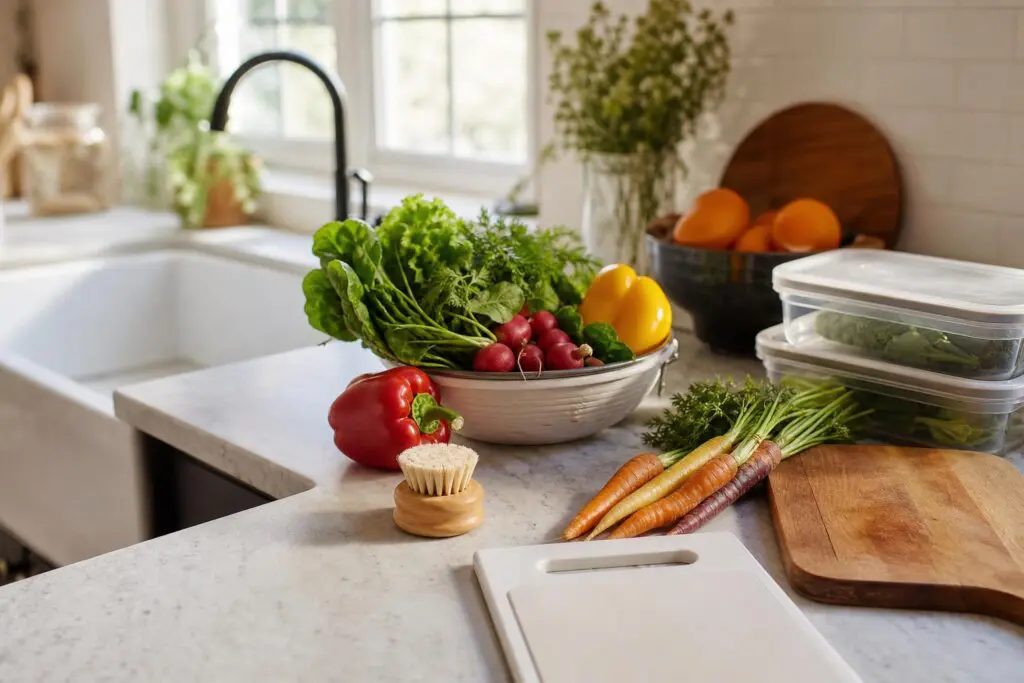
FDA does not recommend soap, detergent or commercial produce washes. Fruits and vegetables can absorb soap and household detergents, potentially making someone sick. Use a clean produce brush on firm items such as melons and cucumbers, then dry washed produce with a clean cloth or paper towel. Washing reduces bacteria but does not eliminate them.
Check the package before rewashing bagged greens or other prepared produce. Products labeled pre-washed or ready-to-eat can be used without another wash, according to FDA. If you choose to rinse them again, keep them away from dirty surfaces and utensils so the extra handling does not introduce contamination.
Separate raw foods and check cooking temperatures
Keep a separate cutting board for raw meat, poultry and seafood, and another for fresh produce when possible. Wash boards, dishes, utensils and counters with hot, soapy water between handling raw animal products and preparing produce that will be served uncooked. FDA also advises against washing meat, poultry, fish or eggs because splashing water can spread bacteria.
Cooking temperatures depend on the food, rather than a single target for the entire meal. FDA’s home food-safety factsheet lists 145°F for beef, pork, lamb and fish; 160°F for ground beef, pork and lamb; and 165°F for turkey, chicken and duck. Use a food thermometer because appearance alone does not reliably establish doneness.
Thawing and marinating also require temperature control. FDA advises thawing food in the refrigerator, in cold water or in the microwave, never on the countertop. Food thawed in cold water or a microwave should be cooked immediately. Keep marinades refrigerated, and do not reuse marinade that touched raw food unless it is first brought to a boil.
Plan refrigerator space for produce and leftovers
Keep the refrigerator at 40°F or below and check it with an appliance thermometer. FDA recommends refrigeration for perishable produce such as strawberries, lettuce, herbs and mushrooms, as well as all produce purchased pre-cut or packaged. Refrigeration belongs in the preparation plan, not just in the cleanup after the meal.
Refrigerate or freeze perishable food within two hours of cooking or purchase. FDA’s home factsheet shortens that window to one hour when outdoor temperatures reach 90°F or higher. For large quantities of leftovers, divide food among shallow containers so it cools more quickly in the refrigerator rather than leaving a large batch together.