California’s pesticide regulator found no detectable pesticide residues or residues within federal limits in 96.8% of the fresh produce samples it tested in 2024. Released Nov. 10, 2026, the results also identified 97 samples with illegal residues, triggering a monitoring and enforcement process that can remove produce from sale.
The Department of Pesticide Regulation tested 3,032 samples covering 115 types of fresh fruits and vegetables grown in California or brought into the state. Of those samples, 1,195, or 39.4%, had no residues detected. Another 1,740, or 57.4%, contained residues within U.S. Environmental Protection Agency tolerances. Illegal residues appeared in 3.2%.
For California-grown produce, DPR reported illegal residues in 2% of the 920 samples collected. The broader testing pool included 825 samples grown elsewhere in the United States and 1,256 grown outside the country. Another 31 samples lacked enough container information to establish their origin. Staff collected samples at 550 California businesses during 2024.
Targeted tests, not a statewide market estimate
Those percentages describe the produce DPR selected for testing, not an estimate of every fruit and vegetable sold statewide. The department deliberately directs sampling toward categories more likely to have illegal residues. Its annual report explicitly cautions that the results are not statistically representative of a particular pesticide, commodity or place of origin.
Sampling priorities include produce heavily consumed by infants and children, commodities with a history of illegal residues, and produce from countries with past violations. DPR also considers consumption patterns among different ethnic and socioeconomic groups, along with produce treated with pesticides listed under Proposition 65 as carcinogens or reproductive toxins.
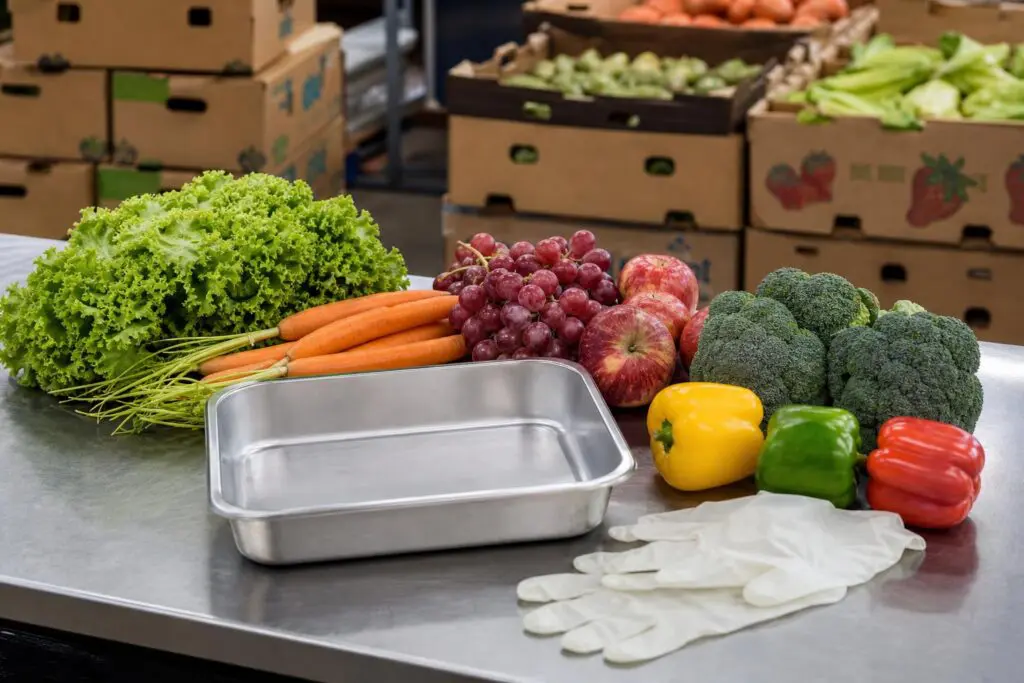
DPR collects produce where it is packed, sold or distributed, and contracts with the California Department of Food and Agriculture’s Center for Analytical Chemistry for laboratory analysis. Testing covers more than 500 pesticides and breakdown products. The program’s targeted approach favors finding potential problems over producing a random snapshot of the produce market.
Illegal residues and acute risk are different findings
An illegal residue does not always mean a pesticide concentration exceeded an established limit. DPR uses two violation categories: residues above an EPA tolerance, and residues for which EPA has established no tolerance on that particular commodity. A tolerance is the maximum legally allowed residue level for a specific pesticide on food.
Among the 97 samples with illegal residues, 71 contained residues without an established tolerance, while 35 contained residues exceeding a tolerance. Those categories overlap because a sample can contain multiple residues. Adding the two counts would therefore overstate the number of samples that failed the program’s legal standards.
DPR separately evaluates samples with illegal residues for potential acute health risk. Its announcement identified 15 samples that met that threshold in 2024, originating from Costa Rica, China and Mexico. That additional assessment distinguishes a legal violation from a potential acute-risk finding: the 97 illegal-residue samples were not all classified as acute-risk cases.
How DPR responds to violations
The annual report says DPR immediately removes produce with illegal residues from trade. If an owner holds additional produce from the same source, the department quarantines those lots until further laboratory testing determines whether they are free of illegal residues. DPR also contacts distributors and vendors to trace distribution and conduct additional sampling.
DPR has authority to levy civil penalties against businesses that pack, ship or sell produce with illegal residues. The announcement said California-grown violations involved produce originating in Fresno, Kern, Madera, Monterey, Santa Barbara, Stanislaus, Tulare and Ventura counties. Those incidents were referred to county agricultural commissioners to investigate the causes and assess civil penalties.
Imported produce accounted for 77 of the 97 samples with illegal residues, compared with 20 from domestic sources. That finding, like the overall compliance percentage, must be read alongside DPR’s targeted selection methods. The figures describe violations found in the 2024 testing pool, not a general safety ranking of produce by origin.