California growers face ongoing challenges from diverse pests in citrus, vegetable, and specialty crops. Recent outreach and research by University of California experts emphasize integrated pest management (IPM) tactics that blend monitoring, biological control, cultural practices, and new chemistry to sustainably protect crops while minimizing chemical reliance.
Refining Citrus Scale Pest Management Through UC IPM Webinar
A recent webinar hosted by the UC Statewide Integrated Pest Management Program and presented by Dr. Sandipa Gautam, Citrus IPM Advisor, highlighted key citrus scale pests of the San Joaquin Valley — California red scale, citricola scale, and cottony cushion scale. The presentation underscored the importance of distinguishing among these scales, as their biology influences monitoring techniques and the timing of treatments. Dr. Gautam also shared recent research advances that enhance scale management and provided practical recommendations for implementing sustainable control programs in regional citrus orchards.
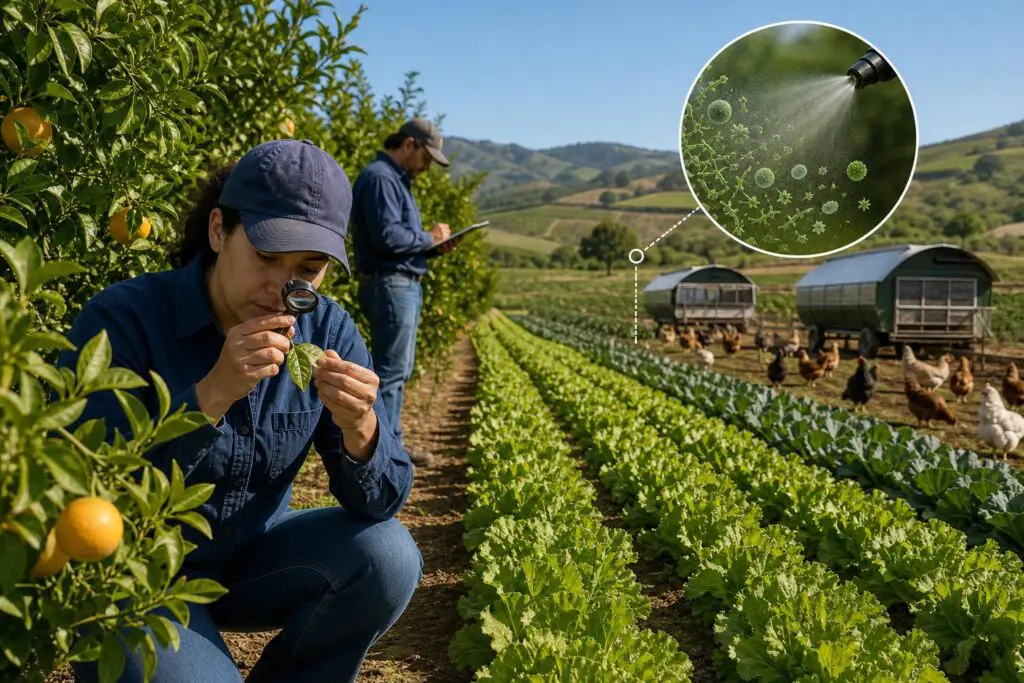
In vegetable production, organic and conventional systems encounter many of the same arthropod pests, including aphids, thrips, spider mites, leafminers, and various beetles and moths. UC Farm Advisor Surendra Dara emphasized that IPM is critical in all systems but especially crucial in organic production where pesticide options are more limited and resistance risks greater. Effective organic IPM incorporates multiple tactics such as cultural controls (e.g., crop rotation, sanitation, resistant varieties), biologicals (natural enemies, microbial agents, biostimulants), selective pesticides with organic certifications, mechanical barriers, and behavioral controls like mating disruption.
Comprehensive Integrated Pest Management for Organic Vegetable Arthropods
Dara noted that botanical and microbial pesticides with active ingredients like pyrethrins, spinosyns, and azadirachtin remain key tools but must be integrated thoughtfully considering pest biology and environmental conditions. Mechanical controls including row covers and reflective mulches, as well as behavioral strategies using pheromone baits and traps, add layers of pest suppression while supporting beneficial insect populations.
Beyond pest management, UC Davis researchers are pioneering integrated farming systems that combine vegetable crop production with poultry grazing to create resource-efficient, closed-loop organic operations. In a USDA-funded tri-state experiment including California, mobile chicken coops are rotated through vegetable fields to graze crop residues and cover crops between planting cycles. This approach may improve soil fertility through manure deposition, enhance pest management, and diversify farm income.
Preliminary results from the UC Davis site report challenges such as managing nutrient deficits in depleted soils and coordinating labor for coop movement, but also positive findings including comparable chicken growth weight in spring flocks and absence of detected Salmonella in soil or meat thus far. The research continues to evaluate the impacts on soil health, pest communities, food safety risks, and economic feasibility to develop science-based best practices that could benefit organic growers seeking diversified, sustainable production strategies.
Innovations in Organic Farming: Integrating Poultry with Vegetable Crops
Adding to growers’ disease management tools, Sym-Agro Inc. and Biofungitek SL announced a 2026 distribution agreement for BEREZI®, a novel biological fungicide EPA-approved and California-registered for use against powdery mildew, Botrytis, and other diseases in fruit and vegetable crops. BEREZI’s patented formulation combines potassium carbonate with thyme oil, offering synergistic antifungal action with reduced phytotoxicity and residue issues compared to conventional bicarbonate fungicides. The product’s improved tank-mixing and loading properties aim to enhance user experience and provide an effective new option for integrated disease management programs.
Together, these advances in IPM education, organic production integration, and innovative biopesticides exemplify a holistic approach to managing pests and diseases in California’s diverse agricultural systems. Stakeholders benefit from the applied research and outreach by UC Agriculture and Natural Resources and partners to implement durable, efficient, and environmentally sound strategies that meet the demands of sustainable food production.