UC Davis researchers are investigating how root-knot nematodes overcome a key genetic defense in tomatoes, a problem documented in samples from California processing tomato fields. Their work targets a practical challenge: identifying populations that can infect and multiply on resistant varieties, rather than simply determining which nematode species is present.
The effort includes a $748,123 project led by UC Davis nematologist Shahid Siddique and funded by USDA’s National Institute of Food and Agriculture. The project runs from Aug. 1, 2024, through July 31, 2027. Its objectives include finding genes involved in resistance-breaking and developing a reliable diagnostic method for field populations.
UC Davis postdoctoral researcher Dadong Dai, who works in Siddique’s laboratory, also studies how these nematodes breach resistant tomato defenses. A November 2026 university research description identifies that question as a current focus of his molecular biology and bioinformatics work, connecting nematode genetics with their ability to infect plants.
One resistance gene, multiple vulnerable varieties
Many fresh-market and processing tomato varieties carry resistance supplied by a single gene, Mi-1. In a February 2024 report, UC Riverside researchers Antoon Ploeg and Scott Edwards described how this shared genetic foundation leaves resistant varieties vulnerable to nematode populations capable of overcoming it. A different variety name does not necessarily mean a different resistance mechanism.
Ploeg and Edwards examined samples collected by UC Cooperative Extension farm advisors over two years from 16 processing tomato fields where resistant plants had become infected. Those fields spanned seven Central Valley counties, from Colusa to Kern. Because sampling targeted fields already showing problems, the results do not measure how common resistance-breaking nematodes are statewide.
What the California greenhouse tests showed
The researchers first placed nematodes from each location on resistant Celebrity tomato plants. Eight weeks later, all 16 populations had caused visible root symptoms. Identification using physical characteristics and PCR-based methods found Southern root-knot nematode, Meloidogyne incognita, in 15 samples and Javanese root-knot nematode, M. javanica, in one Kern County sample.
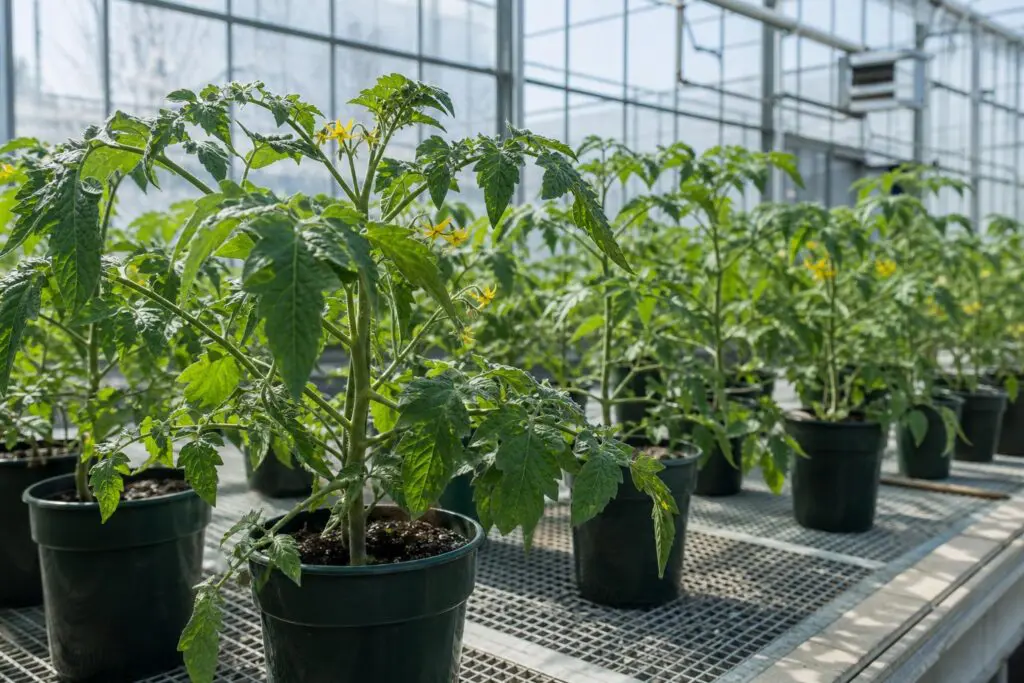
For further testing, the researchers selected four M. incognita populations and the M. javanica population, exposing five resistant processing tomato varieties to them. The greenhouse experiment, conducted twice, also included susceptible and resistant comparison plants and a standard M. incognita population. That standard population multiplied on susceptible tomatoes but not on the resistant varieties.
The five resistance-breaking populations behaved differently: all infected, caused symptoms and multiplied on the resistant tomatoes tested. The degree of multiplication varied among nematode populations and varieties, but none of the tested resistant processing varieties prevented population increases. Ploeg and Edwards concluded that established resistance-breaking populations would likely pose a problem across resistant processing tomato varieties.
Moving from plant tests to genetic detection
Identifying that ability is a separate task from identifying the nematode species. In their 2024 report, Ploeg and Edwards said confirmation required growing nematodes on a resistant tomato and examining the roots six to eight weeks later. The USDA project description likewise identifies a need for tools that distinguish resistance-breaking field populations from those unable to overcome the defense.
The UC Davis project proposes comparing nematode genomes to locate genetic differences associated with overcoming Mi-1. Its methods include testing two candidate genes identified through comparisons of laboratory strains and examining how nematode genes interact with tomato proteins. These are research objectives, not proof that a particular genetic change explains every resistance-breaking population found in fields.
Another question is whether overcoming tomato resistance carries a biological trade-off. The project description reports preliminary observations that resistance-breaking nematodes perform less well on susceptible tomatoes and infect a narrower range of hosts. Researchers plan to investigate the genetic basis of those observations. The preliminary findings are not a basis for choosing a rotation crop.
For field identification, the project plans to compare genomes of resistance-breaking isolates and develop a reliable detection method. That would address the distinction the greenhouse work exposed: two populations identified as the same nematode species can differ in whether tomato resistance stops them. Diagnostic development remains a stated research goal, not a completed tool announced in these reports.