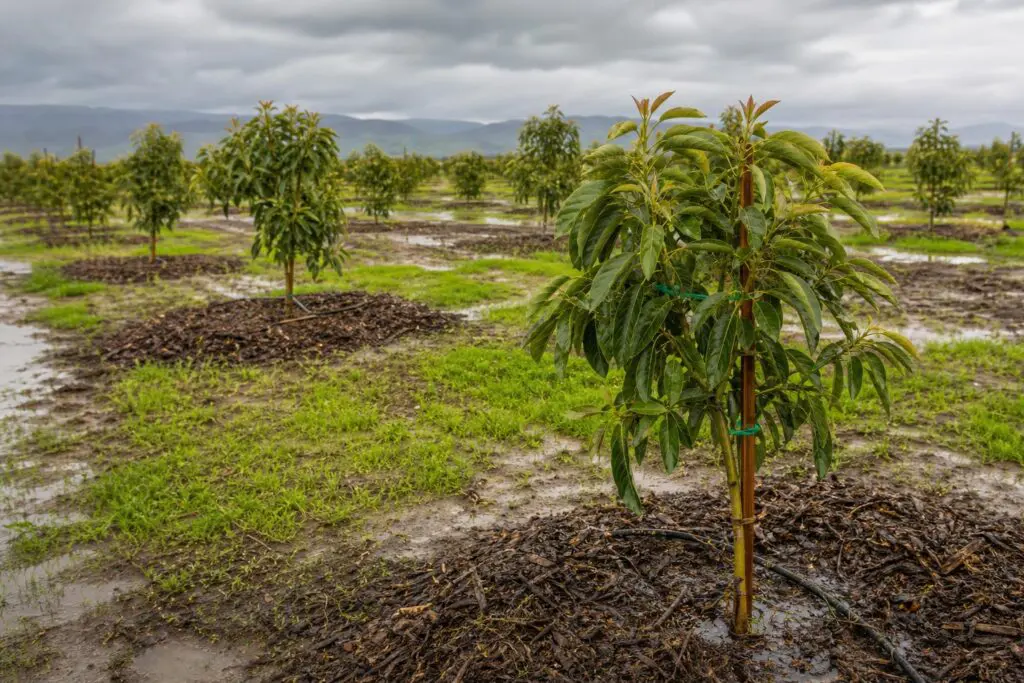
Saturated orchard soils can deprive citrus and avocado roots of air, triggering leaf and fruit drop and, in severe cases, canopy collapse. In guidance published Oct. 22, UC Agriculture and Natural Resources highlights young avocado trees and flat orchard sites as particular concerns, with drainage and irrigation management central to limiting injury.
Rain can help wash accumulated salts out of the root zone, but prolonged wetness creates a different problem. The UC ANR guidance describes damage from soil asphyxiation, especially in avocados. That physiological injury is distinct from infection, although wet conditions also favor pathogens that attack citrus roots, crowns, trunks and fruit.
How saturated soil injures trees
When overly wet soil excludes air, ethylene can accumulate, according to UC ANR. This plant growth regulator influences ripening and aging, and its buildup can lead to leaves and fruit dropping. The guidance also associates asphyxiation with iron chlorosis, particularly in higher-pH soils, and notes that severe injury can bring down large canopies.
Young avocado trees with poorly developed root systems have been especially vulnerable in the observations described by UC ANR. Orchards on flat ground also stand out, and the guidance singles out mulched trees on flat sites as particularly prone to asphyxiation. Those vulnerabilities make orchard layout and soil cover relevant when assessing persistent wetness.
Mulch, leaf loss and irrigation
Planting on berms is one way to avoid the problem, UC ANR says, but that is not a readily available change for trees already established in the ground. For existing plantings, the guidance recommends pulling mulch back to expose soil and allow moisture to evaporate faster when soils remain too wet.
Extensive leaf loss creates another concern: exposed branches can suffer sunburn. UC ANR says whitewashing branches may be necessary after substantial defoliation. Its guidance links that risk to the loss of leaves and water movement through the tree, which can allow sunlight to heat exposed wood enough to cause lasting damage.
Leaf loss also changes irrigation needs. With fewer leaves transpiring, the irrigation regimen needs adjustment, according to UC ANR. That makes defoliation more than a visible sign of damage: it also affects how the tree uses water. The guidance does not provide a single replacement schedule for affected citrus or avocado orchards.
A separate disease risk in citrus
For citrus, excess water also creates favorable conditions for Phytophthora diseases. A separate UC ANR article published in March 2023 explains that these water molds thrive in waterlogged soils and places where water stands. That older guidance provides disease background, rather than a description of current storm conditions or current orchard infections.
During moist conditions, Phytophthora produces large numbers of mobile spores called zoospores. They can swim short distances and move with rainwater or irrigation water to fruit, crowns and roots. UC ANR identifies the amount of pathogen inoculum and the duration of wetness as the most important predictors of citrus brown rot epidemics.
The potential damage extends beyond fruit. UC ANR lists trunk canker, gummosis, and crown and root rots among the diseases Phytophthora causes in citrus. These infections and oxygen-deprivation injury are different problems. Their shared connection to wet conditions helps explain why managing excess moisture matters without treating every damaged tree as an infection.
The 2023 guidance puts moisture management first and calls for both surface and subsurface drainage. Surface drainage removes excess water rapidly during and after heavy rain. UC ANR describes bedding and routing surface water into collection ditches as approaches, with the orchard's natural slope also relevant to how water leaves the site.
Water below the surface presents a separate drainage issue. Rain that soaks into the soil and raises the water table requires subsurface drainage, the older guidance explains, citing subsurface drains or open ditches. Removing standing surface water and dealing with water beneath the root zone address different parts of the same excess-moisture problem.