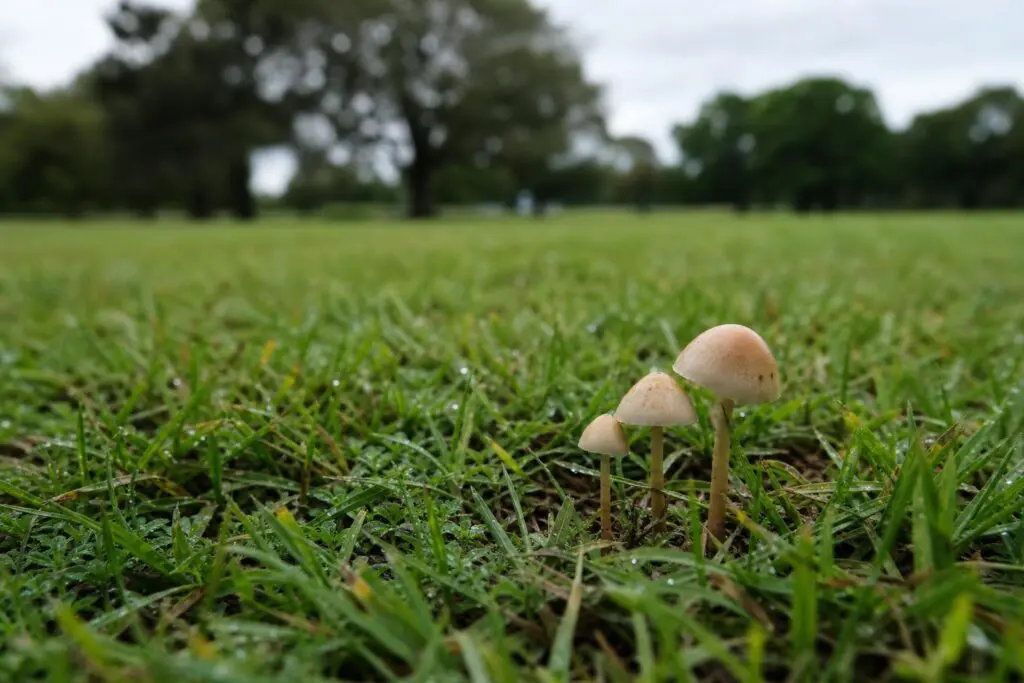
UC Integrated Pest Management has revised its lawn-mushroom guide, adding identification photographs and updated information on common species. Announced October 21, the revision addresses a practical distinction for landscape managers: a few mushrooms usually are not a problem, but some can point to nearby tree trouble or be poisonous if eaten.
UC IPM plant pathologists Jim Farrar and Belinda Messenger-Sikes updated Pest Notes: Mushrooms in Lawns. Along with new photographs, the revision adds references on fungi and reorganizes the material into a more streamlined resource.
Identification separates different concerns
According to UC IPM, a few mushrooms appearing in turf usually indicate abundant organic matter in the soil beneath it. Their presence alone does not necessarily mean the lawn has a health problem.
Identification matters because not all lawn mushrooms carry the same implications. UC IPM singles out Armillaria as an example of fungi that can indicate a problem with nearby trees. The announcement also cautions that some common lawn mushrooms are poisonous when eaten, making ingestion risk a separate concern from turf appearance.
Earlier guidance adds moisture context
Earlier UC guidance, published January 9, described winter rain and damp conditions as a backdrop for mushroom growth in California lawns. That post identified excess water, poor drainage and heavy shade as conditions that can favor mushrooms.
The January guidance also described decaying wood, wood chips, thatch and other organic debris as possible material supporting lawn mushrooms. That background helps explain why fungi may appear in turf even when the grass itself is not the underlying concern.
The revised guide brings the focus back to identifying what is growing. Its expanded photographs and updated species information address the differences between ordinary fungal activity, possible tree-health warning signs and mushrooms that pose an ingestion hazard.