Bicarbonate can complicate orchard nutrition in two ways: repeated irrigation can shift root-zone chemistry toward conditions that restrict iron and zinc availability, while cold, saturated soil can elevate bicarbonate and reduce iron availability in prunes. Those connections make water chemistry and soil-moisture patterns useful parts of an investigation when trees show nutrient problems.
In his October nutrition column, crop adviser Rich Kreps explains why irrigation-water pH alone does not describe that water’s influence on micronutrients. His discussion, paired with University of California Cooperative Extension guidance on spring irrigation in prunes and UC soil-moisture monitoring background, puts the focus on what happens within the wetted root zone.
The distinction is narrower than a general warning against adding fertilizer. For iron and zinc, the question is how alkaline conditions affect nutrients near active roots. For moisture monitoring, it is whether the measurements actually represent the soil those roots occupy.
Why pH alone misses part of the picture
Kreps distinguishes pH from alkalinity, the capacity of water to neutralize acidity and resist a change in pH. A water sample’s pH describes its condition when tested. Bicarbonate contributes to alkalinity, helping explain how repeated applications can influence the soil over a season.
That repeated exposure matters under drip and micro-sprinkler irrigation. Kreps notes that feeder roots, fertilizer and salts concentrate within the wetted soil volume. Bicarbonate-rich irrigation water can make that same volume more alkaline, bringing the water’s chemistry directly into the area where nutrient uptake occurs.
Iron and zinc are most accessible when dissolved near active roots, Kreps writes. As soil pH rises, they become less likely to remain in solution. They can associate with carbonates, hydroxides, clay or organic matter, leaving a measurable soil nutrient supply that roots cannot readily use.
For iron, Kreps describes yellowing between greener veins on young leaves as a common result of limited availability. Because iron moves poorly within the plant, symptoms often show first in new growth and may not correct quickly. Zinc availability also declines in alkaline conditions, making the location and timing of nutrient delivery relevant alongside the amount applied.
Cold, wet soil adds another constraint
A separate UCCE example shows how soil moisture can intersect with that chemistry. In guidance published March 11, irrigation and water resources adviser Curt Pierce cautions that starting irrigation too early in prune orchards can create problems even when warming weather and a dry-looking surface suggest trees need water.
Under cool conditions, high soil water content can elevate bicarbonate, reduce iron availability and produce iron-deficiency symptoms, Pierce writes. His article illustrates interveinal chlorosis on prune leaves associated with prolonged cold, saturated soil. This is spring guidance for prunes, not a general irrigation-start rule for other orchard crops or seasons.
Saturation also affects the roots themselves. Pierce explains that early spring irrigation can reduce soil oxygen during the year’s largest flush of new root growth. Temporary saturation may not kill trees, but it can suppress new roots. Young roots need oxygen and are particularly vulnerable to oxygen-depleted conditions, potentially reducing water uptake capacity needed later in the season.
Measure where the roots are working
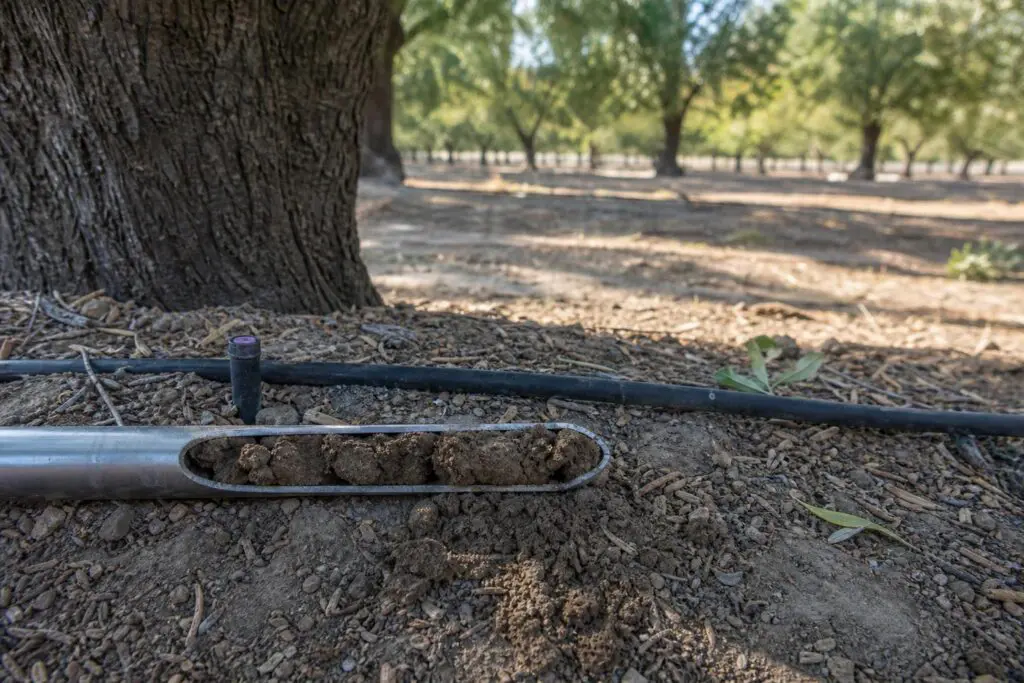
Measuring moisture helps describe those conditions, but sensor placement determines how useful the reading will be. UC’s soil-moisture monitoring background identifies several purposes: estimating soil water-holding capacity, following water movement after rain or irrigation, identifying the depths from which roots extract water, and tracking seasonal extraction patterns.
The document distinguishes instruments that measure water content from those that measure soil matric potential, or how tightly soil holds water. Measurements at multiple depths can describe conditions through the root zone. A shovel or auger also allows a field assessment based on soil feel and appearance, although that assessment is subjective.
Representativeness remains a central limitation. UC identifies variable soils, developing root systems and irrigation systems that wet only part of the orchard floor as factors affecting sensor placement. Its monitoring example found substantial differences in stored soil water among measurement points within a small area around individual trees. One reading therefore requires context about where it was taken.
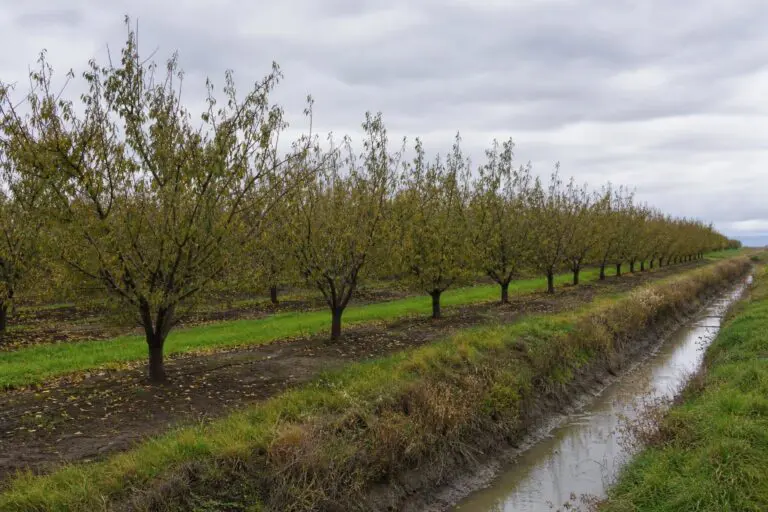
Pierce adds a specific caution for prune orchards: edge probes can report less moisture than interior locations because of compaction, higher temperatures and reduced irrigation coverage. He recommends prioritizing representative locations. For an iron or zinc investigation, Kreps’s chemistry checks and UC’s moisture guidance address different parts of the problem: water bicarbonate and alkalinity describe chemical pressure, while root-zone observations and representative moisture measurements describe the conditions in which roots must function.