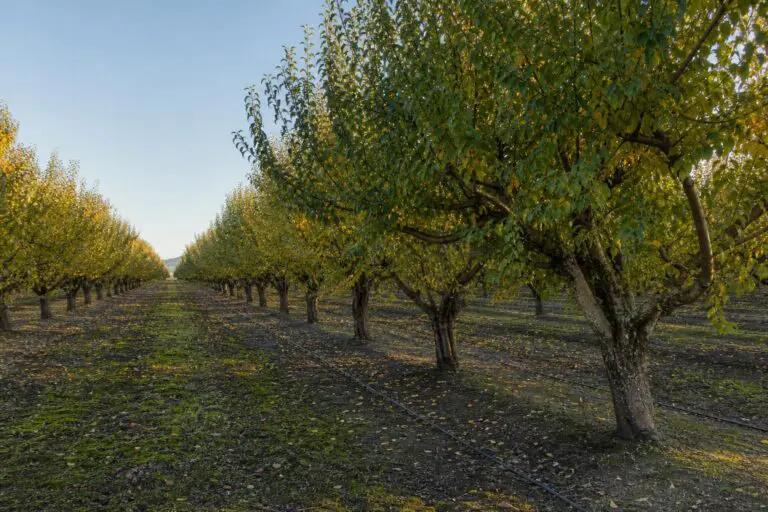
Clearing orchard drainage after harvest can help prevent two problems that may not show their full effects until spring: oxygen-starved roots and Phytophthora root and crown rot. In guidance published Oct. 26, UCCE orchard advisor Jaime Ott urges growers to prepare for excess water and document any flooding so they can track damage and recovery.
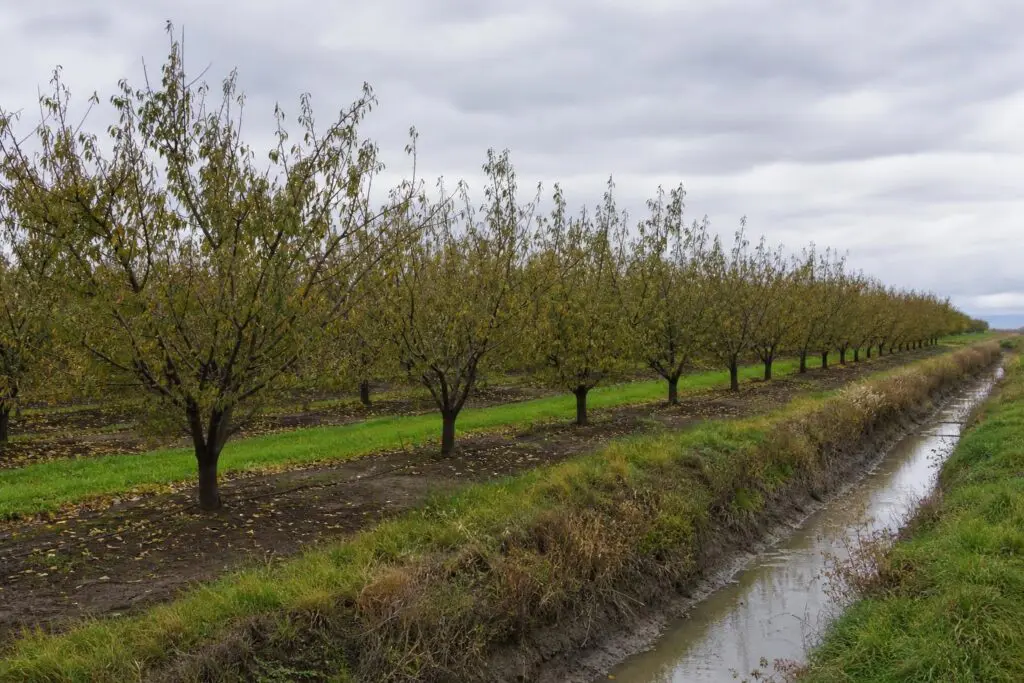
Ott, who serves Tehama, Shasta, Glenn and Butte counties, recommends checking drainage ditches and culverts for obstructions and making sure drain tiles work. Where appropriate, trenches can route standing water away from trees, while berms may help protect flood-prone orchards from overflowing waterways. The goal is to keep water moving through and out of the root zone.
Keep drainage open and protect soil structure
Older UCCE guidance, published in 2017, explains why a backed-up ditch deserves attention: standing water in the ditch indicates water at the same level or higher in the adjacent orchard’s soil profile. Low-lying blocks and heavy-textured soils are especially vulnerable. Roots need oxygen to support the processes that drive growth and water and nutrient uptake.
Protecting soil structure is another part of preparation. Ott advises keeping equipment out when orchard soils are wet because traffic causes more compaction under those conditions. Cover crops or resident vegetation can improve infiltration, reduce runoff and erosion, and support earlier equipment access. Their leaves can also help draw excess moisture from saturated soil.
Separate waterlogging from disease
Flooding and saturated soil can cause both waterlogging and Phytophthora damage, but the problems are different. Waterlogging occurs when water displaces the oxygen roots need, not because an aggressive pathogen attacks them. Phytophthora root and crown rot is a disease caused by organisms that take advantage of wet conditions to infect tree tissue.
Duration and season affect the risk. Ott describes waterlogging as generally developing over days to weeks, with standing water more damaging than moving water and saturation during active growth more harmful than during dormancy. The 2017 UCCE background explains that dormant trees generally tolerate saturation longer because their respiration rates are lower in cool winter conditions.
Neither problem necessarily produces obvious symptoms while floodwater is present. After dormancy, waterlogged trees may break bud late, develop yellow leaves and show weak growth. Ott says waterlogging more often causes gradual decline than sudden collapse, although severe, continuing saturation can kill trees. Examining roots may reveal missing fine roots and dead medium or larger roots.
Phytophthora can also cause yellow leaves, weak growth and a loss of fine roots. More distinctive signs include amber-colored gum associated with trunk cankers and sharply defined boundaries around dead tissue on larger roots. Trees may collapse after spring budbreak or as weather warms in early summer. Waterlogging alone does not produce those distinct tissue boundaries or trunk gumming, Ott explains.
Young trees warrant particular attention after flooding. Ott identifies trees up to three or four years old as more susceptible to Phytophthora infection and more likely to die if infected. Floodwater can also allow infection to begin as high on the trunk as the water reached, rather than only near or below the soil surface.
Document flooding and irrigate cautiously
If water enters an orchard, record when flooding began, which areas were affected and how long water remained. Add the date symptoms first appeared. Ott advises retaining damaged trees for a time in many cases, both for insurance purposes and to see which recover. That patience is particularly relevant when waterlogging is the main problem.
Spring irrigation needs special care because both conditions damage roots and reduce water uptake. Affected trees may have shallower root systems and may need shorter, more frequent irrigations. Ott recommends combining pressure-chamber readings with soil-moisture monitoring: a damaged tree can appear water-stressed even when adding water will not help and could worsen saturated conditions.
Recovery may take a year or two after prolonged flooding or saturation, according to Ott. Some waterlogged trees can recover as new feeder roots replace those lost, as the older UCCE guidance explains. Continue watching affected trees as growth resumes and temperatures rise, when root damage that was difficult to see during winter may become apparent.