Rain-disrupted almond harvest requires more than getting kernels dry enough to haul. Wet hulls can create problems at the huller even when kernel moisture is acceptable, and damp almonds can lose quality while waiting in windrows or trailers. Guidance from Mel Machado of Blue Diamond Growers and Michael Roots of the Almond Board of California puts field drying and processor coordination first.
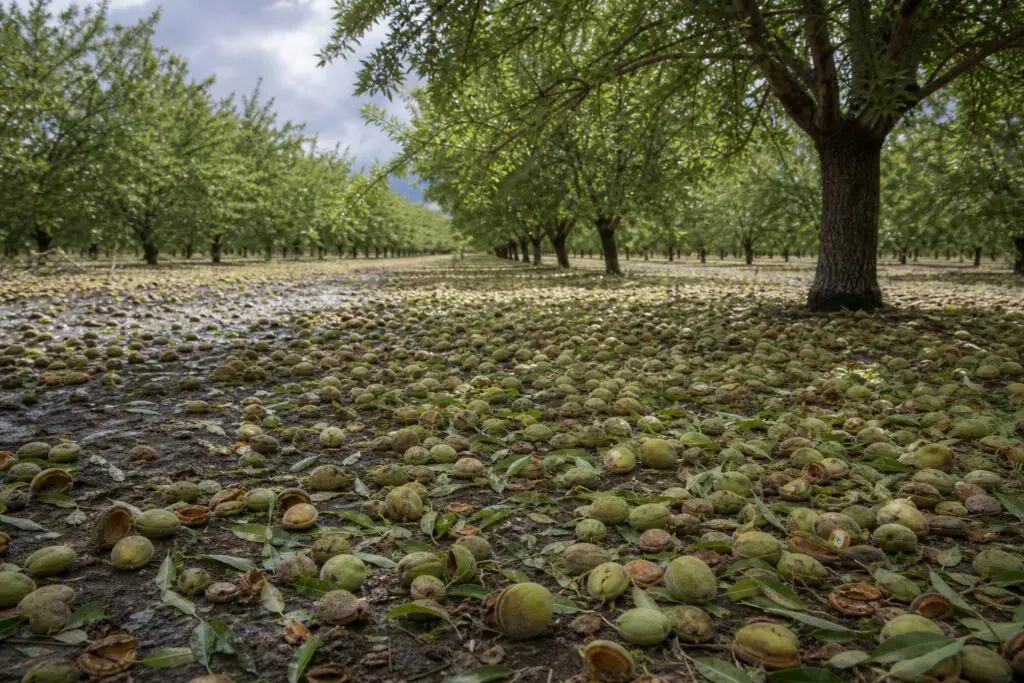
Machado, Blue Diamond’s chief agricultural officer, advises leaving nuts on the tree as long as practical when wet weather is forecast. His central caution is straightforward: avoid putting wet or immature nuts onto wet ground. Harvest decisions also depend on soil conditions, the amount of rain, the short-term forecast and whether the crop is still on trees or already down.
Immaturity and rain-wetted nuts are different problems. Machado distinguishes green almonds, which have not matured, from mature almonds that have become wet. A moisture reading alone does not resolve that difference. He also cautions that readings depend on the sample being tested, while moisture can vary substantially within a single lot.
Give the orchard floor time to dry
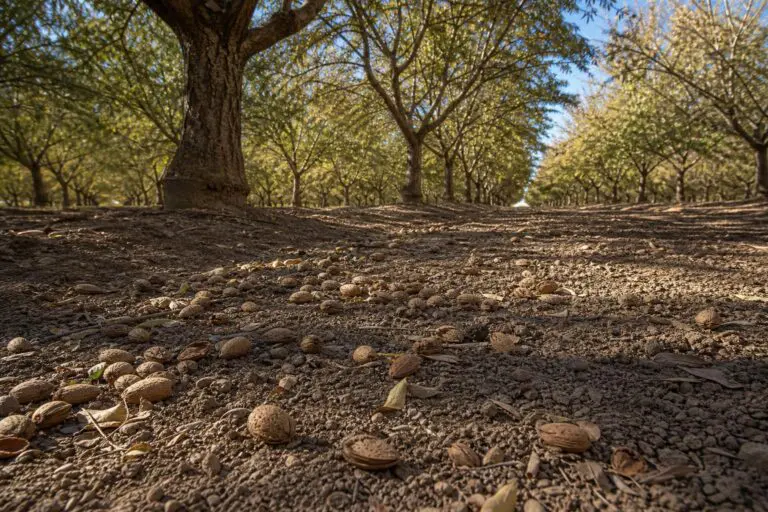
For almonds already shaken, Machado advises against rushing to sweep them into windrows. Allow the orchard floor to dry enough that nuts will not stick to the soil. Roots, the Almond Board’s field outreach manager, says keeping almonds spread out favors drying. Where an opening pass has already been made, he recommends waiting until nuts dry again before closing the windrow.
Once nuts must be windrowed, keeping soil and leaves out of the crop becomes a quality concern as well as a handling issue. The wet-harvest guidance warns that damp windrows containing that debris can develop microbial activity and heat. Machado recommends conditioning windrows when possible to remove debris and improve drying in the field.
Wet, heavy windrows may also need to be opened mechanically. Machado describes growers turning windrows with a sweeper or using spring tines to break them open. These are options for promoting drying, not substitutes for judging field conditions. Soil type and rainfall help determine when equipment can enter the orchard, and the crop’s stage of harvest remains part of that decision.
Drying conditions can differ within and between orchards. Machado notes that thick Monterey hulls hold moisture, while Independence can have a range of maturity because of its longer bloom period. Large or older trees can shade the orchard floor. Row orientation also affects exposure, with east-west rows drying more slowly than north-south rows in the conditions he describes.
Check hull moisture before pickup and hauling
Before hauling, Roots emphasizes checking hull moisture as well as kernel moisture and communicating with the huller. Hulls can absorb enough water to exceed acceptable receiving conditions even when kernels are ready. Overly wet hulls can cause trouble from unloading through hulling and shelling, making the processor’s assessment an essential part of the decision to move a lot.
Machado’s handling rule becomes especially important after pickup: keep high-moisture almonds moving. He warns against leaving them in trailers or stockpiles, where microbial activity can generate heat and damage kernels. Coordination among the grower, harvester, huller-sheller and handler is critical. His stated goal is to send the driest portion of the crop to the huller first.
Keep records that help explain quality losses
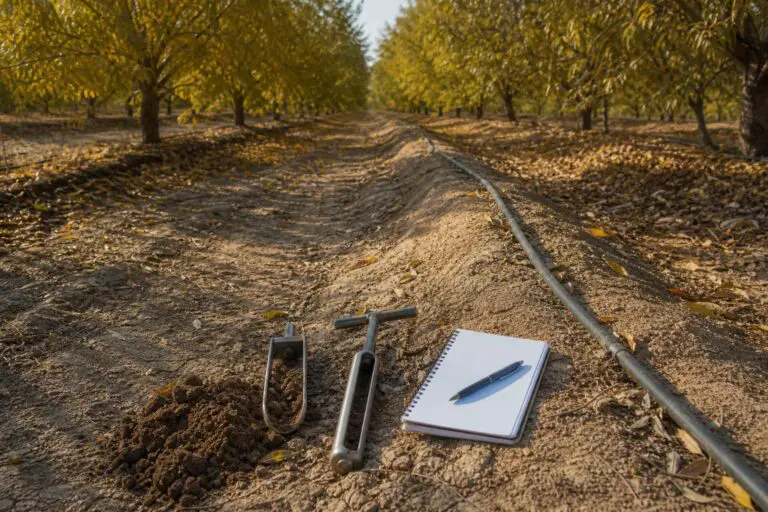
The record of a difficult harvest should preserve more than the final yield. Save harvest timing, yield results and processor grade sheets by block whenever possible. Photograph uneven maturity, weak areas, unusual drop or concentrated damage while those differences remain visible, and mark their locations on a block map. Ranch-wide averages can conceal differences that deserve separate investigation.
A processor’s total reject percentage describes an outcome, not necessarily its cause. Damage may involve insects, disease, mold, staining, shrivel, blanks, foreign material or harvest timing. A high reject figure should not automatically be labeled rain damage. The useful questions are what kind of damage occurred and whether it was widespread or concentrated in particular parts of the block.
Compare those results with irrigation records, soil or plant water measurements, tissue and soil analyses, pest monitoring and application dates. Review maps, photographs and grade sheets with the grower and pest control adviser, block by block. Record what needs further investigation, who will follow up and when, rather than turning an unexplained quality loss into an assumed cause or an automatic treatment change.