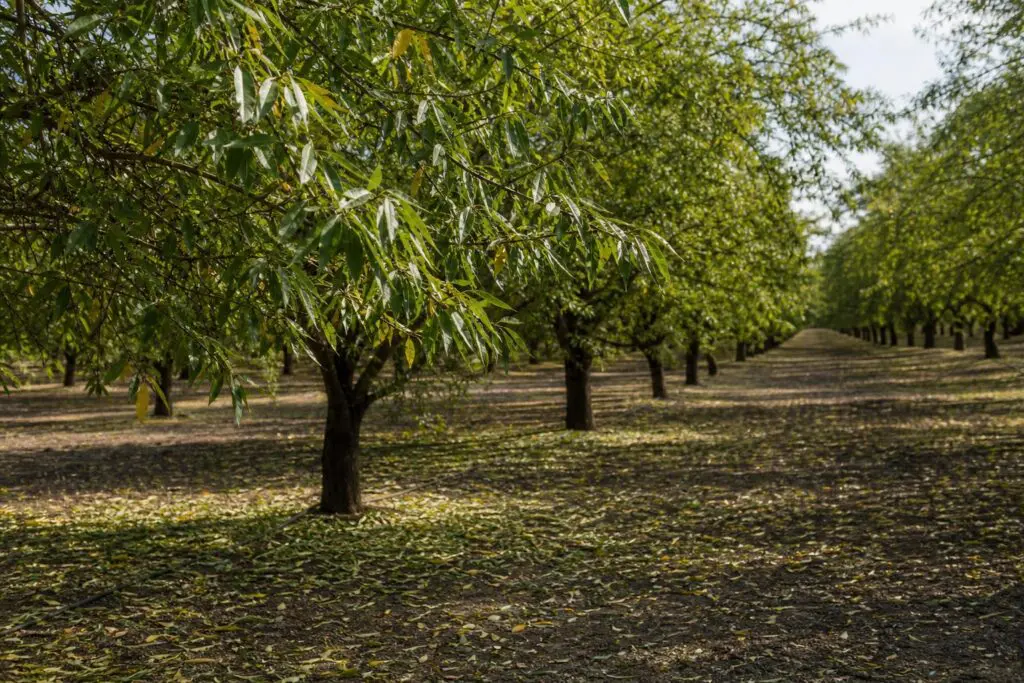
Almond red leaf blotch has been reported throughout the Sacramento Valley, according to a September 2026 update from UC Cooperative Extension orchard advisor Jaime Ott. For growers, a central challenge is timing: the fungus infects young leaves during spring rains, but visible damage can take weeks to appear, well after the infection occurred.
That regional assessment follows the disease's first California identification in 2024 in the northern San Joaquin Valley. In an October 2025 report, UC Davis plant pathologist Florent Trouillas and UCCE farm advisor Luke Milliron documented confirmations in Yolo, Sutter and Butte counties during that summer. Those were earlier detections, not new findings this fall.
The consequences can extend beyond the season when damaged leaves appear. Trouillas and Milliron explain that premature leaf loss reduces the carbohydrates trees accumulate before the next growing season, potentially lowering future yields. The disease affects leaves, so its production effects stem from damage to the canopy and the tree's ability to build reserves.
Symptoms lag infection by weeks
Red leaf blotch is caused by the fungus Polystigma amygdalinum. Infected leaves can remain outwardly normal for roughly a month to six weeks, according to the UC reports. That delay separates the weather that favors infection from the yellow, orange and reddish-brown blotches growers eventually see, making symptom timing an imperfect guide to when infection happened.
Early symptoms generally appear from late April into May, although the UC accounts give slightly different seasonal ranges. Small, pale yellow spots develop into larger orange blotches with reddish-brown areas. By June and July, severely affected leaves can die, curl and drop. The progression unfolds over weeks rather than appearing all at once.
Researchers Renaud Travadon, Florent Trouillas and Alejandro Hernandez also report that new symptoms can appear through June on leaves of actively growing shoots. Ott emphasizes an important distinction from rust: red leaf blotch does not produce successive rounds of new infections from spores generated during the growing season. The year's infections are established in spring.
Fallen leaves carry the fungus into spring
The fungus bridges one growing season to the next in infected leaves that fall to the orchard floor. During winter, fungal structures called perithecia develop in that litter. They contain ascospores, the spores responsible for spring infections. Rain releases those spores into the air, where they can reach newly emerging almond leaves.
UC researchers tracked that process with spore trapping in 2025. In the San Joaquin Valley, the first observed peak in spore release followed rain in late February and early March, around the time leaves began emerging after petal fall. Additional peaks followed rainfall in March and late April, linking spore activity to spring wet weather.
Their findings place the observed infection window approximately between late February or early March and late April or early May, primarily during and after rain. These are seasonal ranges, not fixed calendar boundaries. The researchers' account draws on one field-research season, so the observations should not be read as a multiyear forecast for every California orchard.
Why a clean canopy can be misleading
Together, the delayed symptoms and rain-linked spore release explain why a clean-looking canopy early in spring does not necessarily mean leaves have escaped infection. They also explain why the UC reports distinguish preventing infection from responding to visible damage. Ott reports that treatment after symptoms appear is ineffective against infections already established in the leaves.
Fallen leaves therefore matter as more than the visible end result of summer damage: they hold the fungus through winter and supply the next spring's infectious spores. That carryover connects the previous season's disease with the next season's emerging foliage. It also makes the orchard floor part of the disease cycle, alongside rainfall and leaf development.
Growers who suspect red leaf blotch can contact their local UCCE farm advisor, as Trouillas and Milliron advise. Questions about orchard-specific management belong with UCCE and a pest control adviser. The practical distinction is between identifying damage when it becomes visible and understanding the earlier spring conditions under which those leaves became infected.