Santa Cruz County is testing steam treatment across 25 acres of Pajaro Valley berry fields to assess whether it can offer a practical alternative to pre-plant soil fumigation near schools and other sensitive sites. A November 10 update from the California Department of Pesticide Regulation describes a pilot now moving into field comparisons and longer-term disease monitoring.
The $175,000 DPR-funded project brings together County Agricultural Commissioner David Sanford, University of California, Santa Cruz researchers, berry growers and community members. Fields include ground being prepared for blueberries, raspberries and strawberries. The central question is commercial effectiveness: whether steam can control soil problems well enough to become a workable option beyond smaller research trials.
DPR first announced the project on August 6, identifying summer 2026 as the planned start and saying research would continue into 2027. Its November account adds the acreage, participating crops and sampling schedule. The project remains a test of the technology, rather than a finding that steam can replace conventional fumigation.
Comparing treatment performance over time
Researchers are comparing soil from steamed fields, fumigated fields and untreated control plots. Those comparisons address two different questions: whether steam performs better than leaving soil untreated, and how it measures up against fumigation. The distinction matters because the encouraging results reported from earlier UCSC work were measured against untreated controls, not presented as proof of equivalence to fumigation.
UCSC plans to sample soil at seven, 30 and 60 days to measure pathogens and weed seeds and assess how long each treatment's effects last. Researchers will also track disease incidence into spring and summer 2027. That follow-up extends the evaluation beyond conditions immediately after treatment to disease outcomes as the berry crops grow.
Steam treatment applies heat to soil before planting to reduce soil-borne pests, disease organisms, nematodes and weed seeds, according to DPR. UCSC plant pathologist Jenny Broome leads the research. She has worked with steam since 2011 and says using it at a large field scale has historically posed a challenge.
Fields near schools shape the test
The participating plots were selected for their proximity to schools and other sensitive locations. DPR says growers near homes and schools must navigate fumigation mitigation requirements, including buffer zones and timing restrictions. The pilot is examining a potential alternative in places where those operating constraints and community concerns about pesticide exposure overlap.
Community involvement helped shape the project rather than arriving only after the research was organized. According to DPR, Sanford's office and community leaders sought state support to expand UCSC's work. Safe Ag Safe Schools, a coalition focused on reducing pesticide exposure threats near schools and child-care sites, participated in that effort and in local discussions about alternatives.
Early results leave scale questions open
The expanded pilot builds on UCSC research funded by the California Department of Food and Agriculture in 2024. Under that funding, Broome and colleagues conducted steam trials at two organic and two conventional farms. The earlier work provided a basis for further testing, but it does not settle how the larger Pajaro Valley effort will perform.
“We are seeing really beneficial increases in yield and control of disease in all four farms compared to untreated controls,” Broome said in DPR's update. That is a preliminary observation from the earlier trials. It should not be read as a completed result for the 25-acre pilot or as a quantified comparison with chemical fumigation.
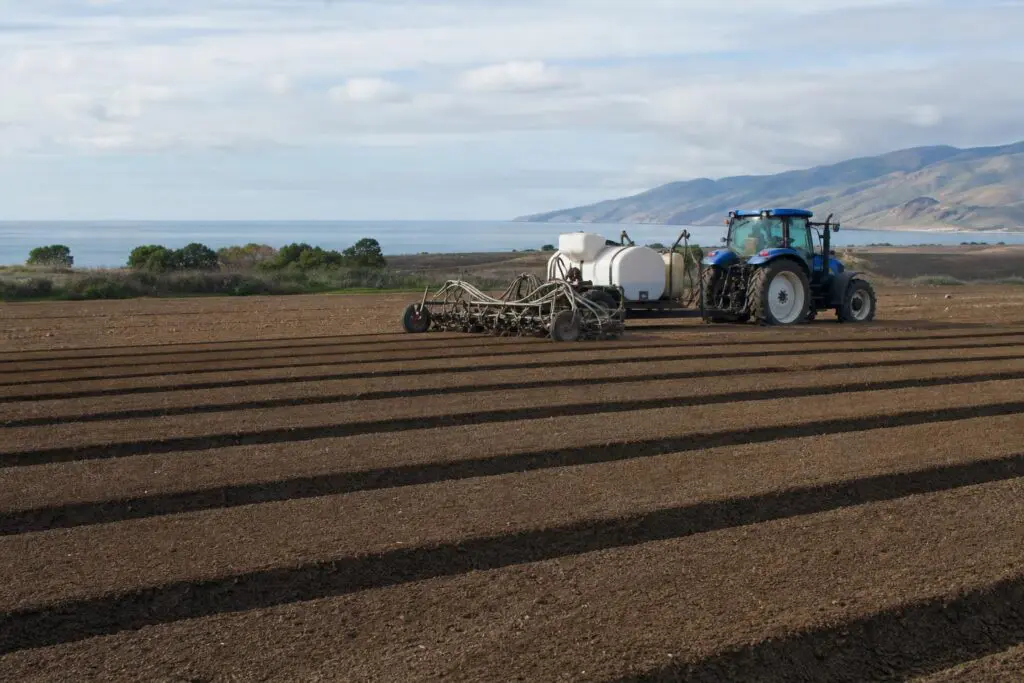
Agricultural equipment developer High Degree supplied the steam injection machinery and also worked with UCSC on the earlier research. Its chief executive, Austin Bowie, identified two remaining tests in DPR's account: demonstrating performance comparable to fumigation and demonstrating that the treatment can work at field scale. Equipment refinement is continuing alongside the research.
The broader search for alternatives also remains open. DPR says research by the California Council on Science and Technology found no single alternative that currently provides a universal, one-to-one replacement for the fumigants it examined. In Pajaro Valley, the next assessments will focus on treatment persistence and disease incidence through the 2027 growing season.