Fall orchard fertilizer decisions should start with a question: Does the block lack nutrients, or is something preventing trees from taking them up? September guidance published in West Coast Nut urges growers to review tissue analyses alongside irrigation performance and soil conditions before making routine postharvest applications, rather than treating every weak block alike.
That distinction separates a targeted correction from another application that may miss the problem. The publication’s September 15 orchard-management article identifies irrigation uniformity, root health, salinity, pH and application timing as possible reasons for poor uptake. A fertilizer decision therefore needs more context than a disappointing yield or a single tissue result.
Build the diagnosis block by block
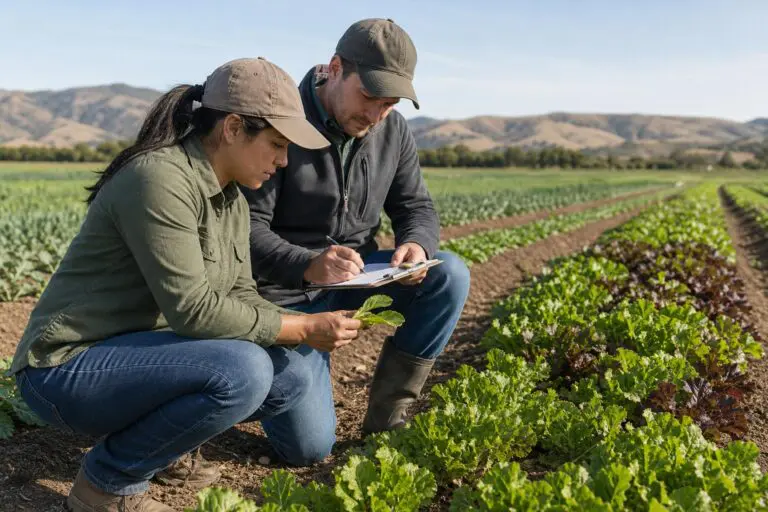
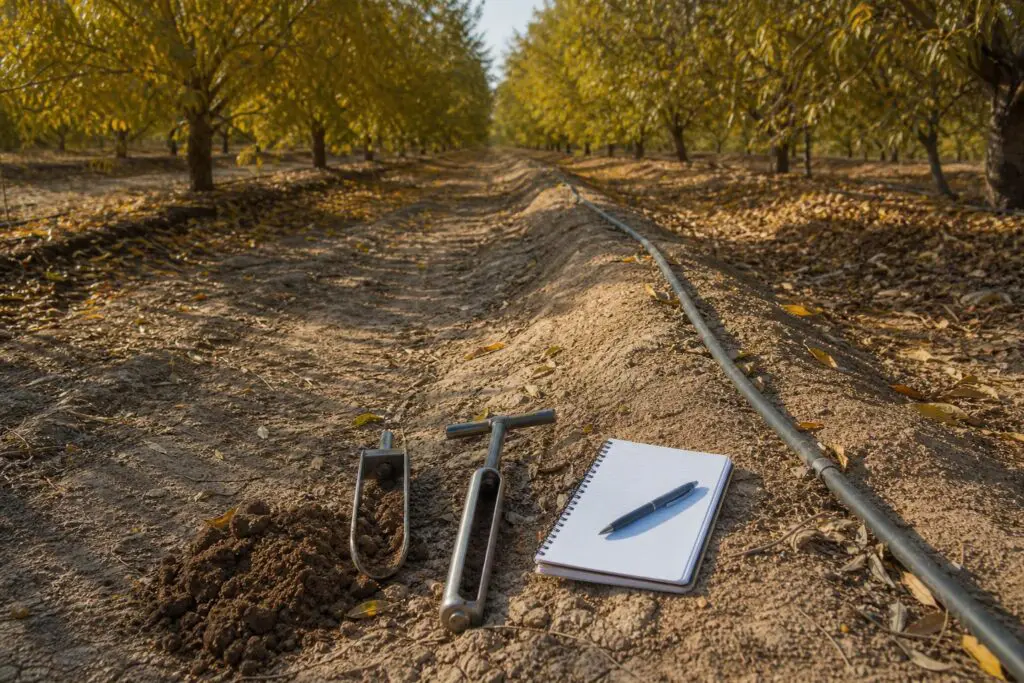
Start with records at the block level. The September 15 article recommends comparing yield and grade information with irrigation records, applied water versus estimated crop demand, soil moisture or plant water status measurements, tissue and soil analyses, and application dates. Look for weak areas that coincide with plugged emitters, poor infiltration, soil variability or root problems.
Agronomist Gary Osteen makes a similar case in his September 26 column: review tissue analyses before applying nitrogen or boron across the orchard. When levels already exceed the recommended range, he says a postharvest application may be reduced or skipped. Low levels, by contrast, warrant attention rather than automatically postponing the issue until spring.
Boron requires particular care. Osteen cautions that excessive boron can damage trees, including pistachios, and recommends letting tissue results, crop history and orchard conditions guide the rate instead of repeating last year’s program. The broader September guidance also calls for reviewing yield, crop removal and water quality before deciding whether nitrogen or boron is needed.
Check water delivery and salinity
Water management belongs in that review, not after it. Osteen prioritizes restoring tree water status when harvest operations allow, then verifying that applied water matches crop demand. His recommendation is to calculate delivery and compare it with conditions in the orchard, rather than assuming that an irrigation run supplied the amount trees needed.
The September 15 guidance adds an important qualification: there is no single postharvest irrigation schedule that fits every orchard. Where harvest reduced or interrupted watering, adjustments should reflect measured demand, soil conditions, weather, system performance and remaining canopy activity. Those factors matter when deciding what a block can use, not just what equipment can apply.
Fertilizer form introduces another constraint. The September 25 Field Notes column advises checking salinity and fertilizer salinity index when selecting nutrient sources. It also distinguishes soil textures, recommending smaller, more frequent applications in lighter soils. That is conditional guidance tied to the block, not a universal application rate or schedule.
Placement matters as well as selection. The Field Notes column emphasizes moving soluble nutrients into the wetted root zone and considering how irrigation carries them through the soil. Its discussion ties nutrient placement to the wetting pattern. That makes irrigation performance part of fertilizer planning, rather than a separate question to address after choosing a material.
Separate feeding from amendment work
Separate an immediate nutrition objective from a longer-term amendment objective. The Field Notes column favors soluble nutrition where appropriate while also addressing soil amendment needs. That does not make soluble fertilizer the automatic choice for every fall application, or establish that one form will outperform another across different orchard conditions.
Osteen offers a different conditional option: a concentrated band of dry potassium can be practical in almonds when it fits the block’s needs. He also recommends planning fall potassium work while soils can support equipment. Together, the columns support matching the approach to the orchard rather than ranking all dry and soluble materials as interchangeable solutions.
Turn the review into a short block-level work list. The September 15 article recommends identifying where more sampling is needed, which irrigation problems require repair and what should be monitored earlier next year, then assigning follow-up responsibility and timing. Keep those tasks distinct from fertilizer purchases so an unresolved delivery or uptake problem does not become another routine application.