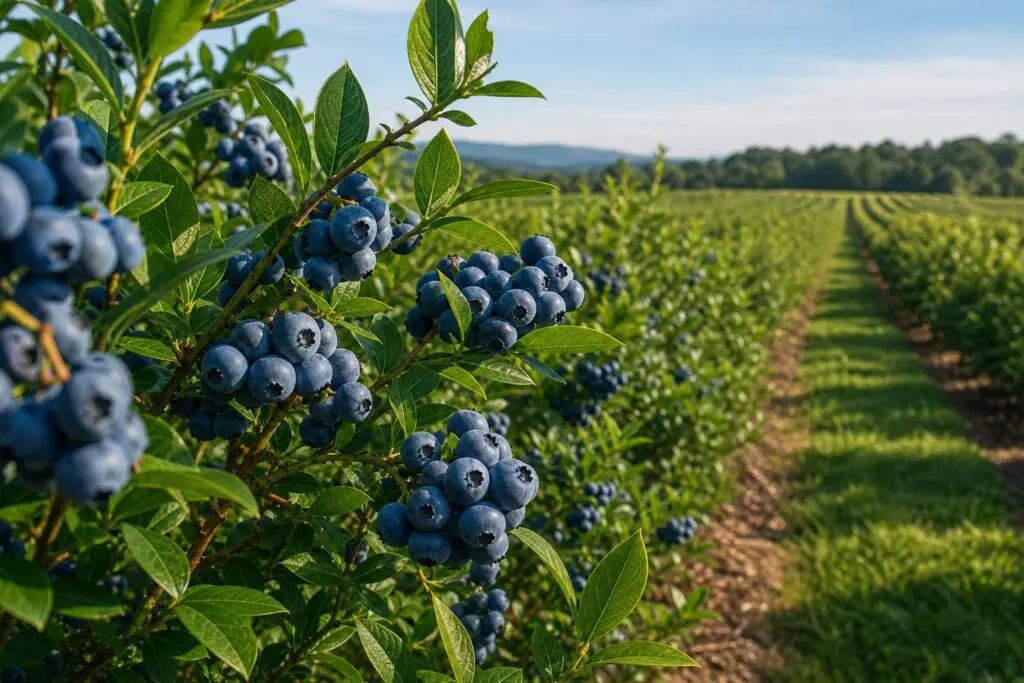
Drones moved birds during most recorded flights in a California blueberry study, but the early results do not yet show that the approach delivers lasting crop protection or pays for itself. The distinction is important for growers weighing a new deterrent against familiar challenges with bird pressure during ripening and harvest.
Reporting in Progressive Crop Consultant describes research by UCCE’s Raymond Mireles, with funding from the California Blueberry Commission. Across 27 flight observations, birds flushed or moved a short distance in 15 instances, departed in eight, and showed other responses, including alert behavior or no response, in four.
Together, the first two categories represent 23 of 27 observations, or about 85%. Actual departures accounted for eight of 27, or about 30%. Those calculated percentages describe the observed responses. They are not measurements of fruit saved, yield improvement or season-long control.
Moving a bird is not the same as protecting a crop
The difference between a short movement and departure is central to interpreting the trial. A bird that relocates nearby may still return to feed. Even a departure does not establish how long the bird remains away or whether repeated flights would produce the same response later in the season.
| Observed response | Number of observations |
|---|---|
| Flushed or moved a short distance | 15 |
| Departed | 8 |
| Other response | 4 |
The reported observations also differed by species. Cedar waxwings moved readily, while house finches required a closer approach. That suggests a single response percentage can conceal meaningful differences in the birds using a field. It does not establish a reliable operating distance or a universal treatment for every blueberry site.
Monitoring helps define the problem
The research included audio monitoring at three sites in the Delano and Kingsburg areas from April 14 through June 16, spanning ripening, harvest and the postharvest period. Activity was higher in the morning than the evening, with reported peaks around 7-8 a.m. Cedar waxwings and house finches were common.
These observations help describe when and where the research team encountered pressure. They should not be treated as a guarantee that every field will have the same daily pattern. For evaluating a deterrent, the relevant question is whether movement translates into less feeding and less damaged fruit under the conditions of the particular site.
UC IPM’s older Birds Pest Notes provide general context: damage varies with species and location, and monitoring should include the birds present, timing and actual injury. The guidance also describes habituation to frightening devices, with birds learning to disregard repeated signals. This helps explain why an immediate response alone is insufficient evidence of durable control.
Compare practical alternatives and costs
The UC guidance discusses netting as effective protection in small orchards, while recognizing its initial cost and the work involved. It is home-and-landscape guidance, last updated in 2010, rather than a commercial blueberry drone recommendation. Its value here is the broader comparison between excluding birds and trying to frighten them away.
For a grower evaluating a future drone service, a useful cost assessment would need more than the price of the aircraft. Operator time, repeat flights and the amount of crop actually protected would all affect the result. Those are evaluation questions, not economic benefits already demonstrated by these observations.
Aviation requirements add another practical consideration. The FAA identifies Part 107 as the framework for work or business operations using small drones weighing less than 55 pounds. Its guidance covers pilot certification, registration and operational requirements, with some operations needing waivers. Meeting aviation requirements is separate from demonstrating that bird deterrence works agronomically.
What the next research needs to establish
The reported next phase, planned for 2027, will examine operating conditions, sustained displacement, crop protection and economics. Those questions connect the early behavioral observations to the outcomes growers ultimately need: whether damage falls, whether the effect persists, and whether the benefit justifies the cost.
For now, the findings support continued testing of drones as a deterrent. They do not support replacing established protection practices on the assumption that an 85% movement response means an 85% reduction in crop loss. Keeping those measures separate makes the preliminary work useful without overstating what it has proved.