A backyard compost pile that smells foul or has dried out needs different repairs, according to UC Master Gardener Kevin Marini. In guidance published by UC Agriculture and Natural Resources on Nov. 2, he explains how balancing materials, moisture and airflow can keep decomposition working, while checking the finished compost helps avoid moving unwanted organisms into garden beds.
Marini, a UC Master Gardener of Placer and Nevada counties, starts with the mix. Compost ingredients fall into two groups commonly called greens and browns, but their actual color can mislead gardeners. Spent coffee grounds, for example, count as greens. Too many green materials can leave a pile dense, saturated, smelly and attractive to flies.
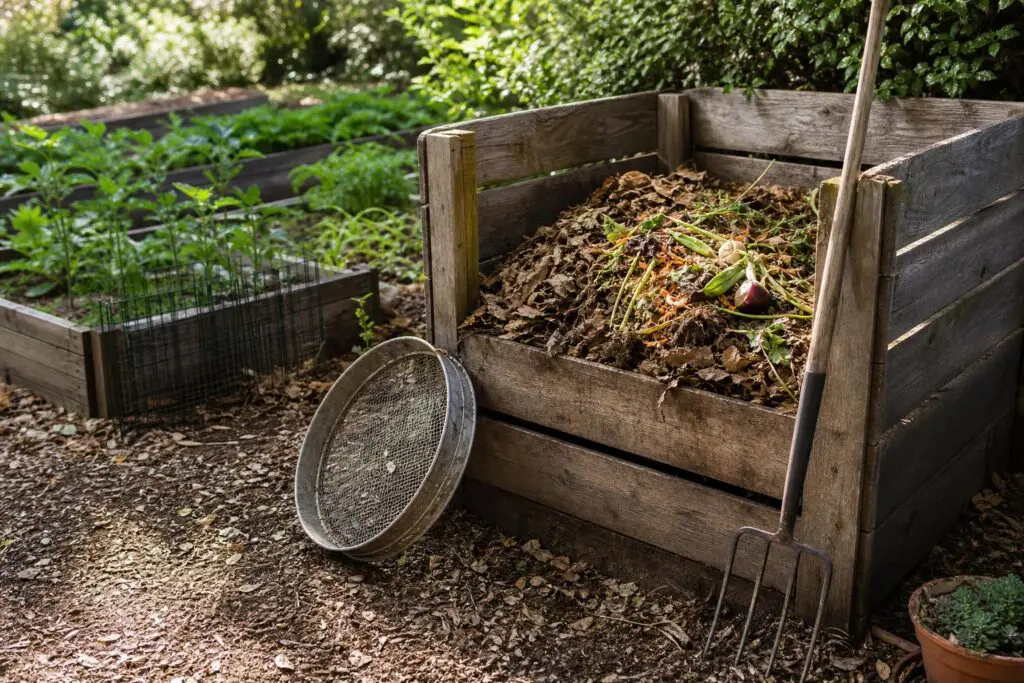
His basic mixing guide is equal volumes of greens and browns. That is easier when building a whole pile at once than when adding small amounts over time. For a continually fed backyard pile, he recommends pairing kitchen fruit and vegetable scraps with browns such as shredded paper, straw or dry leaves each time.
Match the repair to the moisture problem
Moisture provides another useful checkpoint: Marini recommends the dampness of a wrung-out sponge, rather than saturation. Kitchen scraps already contain water, so they contribute to the pile’s moisture along with any water added separately. A cover can sometimes help maintain that balance by shading the pile from summer sun or shedding winter rain.
When a pile becomes too wet, Marini recommends incorporating dry brown materials. They absorb moisture and create spaces that let oxygen enter. A saturated pile has low-oxygen conditions that can produce foul odors, slow decomposition and support maggots. Adding browns addresses both the excess water and the lack of air pockets.
A completely dried-out pile presents a different repair job. Marini says it is difficult to rewet without taking the pile apart, moistening portions and rebuilding it. Dry piles can also become nesting places for rats and mice or attract ants. That makes maintaining dampness a practical part of avoiding unwanted occupants, not just sustaining decomposition.
Keeping larger animals out can introduce another trade-off. A secure, enclosed bin can deny access to raccoons, rats and other visitors, but Marini cautions that bins with few vents may have poor airflow. Gardeners using them should closely monitor moisture because enclosed conditions can still become low in oxygen and develop odors.
Check what leaves and enters the pile
Before moving compost around plants, look at what is living in it. Marini describes a community of bacteria, fungi and visible organisms, rather than a material that should be free of life. He recommends identifying organisms and sifting out potential troublemakers, including earwigs, grubs, snails and centipedes, before applying compost around plants.
Disease prevention also starts before material enters the pile. In December 2024 UC garden guidance, Nanette Londeree advised keeping diseased leaves, stems and fruit out of home compost. Removing infected debris from the garden can help prevent pathogens from spreading, but putting that debris into the compost bin is not her recommended disposal route.
Londeree explains that many plant pathogens survive in debris or soil and can reinfect plants when conditions favor disease. Her advice is to destroy diseased material rather than compost it. For gardeners cleaning up a bed, that means separating infected plant parts from other yard material intended for the backyard pile.
Inspect incoming soil and compost
Incoming compost, mulch and soil deserve inspection, too. UC ANR’s May 2023 jumping-worm guidance advises checking those materials and examining potting soil before buying plants. It identifies coffee ground-like castings on the soil surface as a warning sign. The guidance also specifically advises against buying or using jumping worms for gardening or vermicomposting.
That caution concerns movement as well as worm selection. UC ANR explains that jumping worms can travel with plant material and soil particles on footwear, while their tiny cocoons can move with leaves, mulch, potting mixes and potted plants. Inspecting incoming materials therefore serves a different purpose from correcting the moisture or mix inside an existing pile.
For suspected jumping worms, the 2023 guidance directs gardeners to contact the California Department of Food and Agriculture or their local agricultural commissioner’s office. If identification is confirmed, work with the agency to prevent spread. Do not move known infested compost, mulch, topsoil or plants elsewhere, and clean dirt and debris from equipment and shoes before leaving an infested area.