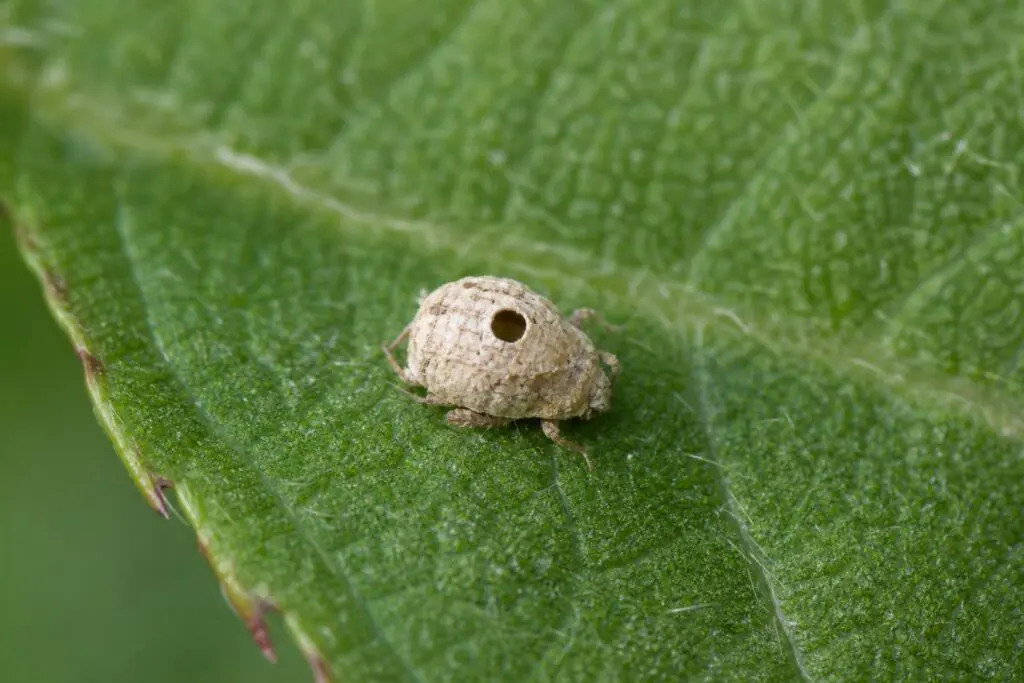
A crusty black or beige aphid can be evidence of a natural enemy at work, not simply a dead pest. UC Integrated Pest Management’s identification guide describes these altered aphids as “mummies.” A hole in one records another step: an adult parasitoid has emerged. For growers checking aphid colonies, those details help distinguish the pest itself from the remains left by a beneficial insect.
An October 26, 2026, UC Agriculture and Natural Resources post highlights parasitoids as natural enemies that can reduce pest populations. Read alongside UC IPM’s July 2025 identification guide, it offers a practical way to recognize their activity through changes in hosts. The useful clues include hardened aphid bodies, discolored scales and insect eggs with emergence holes.
These signs answer a limited but valuable question: Has a parasitoid used this host? They do not, by themselves, show whether natural enemies have reduced a field’s pest population enough. Recognizing the evidence and judging the overall pest situation are separate tasks.
What an aphid mummy records
UC IPM’s aphid example begins with a female wasp placing an egg inside an aphid. The developing larva feeds within the host and kills it, then pupates before emerging as an adult. Most of that process takes place out of sight. The mummy and its eventual exit hole provide visible evidence of what happened inside.
Color alone is not the guide’s only identifying feature. UC describes the mummies as crusty as well as black or beige. That combination matters when comparing an altered aphid with other aphids nearby. The emergence hole adds a different piece of information: it indicates that the adult has already left, rather than merely showing that the host was attacked.
That distinction gives the observer two different kinds of evidence. A mummy is an altered host; a mummy with a hole also bears the mark of emergence. Neither observation supplies a count of the living aphids elsewhere on the plant. Keeping those observations separate avoids treating a conspicuous sign of beneficial activity as a complete picture of the infestation.
Match the sign to the host
Aphids are not the only hosts that retain visible evidence. UC IPM illustrates parasitized scale insects that have turned blackish on a twig. Adult parasitoids leave exit holes when they emerge from the scales. The guide also shows a whitefly host turned black by a parasitoid, extending the recognition approach beyond aphid colonies.
Insect eggs provide another place to look for changes. The October UC post describes stink bug eggs attacked by Trissolcus wasps: their shells darken, and emerging adults leave rough-edged, irregular holes. The recognition value lies in the changed shell and opening, without needing to observe the wasp laying an egg.
Hole shape should stay tied to the particular example. UC IPM’s whitefly illustration identifies a circular emergence hole, while the October post describes an irregular opening in a stink bug egg. These are host-specific descriptions, not a single universal pattern that every parasitoid leaves behind.
UC IPM also illustrates a black corn earworm egg containing a Trichogramma wasp larva beside white, unparasitized eggs. In that example, the contrast helps make an otherwise hidden interaction visible. Together, the egg and scale examples broaden the search beyond adult beneficial insects to the hosts that preserve evidence of their activity.
Keep beneficial insects and host remains distinct
Not every beneficial insect near an aphid colony produces mummies or develops inside a host. UC’s undated beneficial-insect identification handout describes lady beetle larvae as elongated and blackish, with orange bands or spots. Both larvae and adults eat aphids and other soft-bodied insects. Recognizing the larval form adds another useful observation without confusing it with an altered aphid.
The same handout identifies flower fly larvae as feeders on aphids and other small, soft-bodied insects. Adult flower flies have black-and-yellow abdominal bands and two wings. For identification, the life stage matters: the handout assigns aphid feeding to the larvae, rather than relying on the familiar appearance of the adult.
A useful reading of these UC examples therefore keeps three observations distinct: the pest, a visibly altered host and a beneficial insect seen nearby. The first describes what is present; the second can record parasitoid development or emergence; the third requires identification of the insect and its life stage. Combining them into a single label loses information.
For an aphid mummy, the immediate next distinction is straightforward: note its crusty appearance and whether it has an emergence hole. For scales or insect eggs, compare the host and its changes with the matching UC example. The result is a more specific observation of natural-enemy activity, while leaving the separate question of adequate pest suppression open.