UC Davis plant ecologists Justin Valliere and Jennifer Funk propose a different way to understand stubborn invasive weeds: examine how they combine advantages that most plants must trade against one another. Their framework could help identify native plants better suited to compete during restoration, a potential tool for California rangelands affected by weeds such as yellow starthistle.
An October 16 UC account describes their review of published research and proposed framework in Trends in Ecology & Evolution. The researchers argue that focusing on one strength, such as rapid growth or drought tolerance, can miss combinations that make an invader successful. This is a proposed approach to understanding and managing invasions, not a newly validated planting practice.
When weeds escape ordinary trade-offs
Most plants face limits on how they allocate resources. Producing tissues that support fast growth can come at the expense of tougher tissues that withstand stress. Investing in chemicals or structures that discourage herbivores can also leave fewer resources for growth. Valliere and Funk examined those trade-offs, along with the balance between competition and colonizing new ground.
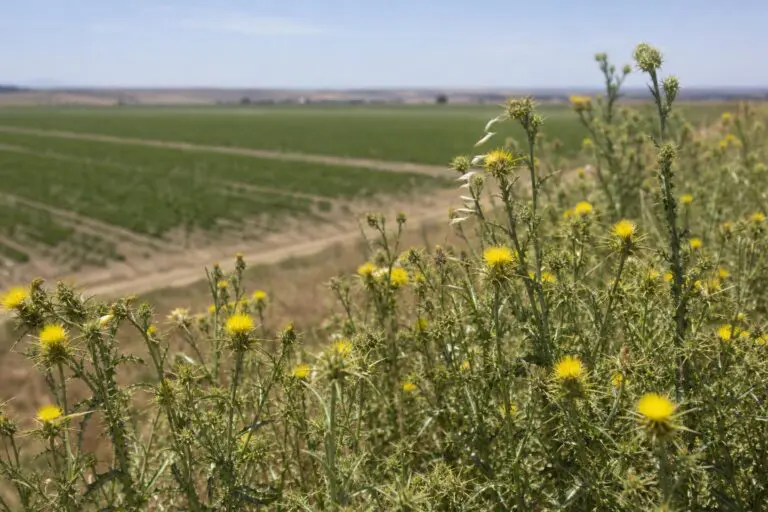
That last trade-off helps explain their interest in yellow starthistle. Plants that spread readily into disturbed areas are often weaker competitors once they arrive, while strong competitors may spread less effectively. According to the UC account, yellow starthistle combines both abilities. Its relatively large seeds help seedlings emerge faster and compete, while its seeds also disperse effectively.
The researchers describe other ways plants can escape the usual constraints. Common stork’s-bill combines fast growth with high water efficiency in the Sonoran Desert. Common mullein in introduced areas grew faster and competed more strongly than plants in its native range while retaining defenses against herbivores. These examples concern different trade-offs, rather than a single formula shared by every invader.
For restoration, Valliere and Funk suggest looking for native plants with combinations of traits resembling those that help invaders succeed. The goal is not simply to find the fastest-growing species or the most drought-tolerant one. Their proposal is to consider multiple abilities together when identifying candidates that might compete more effectively in invaded areas.
An older rangeland trial shows competition at work
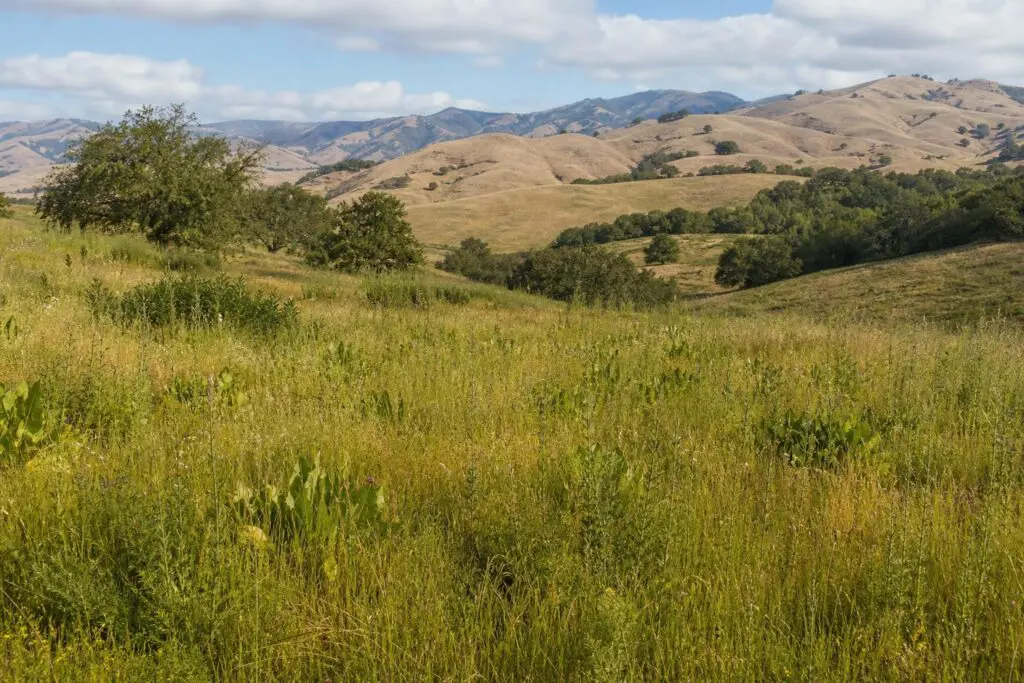
A separate Northern California field study provides an older example of how establishing other plants can suppress yellow starthistle. Published July 26, 2017, the study by Josh S. Davy, Katherine Dykier, Tony Turri and Elise Gornish compared 22 forage types from 2009 through 2014. It examined establishment and persistence in Mediterranean annual rangeland, not the new trade-off framework.
The trials took place in Paskenta, Tehama County, on two nearby sites with different soil types. The researchers tested a diverse group that included native and nonnative plants, annuals and perennials, grasses and broad-leaved species. That design addressed a practical forage question: which plants could establish and maintain cover over time under the local conditions?
Several perennial grasses maintained more than 50% cover: Berber orchardgrass, Flecha tall fescue and several hardinggrass varieties. In 2014, the successful perennials produced more than three times as much dry matter as the unseeded control. They also suppressed annual grasses and yellow starthistle cover, linking persistent forage cover with weed suppression in that trial.
The annual grasses soft brome and annual ryegrass performed well in the shorter term, while forage brassica and chicory also proved viable options in the study. But the authors said these plants would likely need frequent reseeding to maintain dominance. For sustained dominant cover beyond three years, their results favored perennial grasses.
Local conditions still govern results
Those results do not make the tested forages a universal planting prescription. The study authors emphasized that a grass’s ability to suppress other plants depends on climate and seasonal growth. They discussed earlier research in which growth during late spring and early summer helped compete with starthistle, while winter growth mattered for suppressing invasive annual grasses.
The two research efforts address different questions. The older trial measured forage establishment, persistence and weed suppression at specific Northern California sites. Valliere and Funk’s framework asks why some invaders combine strengths that normally conflict, and whether native restoration candidates could do the same. Successful forage competition in the earlier trial does not demonstrate that proposed native-plant approach.