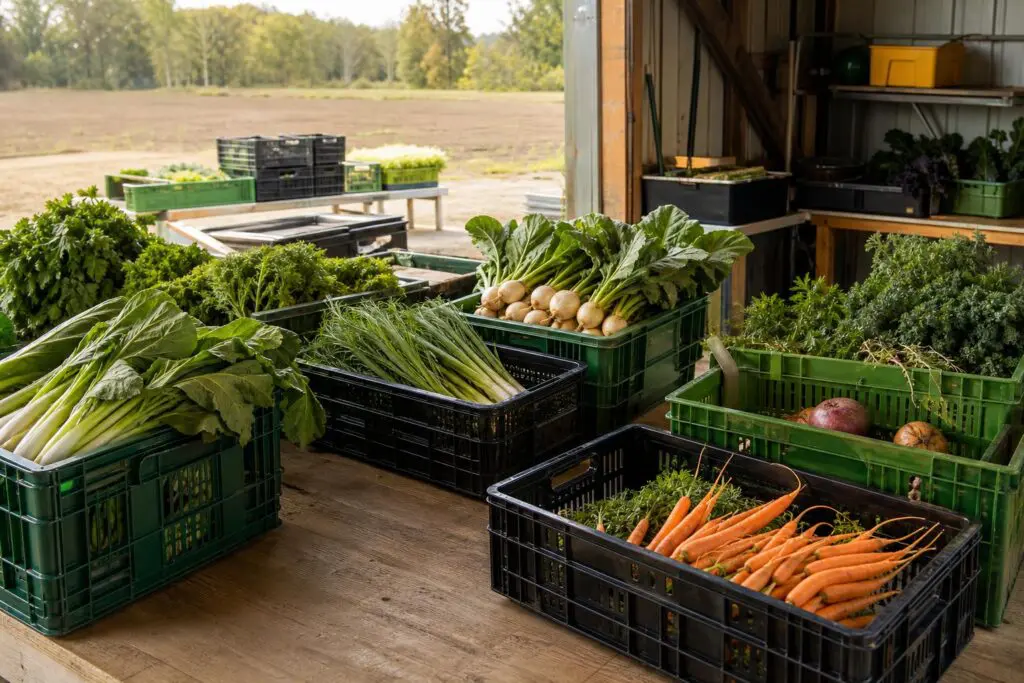
A Northern California food hub has purchased food from 26 local producers while helping connect regional agriculture with schools and hands-on food education, according to an October 15 account from the California Department of Food and Agriculture. The Klamath-Trinity Resource Conservation District’s work brings together two parts of farm-to-school programs: buying local food and teaching students about its sources.
The district, known as KTRCD, uses CDFA Farm to School Incubator Grant funding to support procurement, producers and education across Humboldt, Del Norte and Trinity counties. CDFA describes the organization as an Indigenous nonprofit. Its food hub buys from local farmers and other producers and helps connect those foods with schools and the surrounding community.
The hub also provided food safety education, CDFA reported. Alongside that purchasing work, KTRCD partners with schools, Tribal programs, local organizations, producers and community knowledge holders. Those partnerships give Hoopa Valley students opportunities to learn food preparation, preservation and gardening, as well as traditional food practices, through direct experience and community mentorship.
Intermediaries connect farms and school buyers
The regional example puts a local face on a broader finding from California’s farm-to-school evaluation: schools frequently reach farmers through another organization rather than buying directly. A September 14 UC Agriculture and Natural Resources summary reported that 74% of grant-funded food purchases by transitional kindergarten-through-12th-grade grantees flowed through food hubs and other intermediaries.
That finding places organizations such as food hubs at the center of the school market, not simply at its edges. The evaluation examined school purchasing, regional supply chains and the sustainability of California’s investment. Its authors include researchers from UC Berkeley, UC Agriculture and Natural Resources, Berkeley Food Institute and Food Insight Group, with contributions from Cornell University.
The research summary also reported that 76% of surveyed participating farms expanded production to accommodate school sales. That result describes the surveyed farms, not California agriculture as a whole. Still, it identifies a concrete response among participants: farms increased production as they developed school markets, rather than merely shifting existing sales from one buyer to another.
School purchasing figures provide another measure of that market. Between 2021 and 2025, 92 school grantees spent nearly $6.4 million in grant funds on whole or minimally processed foods, according to the evaluation summary. The figure covers those grantees and grant-funded purchases, rather than all food spending by California schools.
Food education rooted in local knowledge
In the Klamath-Trinity region, food education extends beyond the cafeteria and conventional farm products. CDFA describes student activities involving salmon, Pacific lamprey, deer, acorns and locally gathered plants, alongside gardening, preparation and preservation. Community knowledge holders help connect those activities with traditional foods and practices, giving the program a distinct local and cultural focus.
Hoopa Valley High School teacher Natalie M. Scott described the workshops as another way for students to engage with school while practicing their culture. In CDFA’s account, she said that connection helps attendance and behavior, particularly for students who sometimes struggle to engage. Those are an educator’s observations, rather than quantified findings from the statewide evaluation.
The evaluation also points to work beyond purchasing food. Researchers identified staffing, infrastructure, relationships and institutional capacity as important to keeping farm-to-school systems operating beyond an individual grant. For producers considering schools as customers, the research places the buying relationship within a larger system of people, facilities and organizations needed to sustain it.
State reports ongoing program funding
CDFA’s October 16 program update added a longer-term funding commitment to that picture. The agency said ongoing funding had been secured in the 2026-27 state budget. Administered by CDFA’s Office of Farm to Fork, the Incubator Grant program supports local food purchasing, minimally processed school meals and hands-on education from early childhood through 12th grade.
The program began in the 2021-22 state budget. Its continuing scope joins procurement with education, the same combination visible in KTRCD’s regional work: a food hub purchasing from local producers, partnerships linking schools with community expertise, and students learning how foods are grown, gathered, prepared and preserved.