This is a short-form episode pulled from a larger discussion with South Dakota NRCS specialists on the realities of managing through dry conditions across the Great Plains.
Across South Dakota, producers are watching an uneasy growing season unfold. Crops are emerging slowly. Cool-season grasses are heading early. And while long-range forecasts remain uncertain, concerns about drought persistence and heat are already shaping decisions on farms and ranches across the region.
In this episode, the conversation focuses on what resilient operations are doing differently right now—from contingency planning and forage management to adaptive grazing, plant diversity, cover crops, and protecting long-term soil function during drought.
One of the major themes throughout this discussion is that resilient operations are rarely built in the middle of crisis. They’re built beforehand—through flexibility, planning, diversity, and management systems designed to adapt when conditions turn difficult.
This discussion features:
Tanse Herrmann — State Grazing Lands Soil Health Specialist, NRCS
Marcia Deneke — State Agronomist, NRCS
Emily Rohrer — State Rangeland Management Specialist, NRCS
👉 For the full long-form drought discussion, stream the complete episode here.
📌 Topics Discussed in This Episode
• Drought contingency planning for farms and ranches
• Adaptive grazing management during forage shortages
• Why diverse pastures recover faster during drought
• Native grasses vs. introduced monocultures
• Early indicators of moisture stress in crops and pastures
• No-till and cover crop advantages during dry conditions
• Practical barriers to changing crop rotations
• Using flexibility and adaptive management to build resilience
Additional Resources Mentioned:
👉 Our first podcast episode in this series on drought: https://growingresiliencesd.com/podcasts/episode/1be26141/the-drought-playbook-for-resilient-farms-and-ranches
👉 South Dakota Grazing Exchange: https://sdgrazingexchange.com
👉 SD Grassland Coalition Drought Planning Tools: https://droughtplansdgrass.org
If you found this episode valuable, consider leaving the podcast a five-star review or sharing it with another producer navigating dry conditions this season.
Drought doesn’t begin when the grass turns brown.
It begins much earlier—when producers continue operating as though rain is guaranteed.
In this short-form episode, three experienced South Dakota Natural Resource Conservation Service (NRCS) representatives—Tanse Herrmann, Marcia Deneke, and Emily Rohrer—share practical strategies for navigating dry conditions before they become a crisis.
This conversation is focused on one central idea:
Hope is not a drought plan.
The discussion moves beyond panic and reaction into practical decision-making for both livestock and crop producers. From delaying pasture turnout and adjusting stocking rates to rethinking fertility timing, yield goals, crop plans, and forage options, this episode is about staying flexible while protecting both the resource and the bottom line.
The speakers also explore how drought can create opportunities for collaboration between crop and livestock systems—including grazing standing crops, alternative forage options, and tools like the South Dakota Grazing Exchange.
Throughout the episode, one message remains consistent:
Act early. Stay flexible. Protect the resource.
What You’ll Learn
Key Insight
Drought doesn’t just test a season.
It tests the system.
The operations most likely to weather difficult years are often the ones that planned early, stayed flexible, and protected their soil and forage base before conditions worsened.
Go Deeper
This conversation also inspired an article. To read, go here:
👉 “When the Rain Doesn’t Come: A Practical Drought Playbook for Farmers and Ranchers”
https://www.growingresiliencesd.com/post/when-the-rain-doesn-t-come-a-practical-drought-playbook-for-farmers-and-ranchers
Additional Resources Mentioned
👉 South Dakota Grazing Exchange: https://sdgrazingexchange.com
👉 SD Grassland Coalition Drought Planning Tools: https://droughtplansdgrass.org
About the Speakers
Tanse Herrmann is the South Dakota NRCS State Grazing Lands Soil Health Specialist, focused on grazing management, drought resilience, and long-term grassland function.
Marcia Deneke serves as South Dakota NRCS State Agronomist, helping producers navigate agronomic decisions related to soil health, crop management, and risk reduction.
Emily Rohrer is the South Dakota NRCS State Rangeland Management Specialist, working directly with producers on grazing systems, forage planning, and rangeland resilience.
Together, they bring decades of practical, field-based experience helping producers adapt to changing conditions while protecting the long-term health of their operations.
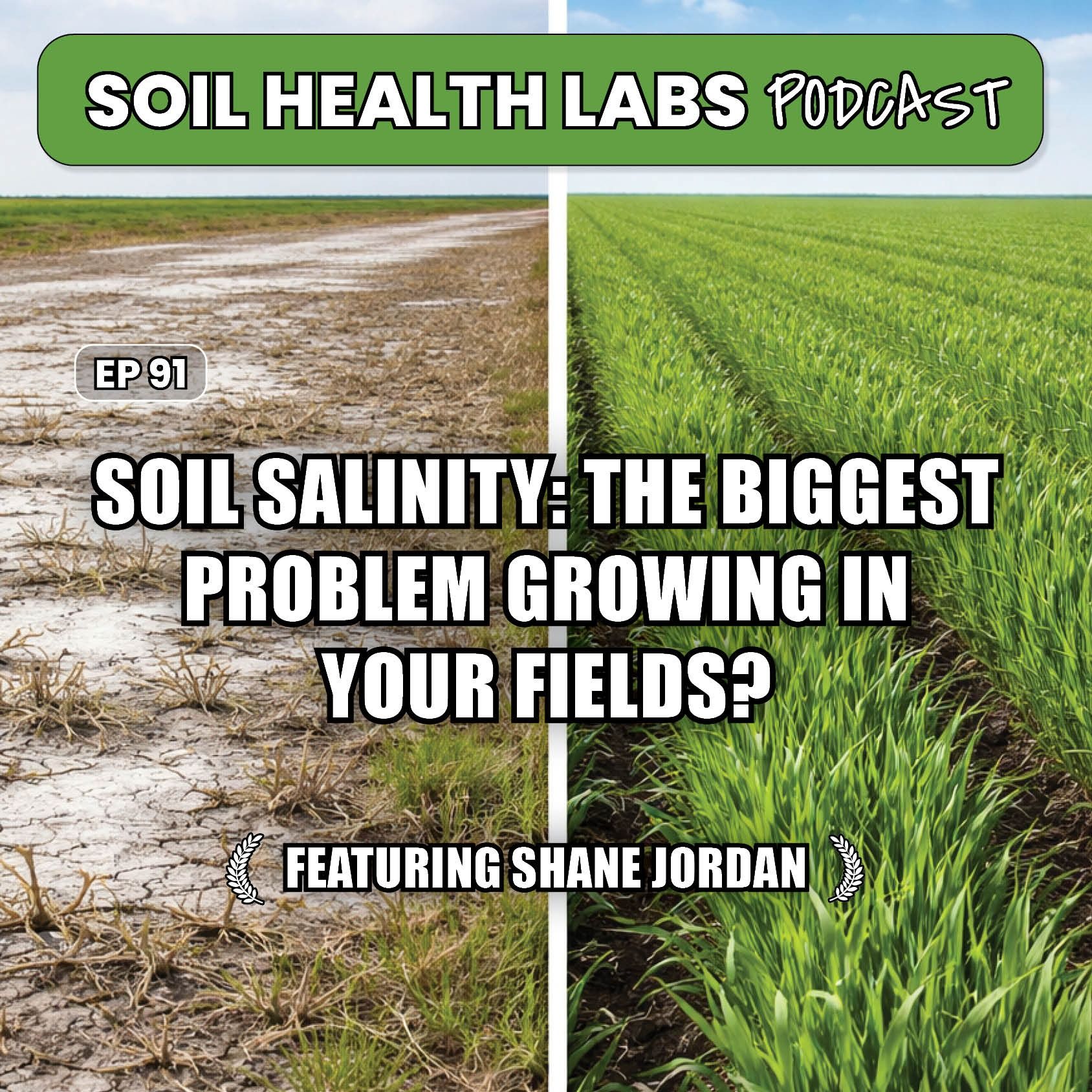
Salinity doesn’t show up overnight—and it doesn’t go away with a quick fix.
In this two-part series, Shane Jordan helps us connect the dots between what’s happening this year and what it will take to respond effectively.
Together, they tell a single story:
Salinity is not a spot problem. It’s a system problem.
The Big Takeaway
What looks like a white patch in a field is often just the symptom.
The cause lies in how water moves across the entire landscape—and how management either accelerates or slows that movement.
Go Deeper
If you’d like to explore Shane’s thinking in more detail, these two articles expand on the ideas in this series:
These pieces dig further into the “why” and the “how,” including the limits of treating symptoms and the importance of whole-field thinking.
⭐ In this episode, Shane also discusses the Regenerative Pilot Program where the NRCS is investing $700 million to support regenerative agriculture. For more info, go here: https://www.nrcs.usda.gov/programs-initiatives/regenerative-pilot-program
About Shane Jordan
Shane Jordan is a Resource Conservationist with the NRCS Brookings Area Ecological Team, specializing in salinity management, soil health, and whole-farm conservation planning.
He grew up on a diversified farm in Iowa and holds a B.S. in Range Management from South Dakota State University. Over a career spanning more than three decades, Shane has worked across the Northern Plains in roles including range conservationist, district conservationist, and watershed project specialist. He served 23 years as District Conservationist in Redfield, South Dakota, working directly with producers to implement conservation systems on working lands.
In 2025, Shane was awarded the Hugh Hammond Bennett National Planner Award, one of NRCS’s highest honors. The award recognizes outstanding leadership in conservation planning, long-term commitment to working with landowners, and excellence in applying resource management to real-world agricultural systems.
Known for his practical, relationship-based approach, Shane emphasizes whole-system thinking—helping producers move beyond treating symptoms to addressing the underlying causes of resource challenges.
Salinity hasn’t gone away—and in some parts of South Dakota, it may be setting up for a comeback.
In this short, focused episode, Buz Kloot sits down with conservationist Shane Jordan to unpack why conditions are aligning for salinity to re-emerge as a serious issue this year. What looks like a dry start may actually be the trigger for something deeper—literally.
This episode sets the stage for understanding the problem before diving into solutions in Part 2.
What You’ll Learn
“When we get a really wet year followed by a dry one… we actually see a lot of these salts get enhanced.”
Key Insight
Salinity is not just a patch problem—it’s a systems problem.
What shows up as a white patch in a field is often just the symptom. The cause lies in how water moves (or doesn’t move) across the entire landscape.
Why This Year Is Different
Together, these create the perfect conditions for salts to move upward and accumulate at the surface.
What to Watch For This Spring
Learn More
We’ve compiled practical resources, videos, and producer insights here:
👉https://www.growingresiliencesd.com/soilsalinity
Coming Next (Part 2)
In the next episode, we move from problem to practice:
About Shane Jordan
Shane Jordan is a Resource Conservationist with the NRCS Brookings Area Ecological Team, specializing in salinity management, soil health, and whole-farm conservation planning.
He grew up on a diversified farm in Iowa and holds a B.S. in Range Management from South Dakota State University. Over a career spanning more than three decades, Shane has worked across the Northern Plains in roles including range conservationist, district conservationist, and watershed project specialist. He served 23 years as District Conservationist in Redfield, South Dakota, working directly with producers to implement conservation systems on working lands.
In 2025, Shane was awarded the Hugh Hammond Bennett National Planner Award, one of NRCS’s highest honors. The award recognizes outstanding leadership in conservation planning, long-term commitment to working with landowners, and excellence in applying resource management to real-world agricultural systems.
Known for his practical, relationship-based approach, Shane emphasizes whole-system thinking—helping producers move beyond treating symptoms to addressing the underlying causes of resource challenges.
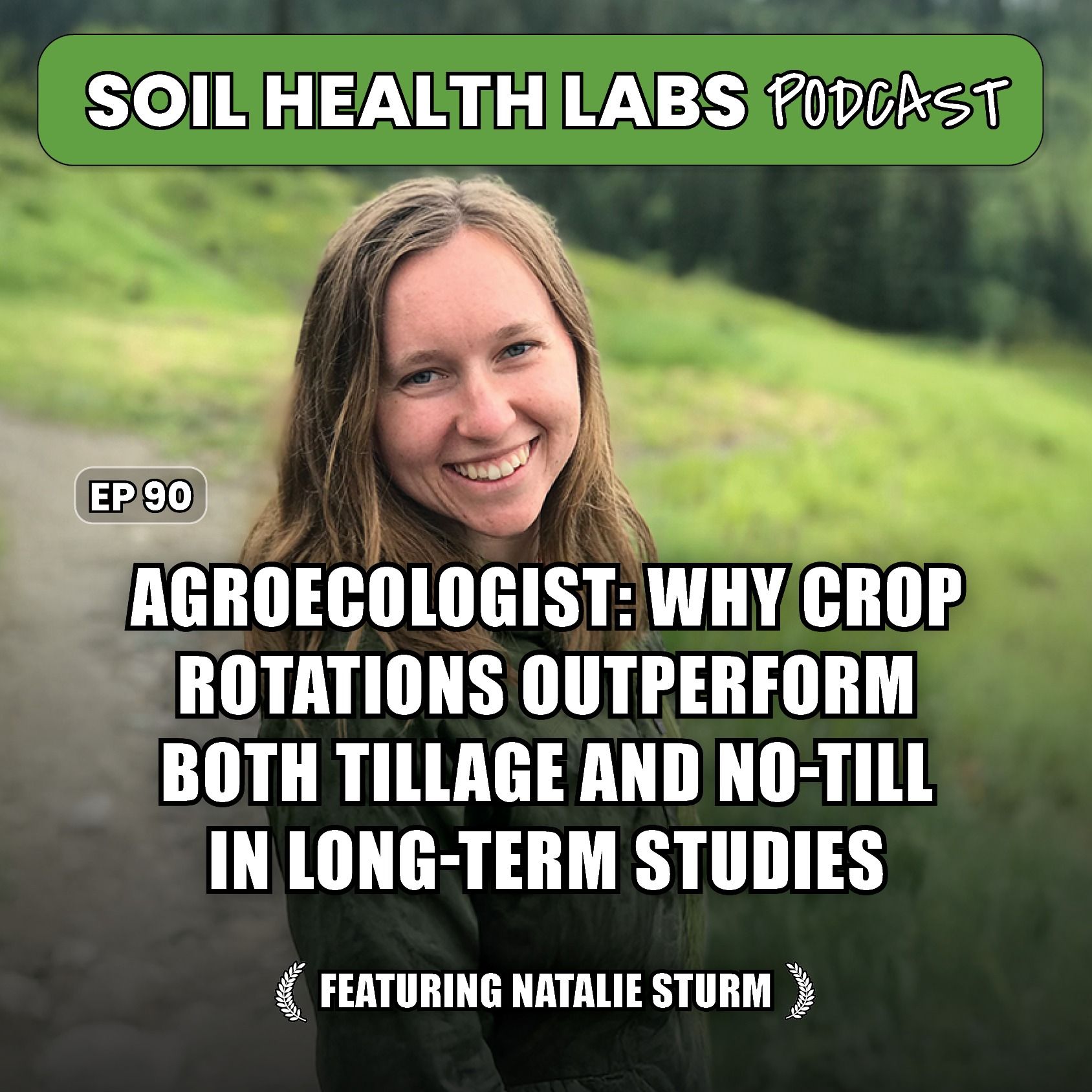
This is a short-form episode featuring Natalie Sturm, pulled from our recent interview and focused on one of the most important—and often overlooked—drivers of soil health: crop rotations.
We’re launching these short-form episodes to better serve our audience. Instead of listening to a full 60–90 minute conversation, you can now jump straight into the most valuable insights—practical, research-backed takeaways you can apply immediately.
In this segment, Natalie explains why the tillage vs. no-till debate misses the bigger picture. Drawing from her research at the Dakota Lakes Research Farm, she shares how two side-by-side no-till fields—managed with the same equipment and soil type—can perform completely differently based on rotation history alone. The difference shows up not just in yields, but in soil structure, organic matter, and resilience.
For the full interview with Natalie, please stream the long-form episode here.
Natalie Sturm didn’t grow up in agriculture—she’s originally from suburban Chicago. Her early concern for climate, biodiversity, and human health led her to Montana State University, where she earned a B.S. in Agroecology through the Sustainable Food and Bioenergy Systems program.
She went on to complete her M.S. at South Dakota State University, studying long-term no-till crop rotations at Dakota Lakes Research Farm. Her thesis demonstrated that rotation diversity, small grains, cover crops, and livestock are key to improving soil quality and yields—not just no-till.
Natalie is currently pursuing a Ph.D. at Washington State University, where she studies the effects of cropping systems on soil compaction in the Palouse region. In 2025, she will return to Dakota Lakes as its new Research Farm Manager.
📌 Resources Mentioned in This Episode:
Guest: Natalie Sturm
Hosts: Dr. Buz Kloot and Dr. Gabe Kenne
Running time: 62 mins
“We could take a shovel, and shovel up some soil in one field, and then just go across the dirt road, and the soils would look completely different... it kind of blew my mind that the only difference between those two fields was the crop rotation they had been under for the past 20 to 30 years.”
—Natalie Sturm
Episode Summary:
Natalie Sturm is a rising voice in cropping systems and soil health. She joins us to reframe the tillage conversation—not as a binary between conventional and no-till, but as part of a broader system that includes crop rotation, residue management, livestock integration, and long-term soil function. Drawing on her M.S. research at the Dakota Lakes Research Farm, Natalie shares insights about why no-till alone isn’t enough and how thoughtful rotation design can drive both soil quality and profitability.
We talk about:
Featured Guest Bio:
Natalie Sturm didn’t grow up in agriculture—she’s originally from suburban Chicago. Her passion for climate, biodiversity, and human health led her to Montana State University, where she earned a B.S. in Agroecology. She then completed her M.S. at South Dakota State University studying long-term no-till crop rotations at Dakota Lakes Research Farm. Natalie is currently pursuing a Ph.D. at Washington State University on the effects of cropping systems on soil compaction in the Palouse region. In 2026, she will return to Dakota Lakes as its new research farm manager.
📌 Resources Mentioned in This Episode:
Additional Resources:
✨ BONUS ARTICLE: What Are We Really Arguing About When We Talk About Tillage: growingresiliencesd.com/post/what-we-re-really-arguing-about-when-we-talk-about-tillage
Featuring:
📝 Episode Summary
In this episode, we sit down with Liz Kierl, Executive Director of the Second Century Habitat Fund (SCHF), to talk about one of South Dakota’s most effective and underappreciated conservation tools: the Working Lands Habitat Program. Liz unpacks how this unique initiative blends private lands stewardship, strategic habitat restoration, and flexible grazing options—all while keeping landowners in the driver’s seat.
With videographer and conservation storyteller Joe Dickie sharing observations from years of working alongside ranchers, and Buz guiding the conversation, we explore how pheasants, pollinators, and producers all benefit when marginal cropland is converted back to native grasses and forbs. Liz also shares how SCHF’s funding model—including the famous Can-Am raffles—is helping build a lasting conservation legacy.
Whether you're a landowner curious about signing up, or someone who just loves South Dakota’s prairies, this is a conversation about habitat that works with producers, not against them.
🔑 Key Topics
🧑🌾 Guest Bio: Liz Kierl
Liz Kierl is Executive Director of the Second Century Habitat Fund, a nonprofit dedicated to restoring South Dakota’s grasslands and sustaining wildlife through voluntary private lands partnerships. Originally from Nebraska, Liz grew up in a family of pheasant hunters and conservationists. She brings deep experience in nonprofit leadership, fundraising, and landowner outreach.
Since taking the helm at SCHF, Liz has expanded fundraising programs (like the Can-Am UTV raffles), built partnerships with agencies and NGOs, and helped landowners tap into the powerful incentives of the Working Lands Habitat Program—an effort that aims to restore grassland on over 100,000 acres.
Additional Resources:
✨BONUS ARTICLE: What Are We Really Arguing About When We Talk About Tillage: growingresiliencesd.com/post/what-we-re-really-arguing-about-when-we-talk-about-tillage
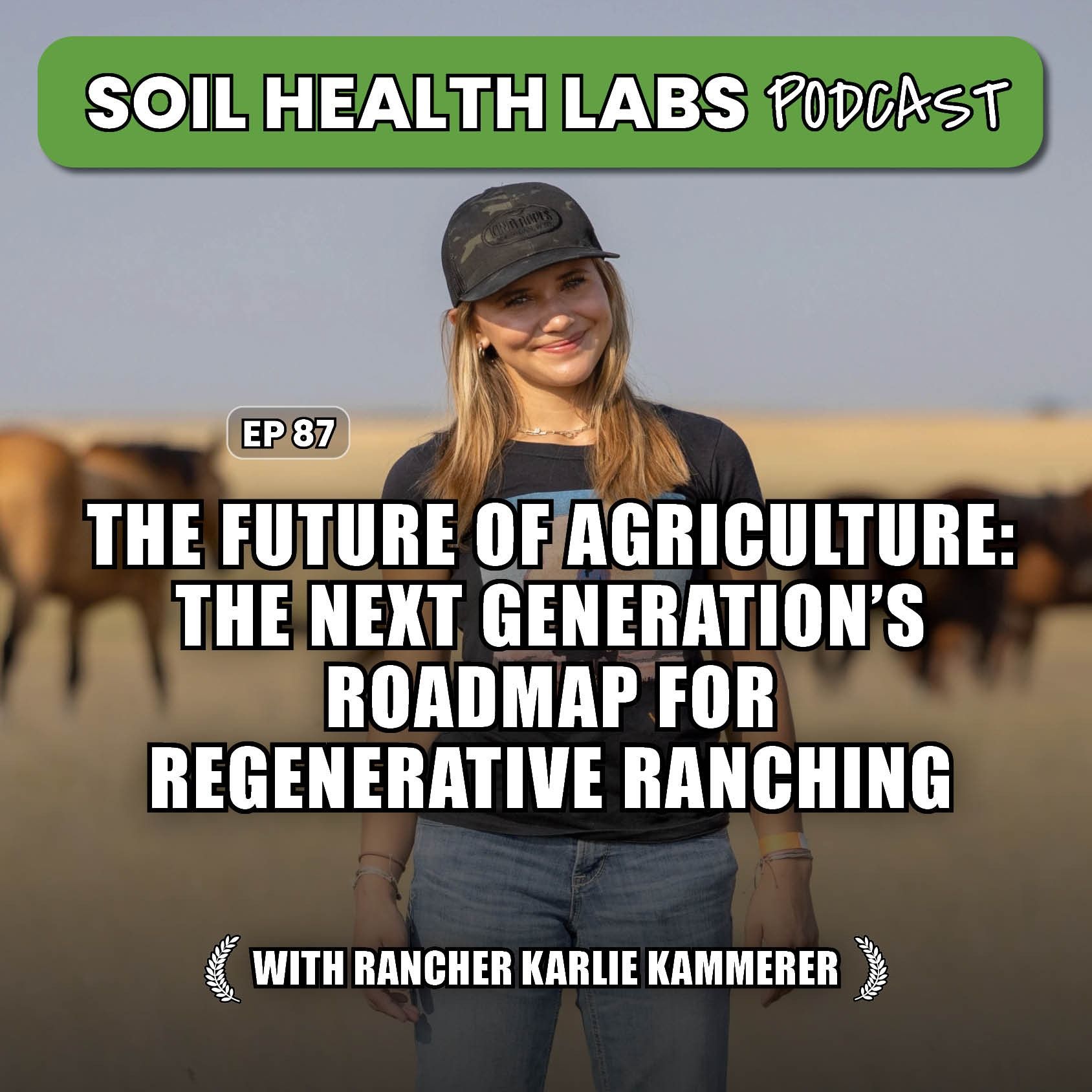
In this episode, Joe Dickie and Buz Kloot sit down with Karlie Kammerer, a rising senior from western South Dakota whose wisdom and clarity around regenerative ranching belies her age. Karlie grew up on a cow-calf operation near Rapid City where her family, including parents Riley and Jimmie and sisters Katelyn and Kimball, is embracing holistic management and regenerative agriculture with open arms—and open minds.
Though still in high school, Karlie has already presented at national rangeland competitions, been a featured voice in Amazing Grasslands, and dreams of running a consulting business with her dad (where he’ll work for her, of course). In this episode, Karlie shares what she’s learning on the land and in the classroom—lessons about livestock, soil health, and the importance of context, context, context.
But she doesn’t stop there.
We talk about how her dad’s paradigm shift reshaped their entire operation—allowing both her parents to come home full-time to the ranch—and how the mental and spiritual health of the family improved alongside the land. Karlie reflects on the influence of mentors like Mitch Faulkner and the power of intergenerational learning. She shares her thoughts on what the ag industry needs to do to keep young people not just interested—but inspired.
You’ll hear Karlie speak with grace, humor, and a refreshing blend of scientific precision and deep, soulful connection to land. As she says: “We look at things on a microscopic level and at a huge level—and I think with all of us, it's like, how could there not be a Creator?”
Whether you're a seasoned rancher, new to regenerative ag, or simply curious what the future looks like, this conversation will leave you hopeful—and maybe even a little humbled.
Highlights:
Quote of the Episode:
“We all kind of have that further appreciation and understanding for something that isn't quite of this world... You feel something different when you're around animals and surrounded by pasture. I couldn’t explain it—but you feel at peace.” — Karlie Kammerer
🎧 Listen now and meet a young woman whose voice is already shaping the range.
Karlie’s Advice for Aspiring Ranchers
If you're a young person interested in rangeland management or regenerative ranching, here are a few things that helped me on my journey:
Additional Resources:
Our Amazing Grasslands - Young and Upcoming Generations Feature: youtube.com/watch?v=S_VlBwG9aks&ab_channel=USDANRCSSouthDakota
✨ BONUS ARTICLE: What Are We Really Arguing About When We Talk About Tillage: growingresiliencesd.com/post/what-we-re-really-arguing-about-when-we-talk-about-tillage
🧲 Quotable Quotes
“When people don't understand much about the prairie, it just kind of looks like this monolith… just one FLAT thing. But really, it's like an old growth forest — full of life.” - Kate Rasmussen
“Once you learn about it, your brain can look for it — and it completely changes how you see your place.” - Kate Rasmussen
👩🌾 Meet Our Guest
Kate Rasmussen grew up ranching in the South Dakota Badlands on her family's cattle operation. Today, she's a Grasslands Conservationist with the World Wildlife Fund (WWF) based out of Spearfish, SD. Drawing from deep personal experience, Kate bridges the worlds of wildlife conservation and sustainable ranching across South Dakota, Montana, Nebraska, and Wyoming.
🌾 Episode Highlights
🐄 Reconciling Ranching and Conservation
💡 Program Spotlight: WWF’s Sustainable Ranching Initiative
Kate outlines two core programs:
📍 Geography Matters
Their focus area includes:
🧠 Insights & Advice for Landowners
🌱 Reseeding: Hope and Hard Truths
🔬 Monitoring & Carbon
🤝 Ecology Meets Economy
🐦 Closing Reflections
🔗 Mentioned in This Episode
🙌 Thank You, Kate!
From prairie reseeding to sheep shearing to rolling up sleeves in Spearfish, Kate Rasmussen reminds us that conservation begins with community and that we all have a role to play — no matter where we are on the journey.
In this episode, we sit down with Dawn Butzer to discuss her journey from her early life and career to her current work and future aspirations. Dawn shares insights into her deep connection with conservation and land management, emphasizing partnerships with the NRCS, South Dakota Grassland Coalition, and Ducks Unlimited.
Early Life and Career
Dawn Butzer’s roots in agriculture and conservation run deep. Growing up, she developed a strong appreciation for the land, learning firsthand about the challenges and opportunities in sustainable agriculture. Her early career saw her working in various capacities, where she gained valuable experience in land management, conservation programs, and working with producers to improve soil and water health.
Current Work
Dawn is currently involved in conservation efforts that focus on grassland restoration, soil health improvement, and sustainable grazing practices. Through her work with the NRCS, she collaborates with ranchers and landowners to implement conservation plans tailored to their needs. She is also actively engaged with the South Dakota Grassland Coalition, which promotes voluntary conservation efforts among producers. Additionally, her work with Ducks Unlimited aligns with large-scale restoration efforts, ensuring that grasslands remain viable for wildlife and agriculture.
Future Aspirations
Dawn is passionate about continuing to bridge the gap between conservation initiatives and agricultural operations. She aims to expand her outreach, working closely with producers to adopt practices that benefit both the land and their bottom line. With increasing challenges such as climate variability and land-use changes, she hopes to play a crucial role in advocating for policies and programs that support long-term sustainability.
Key Partnerships and Programs
Resources Mentioned in This Episode
Dawn and the hosts discussed several books and articles that provide further insight into conservation and sustainable agriculture. Here are a few key recommendations: