Soil health, regenerative practices, and emerging technology — The AgEmerge Podcast. Join our host, Monte Bottens, as he engages with guests from diverse agriculture interests to discuss experiences, practices and scalable applications for any operation. Tune in to new episodes every other Tuesday to regenerate your ideas, soil, crops, livestock and livelihood.
ag-emerge
ag emerge
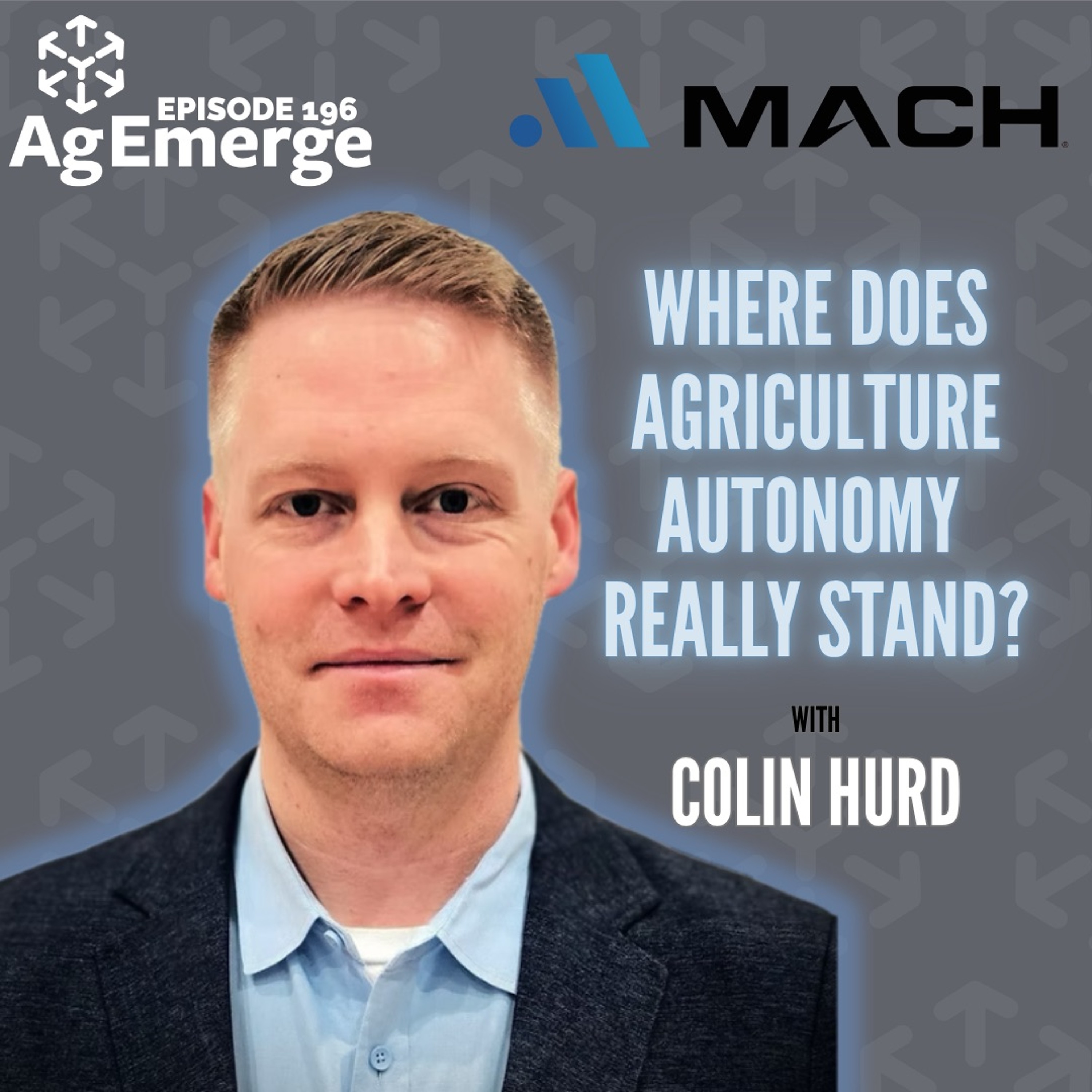
Autonomous tractors are only the beginning. The next breakthrough in ag tech is a physical AI layer that can learn, adapt, and make farms dramatically more efficient without forcing every grower to become a robotics expert. Colin Hurd returns to the AgEmerge Podcast with a behind-the-scenes look at where ag autonomy really stands now, why retrofit solutions are only part of the story, and what has to change before self-driving machines become truly useful in the field.
From dusty harvest conditions that break today’s sensors to the opportunity for AI systems to preserve hard-earned farming knowledge, this conversation gets into the real bottlenecks - and the real upside - of the next five years.
Colin has devoted his career to leading innovative companies in the machinery industry. In 2016, Colin founded his second company, Smart Ag, which developed the first retrofit driverless system to automate tractors. After funding and growing the company, he led Smart Ag successfully through an exit to Raven Industries (NYSE:RAVN) in 2019. Raven was then acquired by CNH Industrial in 2021 (NYSE:CNHI). Colin stayed with Raven and managed business development until forming Mach in 2022.
Learn about Mach: https://mach.io/about-us/
Timestamps
07:08 - Why physical AI could transform the next 5 to 10 years on the farm
10:39 - Colin’s first startup and the soil compaction problem behind Track Till
12:06 - Why preventing compaction led him into autonomy
13:05 - Smart Ag, autonomous grain carts, and the Raven acquisition
14:34 - Building Mock by acquiring autonomy companies with complementary strengths
16:56 - Mach's thesis: OEMs can source autonomy instead of building or buying it all
18:18 - Why off-road engineering talent is hard to recruit and even harder to localize
20:05 - Why lidar struggles in dusty ag environments
21:04 - Radar-based sensing as Mock’s bet for off-road autonomy
22:53 - Why OEM size creates different autonomy needs across large, mid-sized, and shortline brands
24:21 - Mach's modular stack and why it stays OEM-only
26:20 - Why large enterprise users can help accelerate OEM go-to-market timing
27:29 - Retrofit autonomy and why Mach is avoiding that business model
29:14 - Why smaller, autonomy-first machine designs may be the real future
31:20 - Redesigning machines for autonomy instead of bolting it on
34:15 - One operator supervising eight machines in orchard autonomy
35:08 - Where humanoids fit into agriculture and what they would actually do
37:28 - From rigid path planning to non-deterministic physical AI
39:05 - Machines that understand objectives instead of only following pre-programmed routes
40:44 - The three core autonomy buckets: connectivity, situational awareness, and navigation
42:03 - Physical AI as a supervisory intelligence layer on top of the stack
43:03 - Agentic systems, self-repair, and the right-to-repair conversation
45:46 - Transferring farm knowledge, field history, and terrain awareness into machine behavior
47:16 - Using autonomy to support sustainable practices and reduce cost per acre
48:14 - Why cover crop adoption could accelerate if machines could learn from broader experience
50:37 - Physical AI as a way to reduce fear of failure in new practices
55:23 - Why recursive learning on-device is difficult, but data collection and fleet learning are realistic
58:32 - How farmers can connect with autonomy companies and stay current on emerging tech
63:07 - How Ag Startup Engine was built as an investor-managed fund with farmer input
65:39 - PlowVision and AI-guided cutting in meat processing
67:18 - Terra Blaster and real-time nutrient application for soil health
68:47 - Why founder feedback and customer validation matter more than hype
73:18 - The tradeoffs between angel investing and participating in a fund
74:13 - How farmers can get involved as accredited investors and pilot early autonomy tech
75:39 - Why Mach's technology aims to make agriculture more efficient and more regenerative
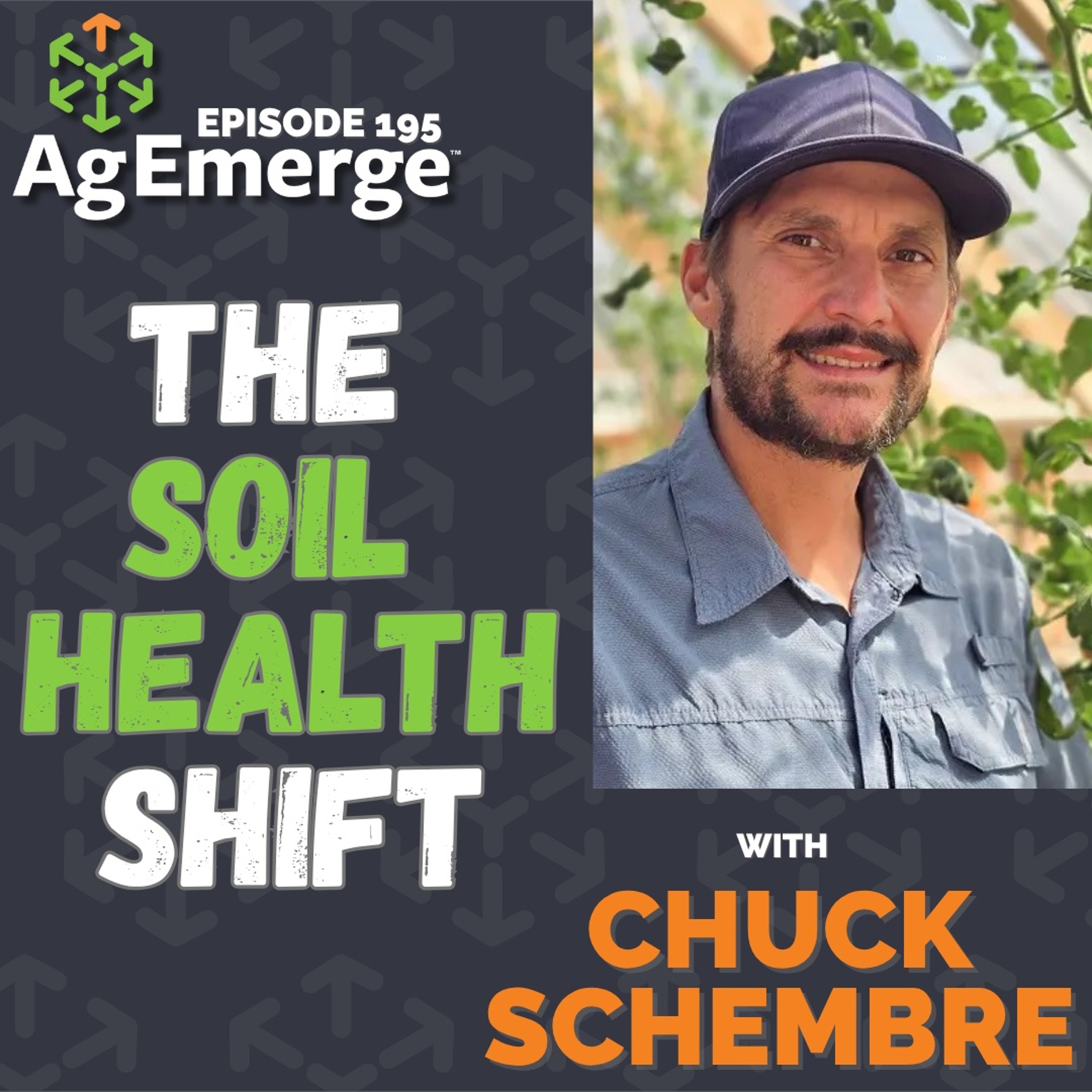
AgEmerge Podcast 195 with Chuck Schembre
August 25, 2026 1:09:40
Regenerative agriculture is not a slogan—it is a system. And Chuck Schembre knows where that system can break, where it works, and how growers can make the transition without throwing yields out the window.
If you care about specialty crops, produce, vineyards, apples, almonds, or the real-world economics of farming differently, this conversation is for you.
Chuck brings a rare perspective shaped by both science and hands-on farming. From working restaurant lines with peak-season tomatoes and onions that changed how he thought about food, to farming across California, Sonoma, Napa, and now the high desert of Nevada, he shares the path that led him into soil health, ecological farming, and regenerative consulting.
This conversation gets into the realities behind regenerative agriculture—not just the ideals. Chuck and Monte discuss why transitions are so complex, what actually motivates growers to change, and why removing one conventional practice can create ripple effects across an entire production system.
They explore herbicide reduction in orchards and vineyards, cover crop termination, fertility management, phosphorus overapplication in organic systems, food safety challenges in produce, and why regenerative farming doesn't necessarily mean eliminating every conventional tool.
Chuck also explains why context matters. A practice that works on a small diversified farm may not translate directly to a large produce operation, vineyard, or orchard. Successful transitions require understanding the entire system, the economics behind it, and the realities growers face in the field.
**About Our Guest**
Chuck Schembre is the owner of High Desert Harvest Farm, a small diversified regenerative farm in Washoe Valley, Northern Nevada, and founder of EcoSoil Solutions, a soil health and regenerative agronomy consulting company.
A Certified Professional Soil Scientist and agronomist, Chuck has two decades of experience farming organically and regeneratively while interpreting soil and plant health metrics and connecting them to practical farm management. His experience ranges from small-scale organic vegetable systems to large orchard and vineyard operations.
He holds a B.S. in Earth and Soil Science from California Polytechnic State University, San Luis Obispo.
Find Chuck online: https://ecosoilsolutions.com
**Timestamps**
06:14 – Napa demo farm and the move to northern Nevada
08:40 – Cal Poly: soils, organic farming, and surf
10:31 – How fresh tomatoes and onions changed his understanding of food
17:35 – Regenerative transitions and finding committed buyers
21:23 – Soil tests, sap testing, and grower experience
23:47 – What motivates growers to change
31:23 – Why chemical reduction often starts with weed management
36:38 – Moving beyond herbicide dependence
37:07 – Systems thinking: one change affects everything else
42:20 – Why cover crop termination is the key decision
43:14 – Myth-busting regenerative agriculture in specialty crops
46:33 – When conventional fertility may still have a role
47:55 – Phosphorus overapplication in organic systems
48:49 – The tool chest: conventional, organic, and regenerative constraints
50:20 – Restoring orchards before replanting
51:08 – Food safety rules and soil health in produce
53:02 – Why large-scale produce is difficult to transition
58:34 – How small growers can profit through creative sizing and packing
64:49 – Why being a farmer makes Chuck a better consultant
AgEmerge Podcast 194 with Dr. Jessica Chiartas and REGENSCORE
August 11, 2026 1:12:21
Unlock the future of sustainable farming with Dr. Jessica Chiartas, currently serving at the University of British Columbia. Her research focuses on the long-term impacts of agriculture on soil carbon and overall soil health with a unique focus on carbon at depth. Jessica shares her inspiring journey from corporate pharma sales to pioneering soil health measurement frameworks that could transform global agriculture. Discover how her RegenScore provides a practical, evidence-based way for farmers, brands, and consumers to quantify and promote regenerative practices—beyond mere labels and checkboxes.
In this episode, Jessica breaks down the complexities of regenerative agriculture, from soil’s vital role in climate resilience, water quality, and human health, to the challenges of creating scalable scoring systems that respect local context. You'll uncover the innovative process behind developing region-specific metrics, the importance of community and farmer-centric approaches, and how technology and storytelling are shaping a new era of transparency and impact. We dive into the intersection of soil science, market mechanisms, and consumer choices, revealing why understanding soil health is essential not just for farmers but for everyone invested in a sustainable future.
Jessica shares why regenerative farming isn’t a one-size-fits-all solution but a nuanced, evolving journey—one that requires collaboration across sectors and disciplines. She emphasizes the psychological and social shifts needed to inspire widespread adoption, highlighting the power of education, trust, and tangible health outcomes. Learn how soil health ties directly to climate resilience, biodiversity, and human wellbeing—and why immediate action is critical to avoid slow, irreversible damage.
This episode is perfect for farmers needing practical pathways to adopt regenerative practices, investors and brands seeking credible impact metrics, educators passionate about soil awareness, and anyone curious about how farming can heal the planet while supporting healthy communities. Jessica’s optimistic outlook reminds us that rapid, positive change is possible—if we leverage science, technology, and storytelling to fuel systemic shifts. Tune in to feel empowered to connect with the ground beneath your feet and imagine a healthier, more resilient future for all.
Resources
Regen Score Framework - https://regenscore.org
Soil Life Project - https://soil.life
Jessica Chartis - UBC Profile - https://ubc.ca/jessica-chartis
Chapters
00:00 Introduction and Jessica's background
01:59 Jessica's journey from pharma to soil science
03:52 Soil health and its impact on human well-being
06:46 Development of Regen Score and its principles
10:14 Regional specificity and scaling of Regen Score
14:57 Challenges and opportunities in regenerative measurement
19:45 Market drivers and consumer engagement
25:07 Food as medicine and health impacts
30:14 Soil health, biodiversity, and environmental benefits
34:51 Policy, economics, and market pull for regenerative farming
40:08 Future outlook and hope for regenerative agriculture
45:00 Practical steps for farmers to adopt regenerative practices
49:58 Jessica's vision for education and soil awareness
55:04 Closing thoughts and optimism for the future
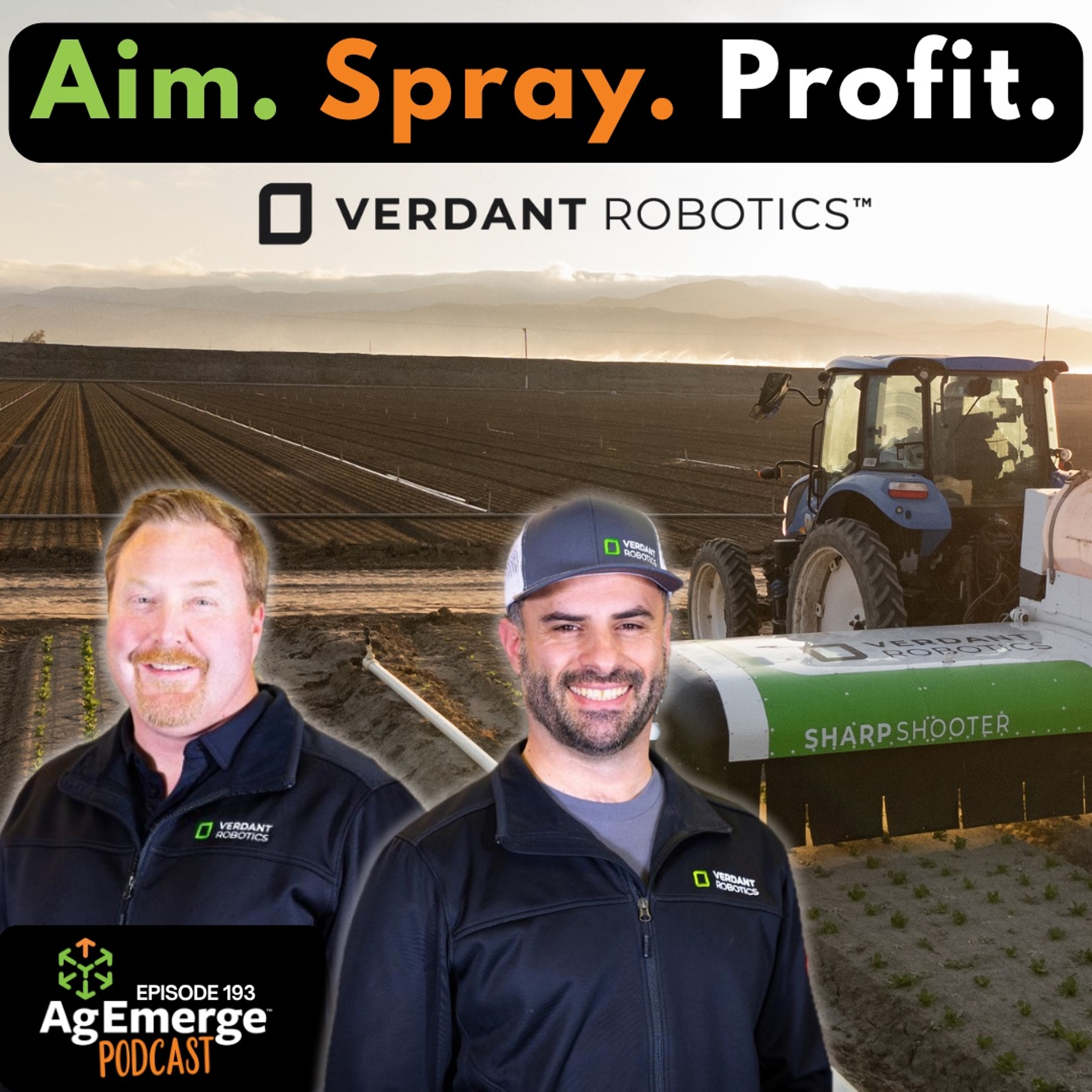
AgEmerge Podcast 193 with Verdant Robotics
July 28, 2026 59:29
The future of ag tech is here—aimable, precise, and radically more efficient. Gabe Sibley and Curtis Garner reveal how they’ve built Verdant Robotics platform to target weeds and pests with pinpoint accuracy but also transforms how farms scout, analyze, and act on data in real time.
Discover how Verdant Robotics is pioneering an autonomous spraying system that’s faster, smarter, and more sustainable than traditional methods. Gabe shares how deep learning, high-resolution imaging, and patented aiming technology are redefining crop management—dissecting individual plants, detecting diseases earlier, and reducing input use dramatically.
Curtis chimes in with stories from scaling operations across North America and beyond, explaining how agility, innovation, and a focus on real farmer pain points propel their mission.
We break down the critical role of digitization in unlocking exactly the right amount of herbicide or fertilizer at the right spot, the challenges of supply chain constraints—and more importantly—how the industry can leap forward despite long timelines and slow tech adoption.
Why wait years to see ROI? This tech promises a rapid payback—sometimes in mere months—that could revolutionize productivity for growers of all sizes and crop types, especially those underserved by existing solutions.
If you’re a forward-thinking farmer or agtech enthusiast tired of incremental improvements that don’t deliver, this is your shot at catching the next big wave. Learn how sophisticated AI, machine vision, and precision application tools are converging into a new era of farming—one where autonomous, versatile robots adapt seamlessly to complex crop environments, saving money, inputs, and water, while boosting yields.
Whether you’re in leafy greens, orchards, or row crops, these insights are essential to understanding how automation will shape the future landscape of agriculture. Are you ready to ditch the old and embrace the cutting edge of farm technology? This episode is your front-row seat to the innovations that are not years away—they’re happening right now.
Gabe Sibley is CEO and Co-Founder of Verdant Robotics, known for cutting-edge autonomous sprayers that combine high-resolution vision with precise chemical delivery. Curtis Garner, Co-Founder and Chief Commercial Officer, is a seasoned farm operations expert, brings practical insights on deploying automation at scale across diverse crops and regions.
Timestamps
07:02 - How farmer conversations reveal unmet needs and unspoken problems
09:59 - Case study: Using AI to identify individual apples and improve profitability
11:17 - Digitizing crops at scale for better decision-making and control loops
14:02 - Unique aimable fluid delivery technology for targeted chemical application
18:11 - 3D space navigation, camera systems, and occlusion strategies in orchards
19:01 - Achieving millimeter-level accuracy and scaling to various crop sizes
20:46 - Expanding from leafy greens to grass seed and international markets
26:09 - Challenges of scaling tech amidst supply chain shortages and global chip scarcity
29:30 - The cultural challenges of integrating Silicon Valley innovation, manufacturing, and farming
36:52 - ROI and operational efficiency of their autonomous spraying units
37:45 - The hardware specs, form factor, and integration options with existing machinery
39:11 - Opportunities in disease detection, multi-spectral imaging, and remote sensing
44:49 - Autonomous operation advancements, teaming with VEX and other partners
58:13 - Final thoughts: the future of agricultural automation and innovations

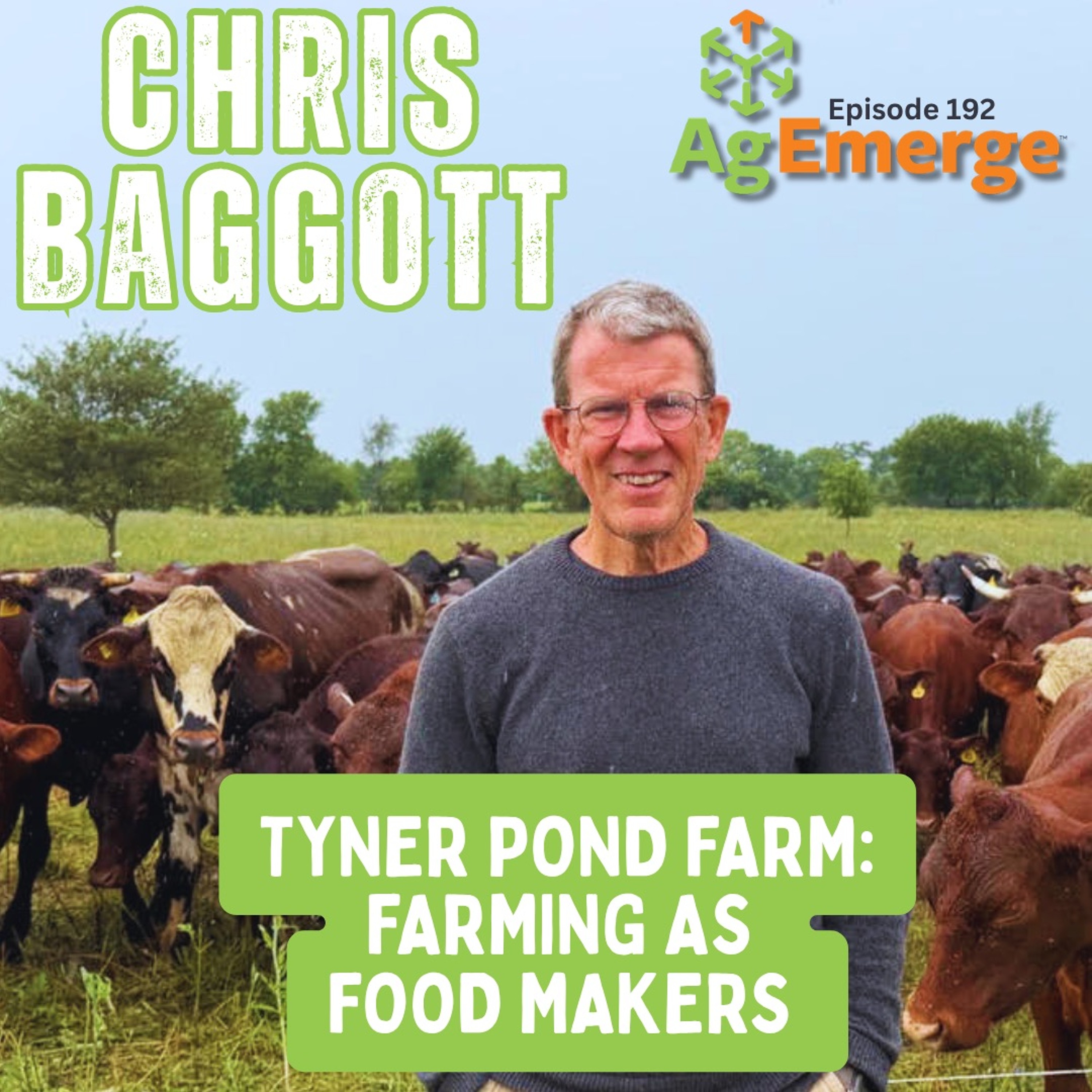
AgEmerge Podcast 192 with Chris Baggott
July 14, 2026 1:05:30
A tech entrepreneur turned regenerative farmer is rewriting the future of agriculture. Chris Baggott, a serial entrepreneur behind Salesforce's pioneering marketing platform and innovative food ventures, shares how his journey from Silicon Valley to the farm is helping producers thrive beyond commodity markets.
**Watch the full episode:** https://youtu.be/wxffwwsEsOg
Chris explains how his technology background taught him the power of democratized marketing and why farmers should embrace digital tools to build direct relationships with consumers. Learn how technology, AI, and transparency help decommodify food, optimize operations, and allow small farms to compete with larger companies through authentic storytelling and local connections.
Monte and Chris discuss the growing demand for local, nutrient-dense food, the challenges of regenerative agriculture, and practical ways to improve profitability through branding, consumer education, and direct-to-consumer sales. They also explore soil health, managed grazing, supply chains, and the future of community-based food systems.
Whether you're a farmer, entrepreneur, or food advocate, this episode offers practical insights into building resilient, profitable businesses rooted in healthy soil and trusted relationships.
**Main Topics Covered:**
* Chris Baggott's transition from Silicon Valley entrepreneur to regenerative farmer
* Technology, AI, and digital marketing for agriculture
* Direct-to-consumer food systems and local markets
* Soil health, managed grazing, and regenerative farming
* Scaling profitable, transparent food businesses
**About Our Guest**
Chris Baggott is the founder of Tyner Pond Farm in central Indiana, a regenerative farm dedicated to restoring healthy soil and producing better food through pasture-based livestock management.
Prior to farming, Chris built successful software companies, including ExactTarget, which was acquired by Salesforce. Today he combines that entrepreneurial experience with regenerative agriculture, raising 100% grass-fed and grass-finished beef, pasture-raised chicken, and eggs using managed grazing and rotational systems.
Chris is also developing FarmersMarket.com, a national marketplace connecting consumers directly with identifiable farmers instead of anonymous commodity products. His mission is to strengthen local food systems by improving transparency, trust, and direct relationships between producers and consumers.
**Timestamps:**
00:00 - Introduction & episode overview
01:11 - Chris Baggott's tech background and ExactTarget
04:13 - Transition to regenerative farming
05:29 - Democratizing marketing through technology
09:06 - Salesforce acquisition and small business marketing
10:53 - Direct-to-consumer food systems
17:26 - Why regenerative agriculture matters
20:12 - Food marketing and digital platforms
25:02 - Grazing management and soil health
30:41 - Partnerships and scaling farm operations
45:50 - Marketing challenges and opportunities
55:58 - Storytelling and consumer trust
66:05 - FarmersMarket.com and connecting with Chris
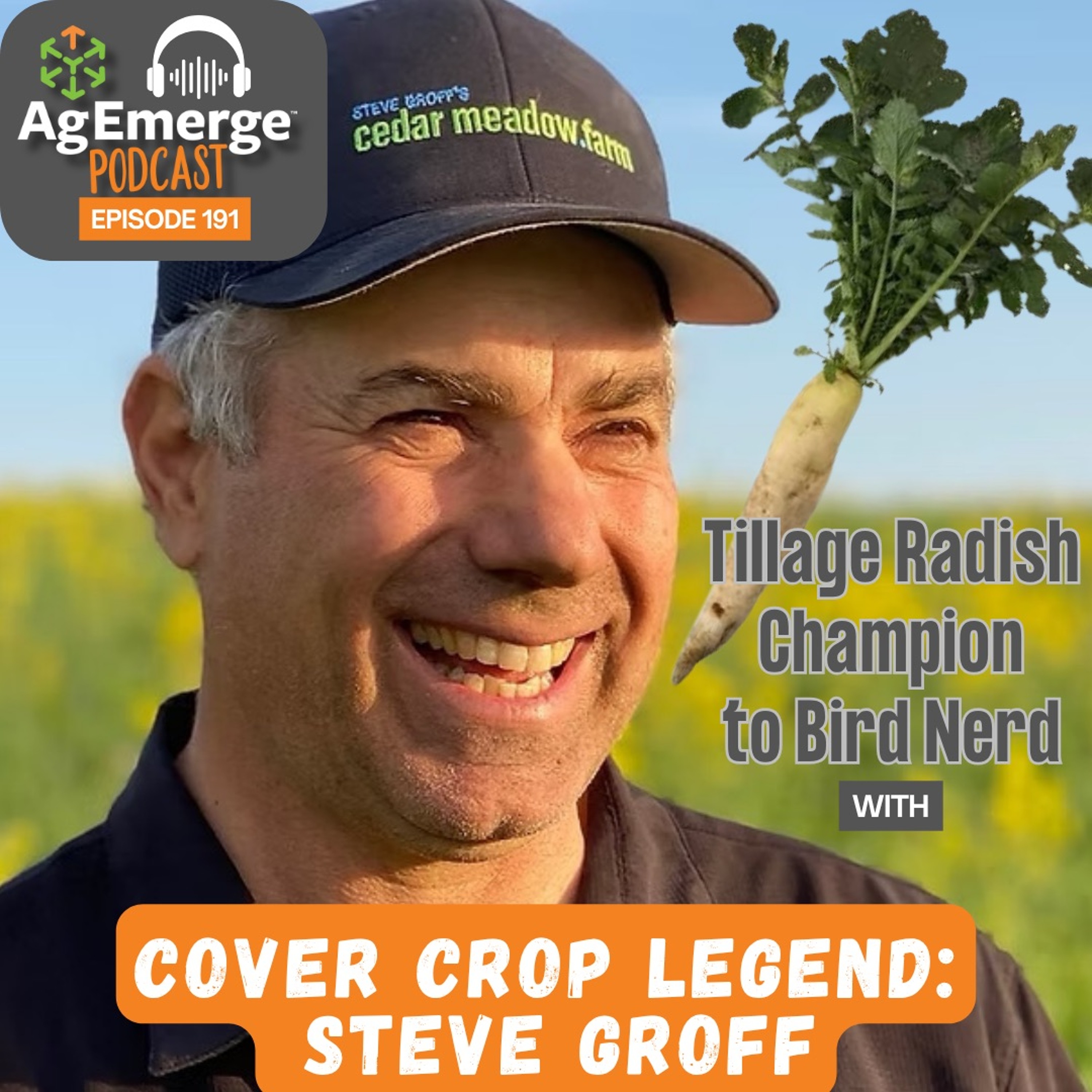
AgEmerge Podcast 191 with Steve Groff
June 30, 2026 1:14:24
Steve Groff continues to provide agricultural thought leadership. Sure, he's an author, speaker, farmer and recently claimed himself as a bird nerd. But one of Steve's hallmark accomplishments, is developing and promoting the tillage radish.
Hailing from Holtwood, Pennsylvania, Steve's Cedar Meadow farm became Regenified certified in 2023. From initial conservation efforts, through integrating cover crop diversity, to projects like biochar and nutrient-dense crop testing, Steve shares the real-world impact of these practices on the Chesapeake Bay watershed, illustrating how strategic land management can clean polluted estuaries while increasing farm profitability.
Monte and Steve discuss the importance of farmer education, public engagement, and bipartisan collaboration to promote sustainable agriculture that benefits us all.
Plus, hear about his recent adventures in fiber crop innovation, including custom flax planters and processing opportunities that could revolutionize U.S. fiber industries and reduce reliance on imports. Enjoy a great catch up conversation with Steve Groff by clicking below.
Steve's Website: https://www.stevegroff.com/
Regenified and Cedar Meadow Farm: https://regenified.com/farm/cedar-meadows/
Steve's Book: The Future-Proof Farm: https://www.stevegroff.com/book
Timestamps:
02:55 - Market shifts: variety packaging and customer preferences
03:37 - Steve's personal farm story and history of no-till since 1982
07:32 - Regenerative agriculture: growing food for health and future generations
08:11 - Challenges of farming on steep, rocky terrain in Lancaster County
09:44 - Land costs, succession, and land transfer strategies
13:43 - Water quality concerns in Chesapeake Bay and conservation efforts
16:37 - Nutrient management, manure regulations, and local innovations
19:33 - Progress in Chesapeake Bay restoration and the role of cover crops
20:58 - Biochar research and its potential benefits and challenges
22:04 - Nutrient runoff issues in the Mississippi Delta and alternative management strategies
23:58 - The potential of Maryland’s cover crop payment programs
25:38 - Lessons from regulatory and incentive approaches across states
30:41 - The role of government, incentives, and public awareness in environmental stewardship
32:36 - The personal impact of water clean-up on community life and future opportunities
33:47 - Linking soil health to human health: the food as medicine movement
36:17 - Innovative tools like cover crop roller development and their origin stories
43:39 - Extending cover crop benefits to pumpkins and specialty crops
45:23 - Moving toward nutrient-dense foods and the role of regenerative practices for health
47:26 - Opportunities in fiber crops: hemp, flax, and market potential
50:17 - The influence of high-profile advocacy and policy in advancing regenerative agriculture
54:45 - The importance of diverse viewpoints and bipartisan support for farm sustainability
56:06 - Linking soil health improvements to health costs and chronic disease prevention
58:28 - Hemp industry challenges: regulation, infrastructure, and market development
61:04 - Innovations in fiber crop equipment, including planting systems for hemp and flax
64:08 - Long-term biochar research plans and soil health impacts
65:22 - Future directions: high tunnels, specialty crops, and nutrient density testing
67:22 - Upcoming events and Steve’s focus on hands-on farm work and family
70:25 - The divine story behind the farm’s historical crops and future crop opportunities
72:43 - Final thoughts: observing nature, curiosity, and the farmer’s role in ecosystem health
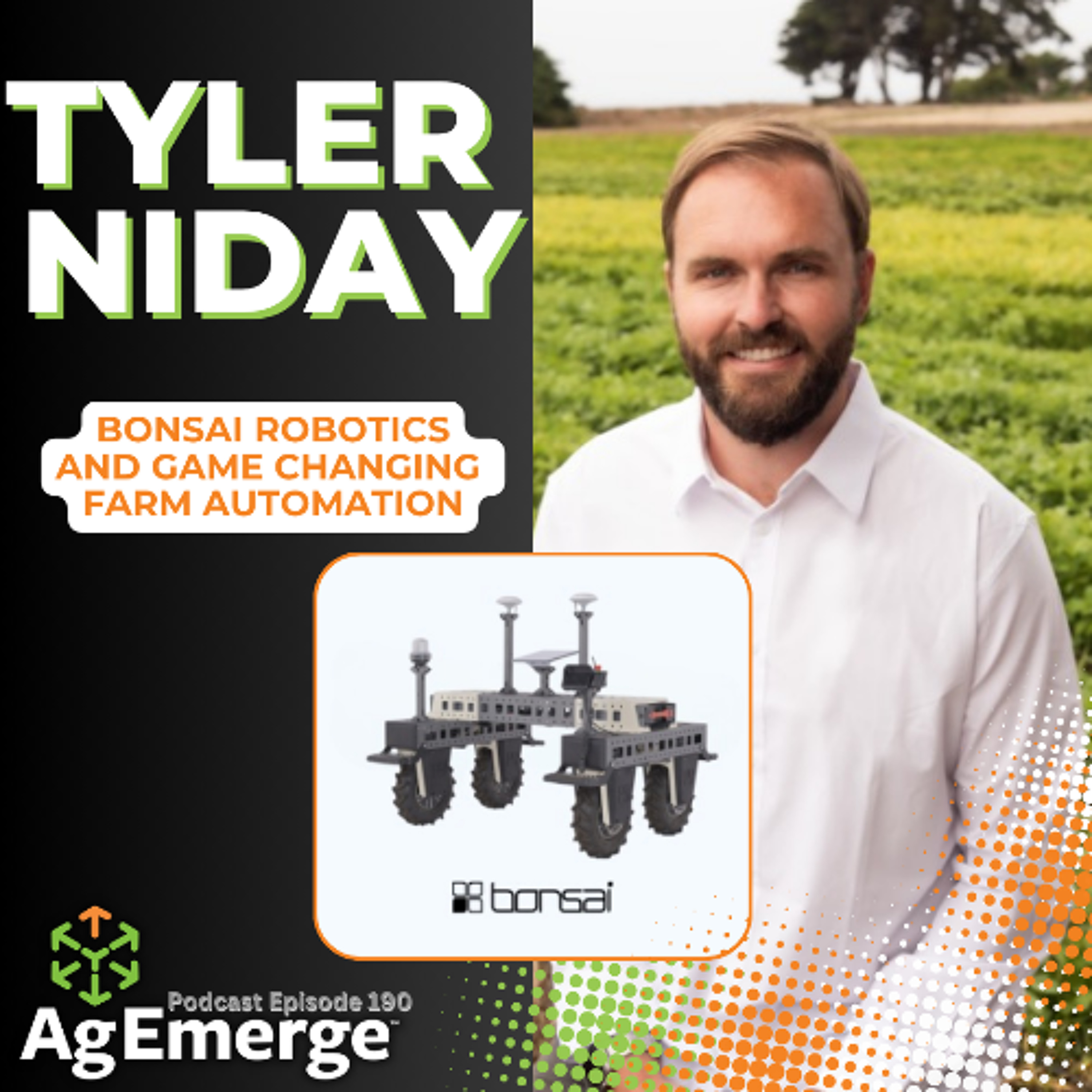
AgEmerge Podcast 190 Bonsai Robotics and Tyler Niday
June 16, 2026 51:15
Most farms struggle with dust, inefficiency, and labor shortages—but Tyler Niday of Bonsai Robotics reveals how AI-driven machinery is changing the game by transforming existing equipment into autonomous workhorses.
Inspired by biology, Bonsai Robotics is making some of agriculture's toughest environments manageable. Tyler shares how autonomous orchard shakers are improving nut harvest efficiency by up to 40%, while converting shuttle trucks into multi-functional farm platforms can save growers hundreds of thousands of dollars in equipment costs.
Monte and Tyler explore the industry's evolution from retrofitting machines with autonomous capabilities to developing full-platform solutions, including Bonsai's Amiga series. These adaptable systems support precision spraying, harvesting, and crop scouting.
Before co-founding Bonsai Robotics, Tyler began in mechanical engineering and helped develop vision systems at Blue River Technology and gained hands-on learning at Orchard Machinery Corporation.
If you've wondered what the future of practical farm automation really looks like, this episode offers a firsthand look at innovations in the field today.
Visit Bonsai Robotics: https://bonsairobotics.ai/
Watch episode: https://youtu.be/Cvs7v5FLSN0
Timestamps:
00:10 - Tyler’s background and journey into ag tech
02:23 - The role of AI and perception challenges in dust environments
07:48 - Vision-only AI vs LiDAR debate and dust interference
12:04 - Scalability of perception models across crops
12:58 - Training AI models on dusty environments and data fusion
16:16 - Focus on specialty crops as a starting point for autonomy
16:45 - Collaborations with OEMs like Floria and OMC
17:30 - Managing connectivity in remote farm locations
19:07 - Starlink and cellular solutions for remote operations
21:30 - The Amiga platform's different configurations and applications
25:44 - Strategic move into precision spraying and harvest-related automation
28:28 - Future autonomous applications for open-field crops
37:44 - Autonomous nut shaker and harvesting efficiency
41:46 - Future of crop variability mapping and individual plant management
47:13 - Returning value through data management and software ecosystems
49:21 - Industry collaboration, standards, and evolving equipment
52:25 - Closing remarks and future outlook
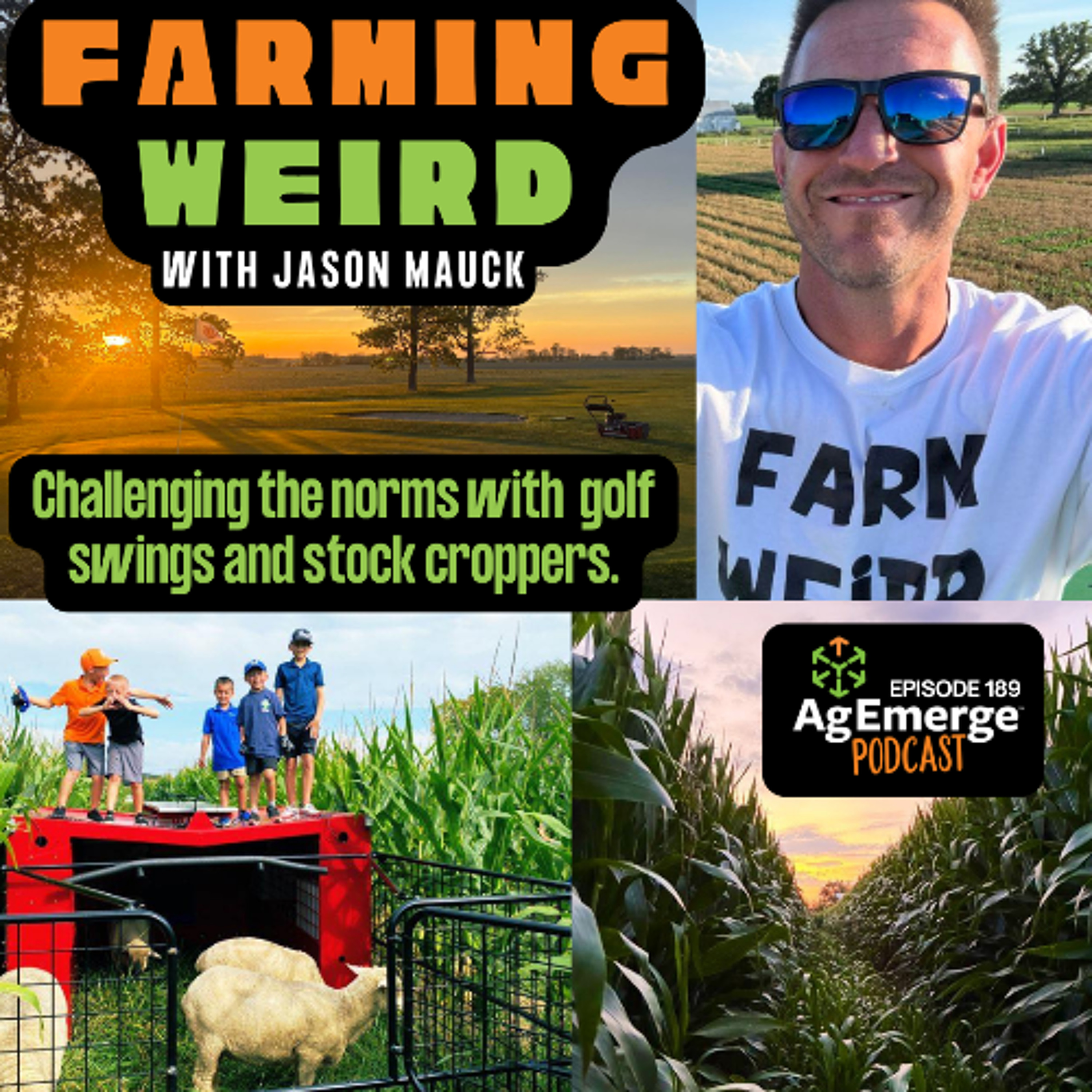
AgEmerge Podcast 189 with Jason Mauck
May 27, 2026 1:41:29
Jason Mauck's approach to relay cropping, alley cropping, and tight plant timing might just be the game-changer every farmer needs to think about.It’s not just about planting crops; it’s about planning the whole system—synchronizing crop timing with solar angles, plant growth stages, and biological triggers.
And here’s the kicker: this isn’t just theory. Jason demonstrated how these principles have already pushed yields into the 80-90 bushels per acre range—something many traditional systems would consider a good year. The understanding of plant interactions, timing, and field layout can reshape the economics of your farm.If you’re tired of the same old, same old, or if you feel like your program is begging for a new approach, this is your nudge to rethink everything.
The key is getting out of the “accept what is” mindset and starting to see your acres as a dynamic, living system that responds to careful nudges.For anyone willing to experiment, to learn, and to question the status quo — consider ways to integrate these ideas into your own farm. The future favors those brave enough to think differently.
See it all in person at the Farm Weird Event. June 27, on Jason's farm.
More Details and Registration: https://conference.eco-ag.com/farmweird?am_id=monte2150
Timestamps:
02:25 - Shifting focus to regenerative farming and early adopter mindset
04:37 - Family background and landscape business
10:37 - Adjusting row spacing, plant density, and resource efficiency for higher yields
12:35 - Managing weeds, weeds suppression strategies, and relay cropping benefits
15:11 - Emotional resilience and momentum after the passing of Jason’s father
18:52 - The difference between salespeople and solution providers
19:25 - Innovations in plant sequencing, planting timing, and resource layering
20:36 - Relay cropping as a response to manure management
30:10 - Adjusting plant populations, seeding densities, and spacing strategies
36:23 - Equipment considerations and planting technology innovations for narrow-row cropping
44:11 - Crop biochemistry, plant growth regulators, and maximizing photosynthesis
45:57 - Strategic shading in crop design
54:05 - Creative mechanical solutions for seed handling, row separation, and crop integrity
58:02 - Crop and residue management, cover crop seeding, and fertility strategies
AgEmerge Podcast 188 with Natalie Sturm
May 12, 2026 56:14
Most conversations about sustainable agriculture focus on practices—what to plant, how to till, or cover crop secrets. But what if the future of healthy soils and resilient farms hinges on something deeper? Dr. Natalie Sturm, Dakota Lakes Research Farm’s new farm manager, reveals how long-term crop rotations—and specifically the power of crop residue—are shaping the next generation of regenerative farming.
Discover how Dakota Lakes is pioneering research that shows soils with consistent root biomass and high-residue crops outperform even the most diverse rotations at building organic matter and restoring soil function. Natalie shares behind-the-scenes insights from 30+ years of no-till management and her own scientific journey from suburban Chicago to the heart of South Dakota. She explains how farm-scale systems, like five-year perennial sequences and livestock integration, can drastically reduce soil erosion, combat salinity, and increase farm profitability without relying on the latest chemical fixes.
You'll learn about innovative strategies such as virtual fencing for livestock, energy independence through on-farm biodiesel, and the critical importance of research that cuts through the marketing noise of the “ag industrial complex.” Natalie delves into how long-term, systems-based research can serve as a blueprint for farms across the country—whether you're in the Midwest trying to restore saline soils or a California grower exploring perennial grasses.
Timestamps:
0:01:18 - The legacy of Dwayne Beck and the importance of long-term research
0:04:32 - Cropping systems diversity and crop management practices
0:06:25 - The role of crop rotation and residue in soil health
0:13:13 - Agroecology principles and ecological benefits in farming
0:16:21 - Livestock integration, virtual fencing, and animal management innovations
0:19:26 - Summer field days and farmer engagement
0:22:45 - Equipment innovations for no-till and residue management
0:39:01 - Residue management and its impact on soil health
0:47:36 - Education events and farm tours for farmers and researchers
0:49:46 - Innovations in energy independence and renewable energy on the farm
0:52:20 - Replicating Dakota Lakes’ model in other regions
0:54:18 - Building networks for collaborative research and adaptation
0:55:37 - Dr. Sturm’s visionary outlook for the next 20-40 years
About our Guest (credit: https://www.sdstate.edu/news/2026/03/sturm-returns-dakota-lakes-research-farm-next-farm-manager)
Dr. Natalie Sturm conducts agronomic field research at the Dakota Lakes Research Farm.
Sturm conducted research at the Dakota Lakes Research Fam as part of her master’s degree. She is now replacing her former mentor, Dwayne Beck, who retired after more than 35 years of service.
Sturm completed her bachelor’s degree in sustainable food and bioenergy systems at Montana State University, her master’s in plant science at South Dakota State University and her doctorate in soil science at Washington State University. In her first few months on the job, she plans on learning as much as possible about the farm’s daily operations and meeting the local farmers, scientists and stakeholders that support the Dakota Lakes mission.
The Dakota Lakes Research Farm is a unique partnership between the SDSU College of Agriculture, Food and Environmental Sciences and the Dakota Lakes Corporation, a nonprofit, farmer-led organization that owns the farmland and provides input on how research performed on the farm can best impact farmers. The research is conducted by SDSU faculty and staff through South Dakota Agricultural Experiment Station funding. Both entities are committed to conducting research that allows South Dakotans to make more informed decisions on their operations.
Annually held on the last Thursday in June, this year’s Dakota Lakes Research Farm Field Day is on June 25, beginning at 3 p.m. More info: https://dakotalakes.com/
AgEmerge Podcast 187 with Matt Griggs
May 5, 2026 1:05:03
Most farmers abandon their soil health innovations at the first sign of trouble — but Matt Griggs chose perseverance over resignation. After a near-fatal combine accident and years battling fragile, erodible soils, he’s proving that bold, strategic changes can turn disaster into success.
Resources & Links:
Griggs Farms LLC - YouTube Channel: https://www.youtube.com/@UC7NfwgKKPu2AlhfQyWqjkfg
Griggs Farms LLC - Website: http://www.griggsfarmsllc.com/
Crop Budget Spreadsheets – Free resources for farm management: http://www.griggsfarmsllc.com/spreadsheets.html
More about this episode:
From surviving a life-threatening crash to revitalizing the soil pan beneath his fields, Matt shares how a mindset of resilience and innovation can transform even the most broken land. You'll discover how cover crops like annual ryegrass and radishes can dissolve the fragile soil pan, increase organic matter, and dramatically improve moisture retention — even in the driest conditions.
We break down:
- The pioneering practices Matt employs to reshape his soil profile
- Using custom-designed hooded sprayers to implement strip till techniques for effective cover crop management
- The critical role of soil microbiology and carbon in building resilient, drought-proof farms
- How innovative crop choices, such as canola and the integration of legumes, open new market opportunities
- Real stories of recovery and hope amid record droughts, emphasizing the importance of persistence and continuous learning
Why does this matter? Every farm faces unique challenges—whether it’s soil degradation, water scarcity, or market volatility. Matt’s story offers a blueprint for pushing past obstacles, turning setbacks into stepping stones, and creating a future-proof operation grounded in soil health. His example highlights that the key to farming resilience isn’t just better yields—it’s a shift in mindset, management, and determination.
Perfect for farmers, ag professionals, or anyone looking to understand how soil health practices can restore land’s capacity to fight drought and erosion. If you're tired of doing the same old, expect better results by thinking differently, experimenting boldly, and never giving up.
Follow Matt at Grigg's Farms LLC on YouTube and all major social media platforms for real-time updates—whether it’s soil breakthroughs or crop budgets. This episode is a masterclass in resilience, innovation, and the relentless pursuit of a more sustainable, profitable farm.