USDA confirmed Arizona’s first New World screwworm detection in a Cochise County dog on October 28, announcing a joint federal-state response that included animal movement controls and increased surveillance. For livestock and pet owners in the affected area, the agency’s immediate message was to inspect animals daily and report suspected infestations promptly.
Samples from the dog were confirmed at the Animal and Plant Health Inspection Service’s National Veterinary Services Laboratories in Ames, Iowa. APHIS said it was working with the Arizona Department of Agriculture. The detection involved a pet, but the pest also affects livestock and wildlife and, less commonly, people.
The animal-health concern is the damage caused by the larvae, which feed on living tissue. APHIS warns that infestations can cause severe wounds, animal suffering and significant economic losses when they are not detected and treated quickly. That makes recognition and reporting central parts of the response, alongside measures aimed at the flies.
In its October 28 announcement, APHIS said officials were establishing a 20-kilometer infested zone around the detection and implementing animal movement controls for that area. The announced measures also included increased live-animal surveillance, trapping, sterile fly releases and targeted outreach to local producers, veterinarians and communities. Those measures describe the response announced that day.
What owners should watch for
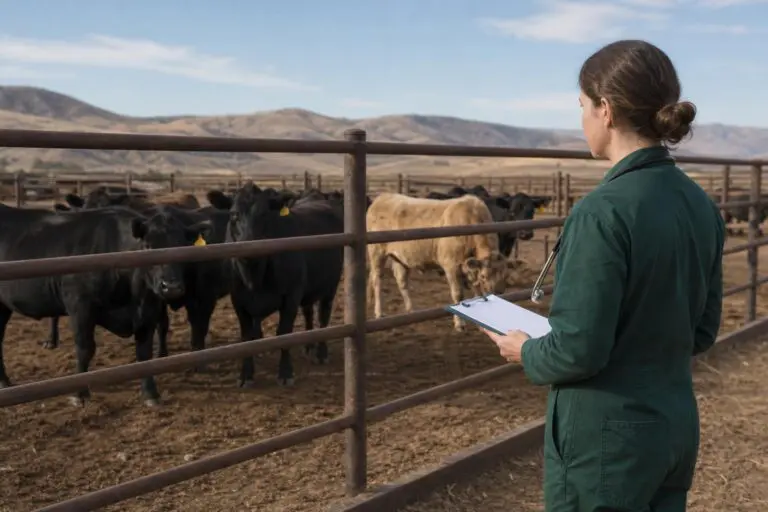
USDA urged animal owners in the area to look daily for draining or enlarging wounds and for maggots or egg masses in wounds. Its warning signs also included discomfort or irritability. These are the agency’s inspection prompts for owners, paired with a request to bring suspected infestations to animal-health professionals immediately.
Owners should also check for lesions around body openings, including the ears, nose, genital area and umbilicus, according to USDA. Anyone who suspects an infestation should immediately contact a veterinarian, a state animal health official or USDA. The agency’s guidance applies to both pet and livestock owners in the affected area.
How surveillance supports containment
APHIS’s New World Screwworm Response Playbook explains how those individual reports fit into a broader response. The agency identifies screwworm infestation as immediately reportable under its national animal-disease reporting framework. The playbook is a planning resource for officials and responders, designed to help them adapt surveillance and control activities as conditions change.
The framework links animal inspections with fly surveillance, movement requirements and sterile insect releases rather than relying on a single measure. APHIS describes two central aims: preventing contact between screwworm flies and animals that are not infested, and stopping the flies’ production cycle and establishment. Prompt detection supports those efforts.
Sterile insect releases are one part of that combined approach. The playbook says prompt detection, appropriate treatment of infested animals and the sterile insect technique can stop the production cycle. It also calls for coordinating public communications, maintaining information flow and securing the resources needed to sustain a response through control and eradication.
Live-animal commerce and changing conditions
For livestock businesses, the playbook distinguishes the pest’s animal-health and commerce consequences from food safety. APHIS says screwworm infestation is not a food safety concern, but it can have immediate effects on interstate commerce and international trade in live animals. Maintaining continuity of agricultural business is an explicit response goal.
The playbook also calls for adapting the response to local conditions. Its framework changes with the geographic extent of an outbreak and the availability of personnel and sterile flies. Those planning categories are not a classification of the Arizona detection; they explain why surveillance, inspection and containment activities may change as officials assess conditions.
For updates beyond the October 28 announcement, USDA directs owners to its public screwworm dashboard under “Current Status,” which the agency says is updated daily at 6 p.m. Eastern time. Its screwworm information site also provides suspect-case reporting guidance. Owners seeking current response information can use those resources alongside contact with animal-health officials.