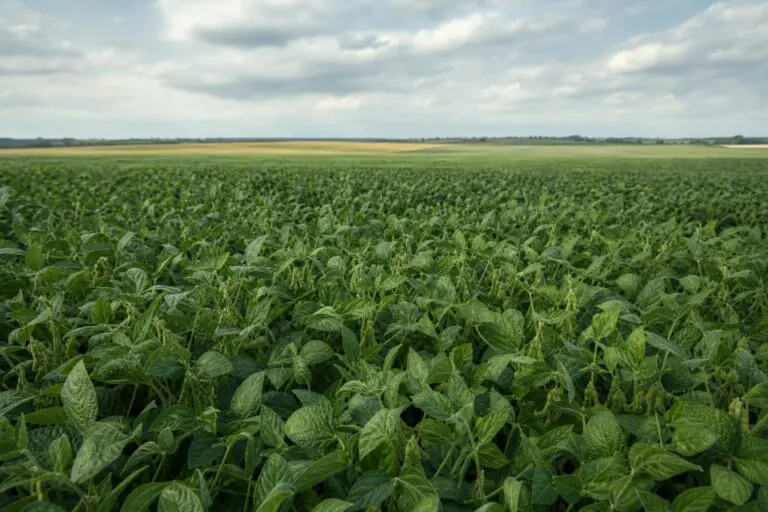

Commercial banks made more non-real estate farm loans in the third quarter of 2026, but smaller average loans pulled the annualized dollar volume down 25% from a year earlier. Operating loans drove most of the decline, while machinery and equipment financing stood out for substantially shorter repayment terms.
The national estimates come from University of Illinois economist Gerald Mashange’s Oct. 29 analysis of Federal Reserve survey data. Interest rates eased across the reported categories, but borrowers still faced rates well above 2020 levels. The combination means the decline in lending dollars should not be read simply as fewer loans being made.
For California readers, the geographic limits matter: these are national commercial-bank estimates, not California lending results. A separate farm-account study discussed below also provides no California-specific results or benchmarks. Neither analysis establishes whether smaller loans reflected borrower demand, lender restrictions or a different mix of borrowers.
More originations, smaller operating loans
Across all non-real estate farm lending, loan originations increased 11.1% from the third quarter of 2025. Average loan size nevertheless dropped 32.5%, from approximately $120,500 to $81,300. The estimated annualized volume consequently fell from $75.33 billion to $56.47 billion.
Those dollar totals describe the estimated pace of new lending, not outstanding farm debt or the cumulative amount banks lent throughout the quarter. The Federal Reserve System’s Survey of Terms of Bank Lending to Farmers uses a stratified, voluntary sample of insured commercial banks. Third-quarter observations cover a representative week, the first full business week of August, and are expressed at an annual rate.
Operating loan counts rose 16.4%, but average size fell 39.1%, from about $127,200 to $77,400. Annualized operating loan volume dropped 29.2%, from $60.67 billion to $42.96 billion. That $17.71 billion decrease accounted for most of the $18.86 billion decline across all non-real estate farm lending.
The longer comparison tempers the year-over-year drop. Despite shrinking sharply from 2025, the average operating loan remained 13% above its 2015–2025 third-quarter average of $68,500. Operating loan volume was 5.2% below its corresponding average of $45.34 billion. The annual decline and the longer-term comparison describe different starting points.
Equipment terms shorten sharply
Machinery and equipment lending showed a smaller annual decline in dollars but a more pronounced departure from historical repayment terms. Originations increased 3.8%, while average loan size slipped 9.5%, from approximately $43,400 to $39,300. Annualized volume declined 6%, from $2.61 billion to $2.46 billion.
Unlike operating loans, equipment loans were below their 11-year third-quarter averages on both size and volume. Average equipment loan size was 21.5% below the $50,100 historical average. Volume was 38.9% below the $4.02 billion average. Thus, the modest annual volume decline did not mean equipment lending was near its longer-term level.
Equipment loan maturities shortened from an average of 53.9 months in 2025 to 29.3 months in 2026, a reduction of more than two years. The latest average also fell below the 2015–2025 third-quarter average of 40.4 months. These are category averages, not terms offered to every equipment borrower.
Operating loan maturities also shortened, falling from 20.6 months to 13.3 months, close to their historical average of 12.1 months. Across all non-real estate farm loans, average maturity declined from 21.6 months to 17.5 months, still above the 15.3-month historical average.
Lower rates, but not a return to 2020
Average effective interest rates moved lower even as maturities shortened. The rate across all non-real estate farm loans fell 34 basis points to 6.77%. Operating loan rates declined 36 basis points to 6.66%, and machinery and equipment rates fell 68 basis points to 7.06%. A basis point is one-hundredth of a percentage point.
The comparison with 2020 remains less favorable for borrowing costs. Third-quarter rates that year averaged 3.26% overall, 3.20% for operating loans and 4.57% for equipment loans. Lower rates than in 2025 therefore did not restore the financing costs recorded at the start of the decade.
Repayment capacity is a separate question from lending volume. In an Oct. 2 study using FINBIN crop-farm accounts from 2007 through 2025, Purdue University’s Michael Langemeier describes a capital debt repayment margin that accounts for farm and off-farm income, depreciation, owner withdrawals and principal obligations. That framework assesses funds available to meet obligations; it does not explain the 2026 lending decline or measure the finances of borrowers in the Federal Reserve survey.