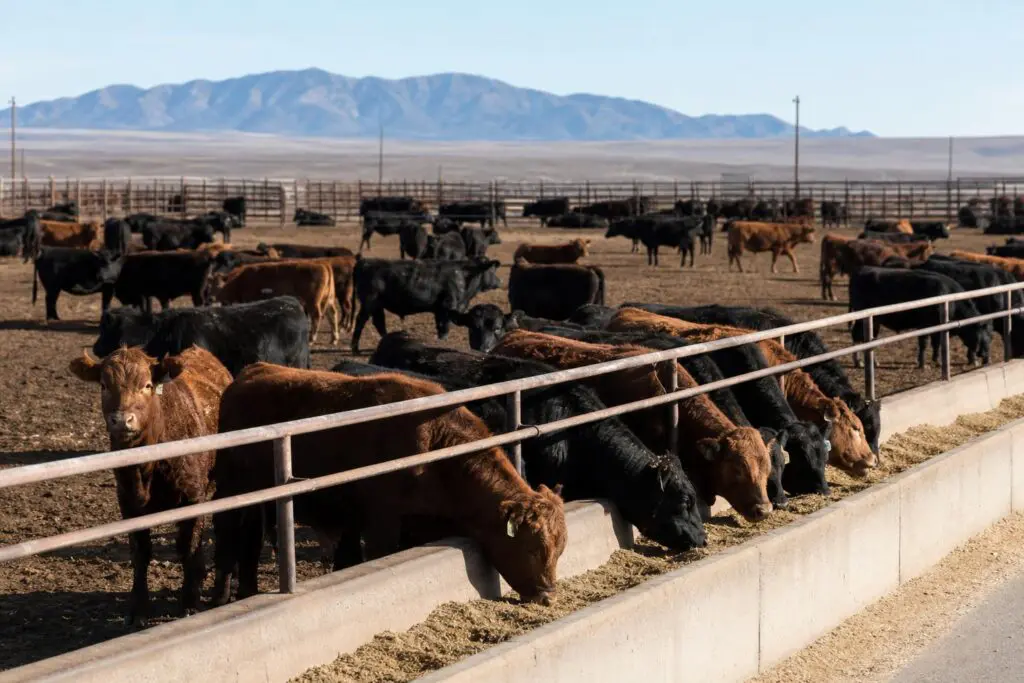
Persistently lower feeder-cattle imports from Mexico could raise U.S. cattle prices while moving more beef production south of the border, according to University of Missouri researchers. Their analysis finds that rebuilding the U.S. herd would partly offset lost imports, but would not eliminate the resulting increase in U.S. net beef imports.
Elliott Dennis, Sera Chiuchiarelli, Wyatt Thompson and Seth Meyer, with Missouri’s Food and Agricultural Policy Research Institute, compare two trade paths for 2027 through 2031. Their analysis, published Oct. 26 Pacific time, examines possible market responses rather than predicting a border decision. Its price changes measure differences between scenarios, not increases from the previous year.
Two paths for feeder-cattle trade
The institute’s August 2026 baseline assumes Mexican feeder-cattle imports gradually recover to more than 1.2 million head annually. The alternative holds imports near 330,000 head a year. That would leave imports about half below the baseline in 2027 and almost 75% below it during 2028 through 2031, creating a persistent gap in cattle available to U.S. operations.
The researchers describe restrictions prompted by New World Screwworm and a partial reopening in August and September 2026 as the backdrop for their work. The central question is what happens if live-cattle trade remains restricted instead of recovering. Their answer separates the immediate loss of animals from the slower adjustments by cattle producers, feedlots and processors.
Initially, fewer imported animals mean fewer cattle available for U.S. slaughter and less domestic beef production than under the recovery baseline. Heavier slaughter weights could recover some production, the authors say. Even so, the tighter supply pushes feeder-cattle, fed-cattle and beef prices above the baseline, with price pressure strengthening between 2027 and 2029.
The modeled fed-steer price is 4.2% above the baseline in 2029, compared with 2.7% above it in 2031. That easing reflects an assumed producer response: higher prices encourage U.S. ranchers to retain more heifers and expand the breeding herd. More cows eventually produce more calves, partially replacing cattle that otherwise would have arrived from Mexico.
Herd rebuilding cannot fill the gap quickly
That response takes time, especially with an already small breeding herd. In an Oct. 5 analysis, University of Illinois agricultural economist Gerald Mashange cited USDA’s July estimate of 28.5 million U.S. beef cows, down 1% from a year earlier. Replacement heifers rose 3% to 3.8 million head, but the projected 2026 calf crop fell 2% to 32.5 million.
Retaining heifers also removes animals from the near-term market before those females contribute calves. Mashange cited Federal Reserve Bank of Kansas City research finding that cattle inventories historically tended to expand only after two to three years of heifer retention. High replacement costs, drought and other production risks could slow that process, limiting how quickly domestic production fills an import shortfall.
Competition shifts to beef markets
Meanwhile, cattle no longer exported to the United States remain available for feeding and slaughter in Mexico. The Missouri model assumes that handling those additional animals strains Mexican feeding and processing capacity. During that adjustment, Mexican cattle producers receive lower prices even as the gap between what producers receive and feedlots pay temporarily widens.
As Mexican production expands, more beef becomes available for export. The researchers estimate that the production increase eventually exceeds half a billion pounds, roughly 11% to 11.5% above the baseline. Mexico’s consumers nevertheless face higher beef prices in the scenario, initially because of processing inefficiencies and later as Mexican prices move more closely with higher U.S. prices.
The trade result cuts both ways for U.S. producers. Less competition from imported feeder cattle accompanies more competition in finished beef markets. Compared with the recovery baseline, the model produces more U.S. beef imports and fewer U.S. beef exports, while Mexico’s net exports increase. Some lost cattle imports are replaced domestically, but some production stays in Mexico.
Those outcomes depend on uncertain trade volumes, Mexico’s expansion costs and the assumed U.S. herd response. The model also leaves out potential benefits from containing New World Screwworm. The authors find lower combined beef production in the two countries even through 2031, but their analysis does not weigh that production cost against the animal-health benefits of restrictions.