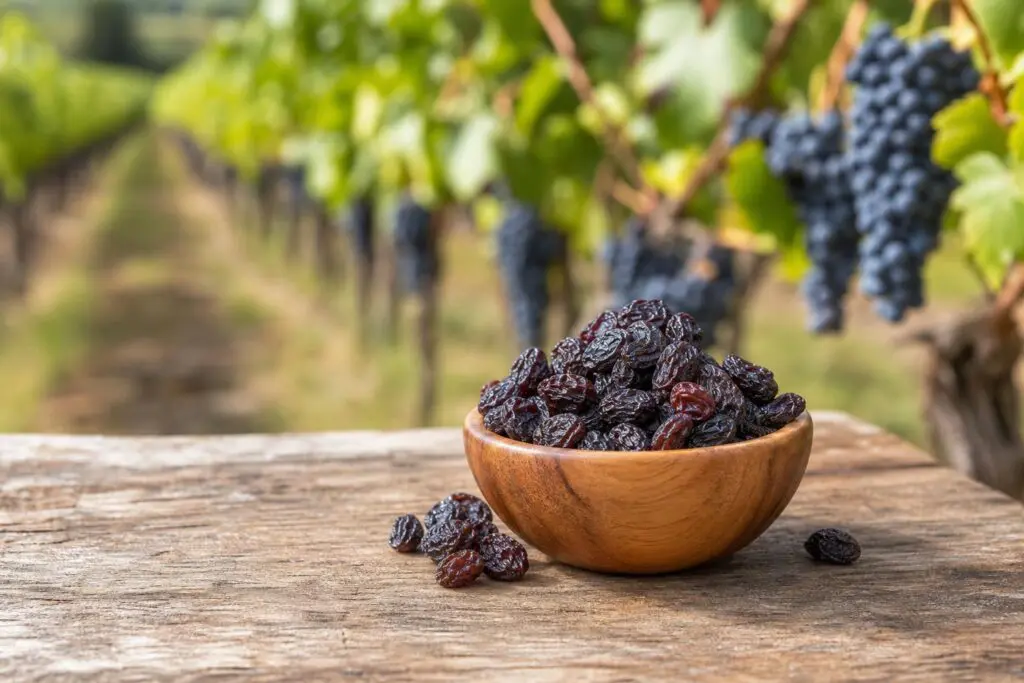
California’s raisin marketing order will move to a smaller governing committee under a USDA final rule that takes effect Nov. 9. The changes reduce the Raisin Administrative Committee from 47 members to 21 and revise representation, nomination procedures and several program authorities.
USDA announced the amendments Oct. 9, the same date the final rule appeared in the Federal Register. That publication date is not the effective date. For growers and handlers following the transition, the distinction matters: the rule establishes a new structure, while nominations and appointments are separate implementation steps.
The amendments extend beyond reducing the number of seats. They also address how reconditioned raisins qualify for standard outlets and how the committee may accept voluntary funding and manage intellectual property developed through the program.
A smaller committee with a different structure
The revised committee will have 12 producer members, eight handler members and one public member, with alternates. Its quorum drops from 25 to 14. The order also removes producer districts and changes designated representation, including an unaffiliated-producer seat and removal of a designated cooperative bargaining association seat.
| Provision | Previous structure | Revised structure |
|---|---|---|
| Committee membership | 47 | 21 |
| Quorum | 25 | 14 |
USDA’s rulemaking record describes difficulties filling seats and maintaining participation under the larger structure. The agency expects the smaller committee to ease those problems and reduce administrative burdens. Those are the stated reasons for the change, not measured results from an already completed transition.
The nomination amendments remove separate nomination procedures that witnesses said discouraged participation. USDA’s announcement says it will announce nominations for two-year terms. Growers should distinguish that next administrative step from the grower referendum that already authorized the amendments.
What growers approved in the referendum
The referendum ran Jan. 12-30, 2026, and considered four amendment packages. Each met the required approval threshold. For the governance package, 76.25% of growers voting supported the changes, representing 82.66% of the volume voted.
The nomination package received 67.50% support by grower count and 81.65% by volume. The packages addressing marketing policy and reconditioned raisins, and voluntary contributions and intellectual property, also passed. These figures show approval of particular amendments rather than an election of the new committee’s individual members.
The order itself is longstanding. USDA’s program overview describes quality requirements and research and promotion authorities under a program established in 1949. The new rule changes how portions of that program operate; it does not establish an entirely new raisin marketing system.
Reconditioning does not eliminate quality requirements
The final rule clarifies the treatment of reconditioned raisins. Under the amended provision, raisins must be inspected and certified as meeting the applicable minimum grade, quality and condition requirements before they qualify as standard raisins. They must also be labeled accordingly.
For handlers, the important distinction is between a product’s treatment history and its certified condition after reconditioning. The amendment provides a route to normal outlets for qualifying raisins. It should not be interpreted as a blanket waiver of inspection or minimum standards, or as permission to market any reconditioned lot without meeting the stated requirements.
New funding authority comes with controls
The committee may accept voluntary contributions for authorized expenses, but those contributions must be free of donor-imposed restrictions on how the committee exercises its authority. The committee controls their use within the program’s authorized purposes.
The intellectual-property provisions cover work developed using program funds. Such property belongs to the United States government as represented by the committee, and resulting income remains subject to the order’s fiscal controls. Licensing requires the Secretary’s approval.
These provisions give the program additional ways to support and manage its work, while preserving limits on donor influence and use of resulting revenue. They do not turn a voluntary contribution into a donor’s right to direct committee policy.
As Nov. 9 approaches, the practical developments to follow are USDA’s nomination notice and implementation of the new membership structure. For questions about the revised rules, the October final rule is the current authority; older program summaries may still describe the previous committee.